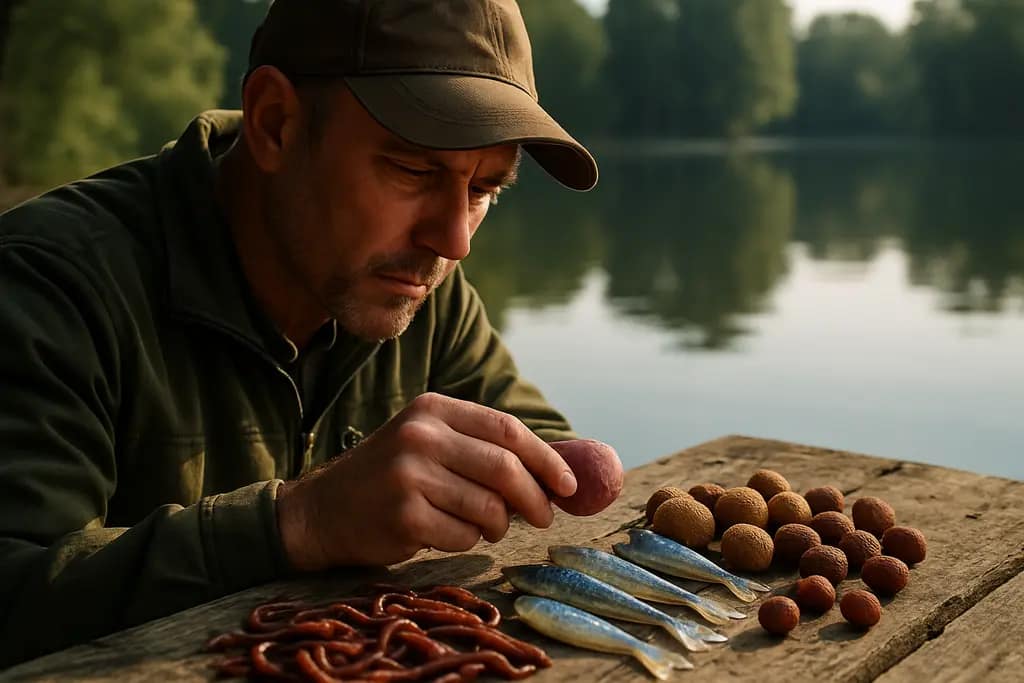

Catfish tournament baits are not just a grocery list for the cooler. They are part scouting report, part fish behavior read, and part team discipline. The best teams I’ve watched do not show up with one magic tub and hope the river is in a generous mood. They build a bait plan around species, water conditions, legal limits, bait care, and how each rig presents scent without turning into a tangled mess.
As of September 4, 2026, the latest tournament bait talk has been shaped by two clear signals. First, manufacturers continued pushing bait-care and prepared-bait products toward serious anglers. In July 2026, Catfish NOW reported that B’n’M Poles, CatfishPro, and Fishbites had introduced enhanced live-bait storage, livewell containers, and new prepared baits aimed at tournament anglers Catfish NOW report. Second, species-specific bait selection still matters more than brand chatter. A Carolina Sportsman guide published on September 2, 2026, stated that blue catfish favor dead cut bait such as shad or crappie chunks, while flatheads do best on live baits such as bluegills or crappie where those baits are legal Carolina Sportsman bait guide.
That gives tournament crews a practical starting point: don’t pack like a weekend bank angler, and don’t rig like every catfish in the lake wants the same meal. Your bait box should answer one question before launch: which fish are we trying to weigh, and what bait keeps working after hours in heat, current, and boat traffic?
Catfish Tournament Baits By Species
Species decide the bait board. A channel cat strategy built around prepared bait and smaller scent-heavy offerings is a different plan from a blue cat program built around bloody cut bait. Flatheads add a third lane because they are tied closely to live prey in the research provided. If your team blurs those lanes, you may still catch fish, but tournament fishing punishes lazy decisions.
Catfish Tournament Baits For Blue Cats
For blue cats, catfish tournament baits should start with cut bait. The key is not just the species of baitfish, but how it is cut and how long it keeps bleeding. Shad and crappie chunks were specifically named in the September 2, 2026 Carolina Sportsman piece as dead cut-bait options for blues. In practice, that means your crew should avoid turning every bait into the same cube. Cut some pieces as steaks, some as fillets, and some as head sections if legal where you fish. Different cuts release scent at different rates and ride differently in current.
Use the first hour of practice to test how long a bait piece stays firm on the hook. If it washes out fast, save that softer cut for short anchor sets. If it stays intact but does not bleed much, score the skin or expose more flesh. A bait that smells great in your hand but spins on the leader is not tournament-ready. Presentation still matters.
Live Bait Reads For Flatheads
Flathead bait planning is more direct: keep legal live bait healthy. Live bluegills or crappie were named in the research as strong choices where allowed. That “where allowed” phrase should be treated like a pre-launch checklist item, not an afterthought at the ramp. State rules can differ on possession, transport, size, and species. A disallowed bait is not a backup plan; it is a tournament risk.
Healthy live bait also changes how you rig. Give the bait enough freedom to move, but not so much that it wedges into cover before a flathead finds it. If you fish timber or tight bank structure, shorten the leader enough to control the bait. If you fish a clean ledge or hole edge, a little more movement can help the bait signal distress naturally.
Prepared Baits For Channel Cats
Prepared bait still has a place, especially when channel cats are part of the target. The July 2026 manufacturer activity around prepared baits shows that companies still see tournament value in scent-forward products. Treat those baits as precision tools. They shine when the goal is to create a scent trail and keep a bait fishing through repeated casts or controlled drifts.
One mistake I see from newer teams is using prepared bait on gear that does not hold it. If a bait needs fiber, sponge, dip-worm texture, or a specific holder to stay put, rig for that before the event. Practice casting it. Practice retrieving it. Practice rebaiting it in low light without smearing half the tub across the deck. Tournament minutes vanish fast when the bait station looks like a raccoon raided a deli counter.
Fresh Bait Care Before Blast-Off
A reliable catfish tournament baits plan depends on bait condition. The 2026 gear trend toward better live-bait storage and livewell containers makes sense because bait quality can slide during long tournament days. Heat, crowding, weak aeration, and sloppy handling all work against you. If your bait starts strong and finishes tired, your late-day spots may not get a fair test.
Build your bait routine before the boat leaves the driveway. Assign one angler to bait care the same way teams assign someone to net duty or electronics. That person checks water, container crowding, lid security, ice or cooling needs where legal and safe, and whether cut bait is separated by freshness. The goal is simple: every bait that hits the water should look like it belongs in the plan, not like it survived a garage sale.
- Separate live and cut bait tools: Use different knives, boards, and containers so live bait care stays clean and cut bait prep stays fast.
- Label bait batches: Mark bait by source or time so your team can track what produced bites during practice and competition.
- Protect legal bait records: Keep receipts, capture notes, or rule references if your event or state agency requires proof.
- Plan for culls in bait quality: Replace weak live bait before it fails on a key anchor set.
If your team wants a deeper tournament-day bait checklist, I’d pair this plan with these tournament catfish baits notes on matching bait, rig, water clarity, and stamina.
Rigging Choices That Protect Your Bait
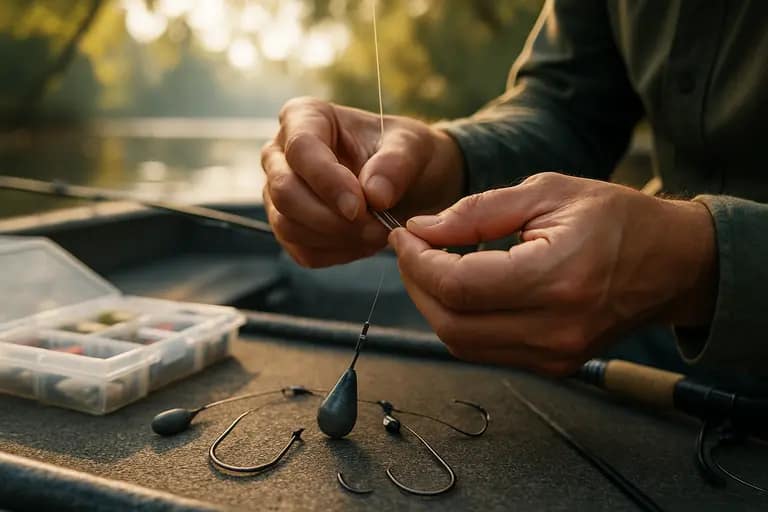
Bait and rig should be built as one system. A beautiful cut of shad does no good if the hook point is buried, the leader twists, or the sinker pins the bait in silt. The rig should help the bait release scent, stay visible, and hold position long enough for a quality fish to commit.
Hook Exposure And Bait Size
Match hook size to bait thickness, not to wishful thinking. Big bait can select for bigger fish, but a hook gap clogged with meat costs hookups. On cut bait, leave the point and barb clean. On live bait, place the hook so the bait stays active and upright. If the bait rolls, hangs backward, or dies quickly, change the hook placement before blaming the spot.
For tournament practice, track missed bites by bait type. A lot of short pulls on big cut bait may mean small fish are pestering it, but it may also mean your hook is hidden. A flathead strike on live bait can feel different from a blue cat loading up on cut bait, so your hookset discipline and drag setting should match the target.
Scent Trail And Bottom Contact
Scent needs water movement. If the bait is buried in mud, tucked behind debris, or pinned under the sinker, the scent trail gets weaker. Set the bait where current can work across it. In lakes, that might mean a wind-blown edge, a channel lip, or a depth break. In rivers, that often means seams, eddies, and soft edges near stronger flow.
Do not overcomplicate the rig box. Carry enough sinker styles to hold bottom, drift, or suspend as needed, but do not change three variables at once during a tournament. Change bait first, then leader length, then weight position. That order helps your team learn instead of guessing.
Why Catfish Tournament Baits Decide Weigh-Ins
Catfish tournaments reward teams that make clean adjustments under pressure. Bait is one of the easiest places to gain or lose control. If you know blue cats are the target, start with quality cut bait. If flatheads are the target and live bait is legal, protect that bait like it is part of the weigh bag. If channel cats are in play, prepared bait can still earn a spot when rigged so it stays fishing.
Treat catfish tournament baits as part of your team’s performance system. Scout the legal bait list, test bait cuts during practice, organize the cooler, assign bait-care duties, and keep notes after every bite. That is not fancy. It is disciplined fishing, and disciplined fishing is what keeps a tournament crew dangerous from first cast to last call.


