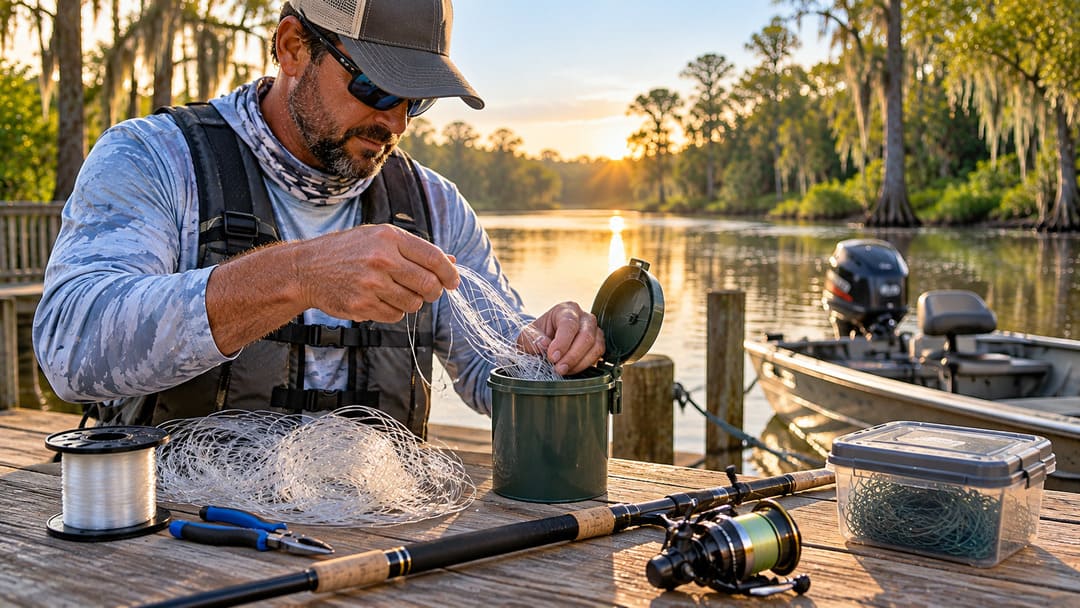
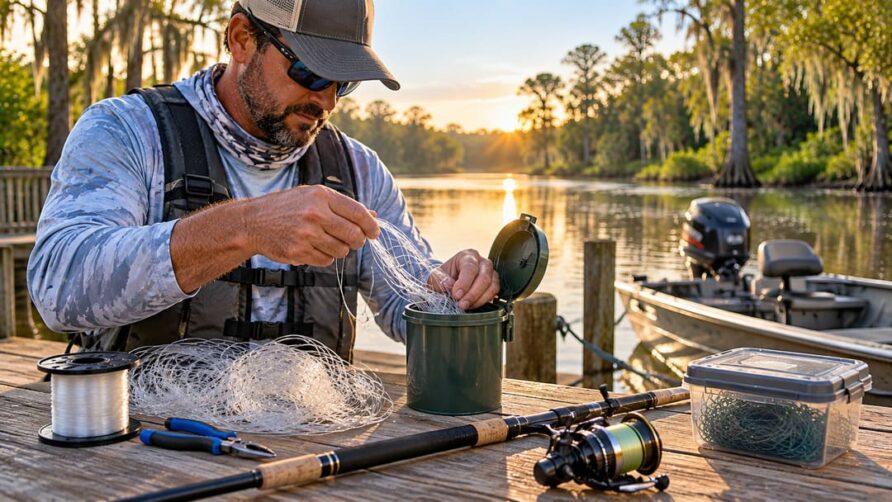
A fishing-line recycling tube at a Florida boat ramp is not a general tackle trash can. It can accept clean monofilament and fluorocarbon line, but not braided line, wire leaders, hooks, or sinkers. For catfish anglers who regularly fish around wood, rocks, and weed edges, that distinction matters every time a leader is replaced or a rig breaks off.
The environmental concern is straightforward. Florida’s Fish and Wildlife Conservation Commission (FWC) explains in its Stash the Trash guidance that discarded line can entangle wildlife in lakes and other waterways. Even a short fishing trip can leave loose line on a bank, in a boat, or around submerged cover if the angler has no plan to collect it.
Make fewer breakoffs part of the catfish plan
Disposal starts before a fish bites. A leader that has rubbed against a rock or log is more likely to fail on the next cast or under load. Check it after snagging, dragging through abrasive cover, or landing a fish; if it is damaged, replace the affected section and retie. A few minutes of inspection may prevent a much longer length of line from being lost underwater.
Cast selection matters too. The site’s guide to fishing catfish around heavy vegetation favors openings and workable edges over burying a bait inside dense plants. The same principle helps limit rigs snagging on stems. Beside timber or rock piles, choose a position that allows a controlled retrieve instead of casting blindly through the obstruction.
The right equipment cannot eliminate snags, but a balanced setup helps. The site’s big-cat gear guide for new anglers explains how main line, leader, rod, and drag should work together. Set the drag appropriately and replace frayed line rather than compensating with a dangerously hard pull. Never enter swift water, lean over an unstable bank, or bring a boat into hazardous cover just to retrieve a lost rig.
FWC’s line-conscious fishing advice specifically recommends checking for frays, avoiding casts into places where line is likely to catch, and storing loose pieces immediately. It also suggests a simple portable holder made from a canister with a slot in the lid. For a bank angler, that can be as useful as spare leaders: cut-offs go into the holder instead of blowing away while the next hook is tied.
Which catfish line belongs in a recycling tube?
FWC’s Monofilament Recovery and Recycling Program guidance identifies monofilament and fluorocarbon as accepted types of line. The program excludes braided line and wire. Line heavily mixed with plant growth or other debris may also be unsuitable for recycling.
NOAA recommends bringing discarded fishing line and tackle ashore for proper disposal because abandoned fishing gear can entangle wildlife and damage aquatic habitats.
That means a worn nylon main line or a clean fluorocarbon leader can go into a designated collection bin, with the hook, swivel, sinker, and other tackle removed. Do not assume a dark coating or a single-looking strand makes a mystery product eligible; check the line packaging if you are uncertain.
Braid creates the most common sorting problem for modern catfish rigs. Its woven strands are useful for many fishing applications, but FWC’s program does not accept them in its monofilament bins. Put used braid or wire into a covered trash container after cutting it into short pieces, less than 12 inches each. Do the same with line too dirty or entangled with vegetation to recycle. Do not put fishing line in ordinary curbside recycling either: it requires specialized handling.
Recycling also does not mean the old line becomes a fresh spool of fishing line. According to FWC, collected material is sorted and sent for processing into plastic pellets that can be used in other products. That is one reason hooks, weights, and pieces of bait have no place in the tube.
Get the line to the correct collection point
Florida’s official line-recycling bin map lets anglers search collection points by location and bin type. Outdoor PVC tubes are commonly placed at boat ramps, fishing piers, and marinas; participating tackle shops and other organizations may have indoor bins. Because the map relies partly on volunteer updates, confirm that a particular drop-off is still present before making a special trip.
At the end of a catfish outing, sort what is in your line holder: clean mono and fluorocarbon for the designated recycling program, and short sections of braid or dirty line for a lidded trash can. Remove sharp tackle before disposal and secure hooks so they cannot injure anyone emptying a bin. Retrieve abandoned line you encounter only if you can do so safely.
The goal is not to claim that one angler can eliminate all lost fishing line. It is to make three habits routine: prevent avoidable breakoffs, collect the pieces you control, and send each type of line to the right place. Florida catfish fishing leaves a smaller footprint when the cleanup plan is part of the rigging plan.