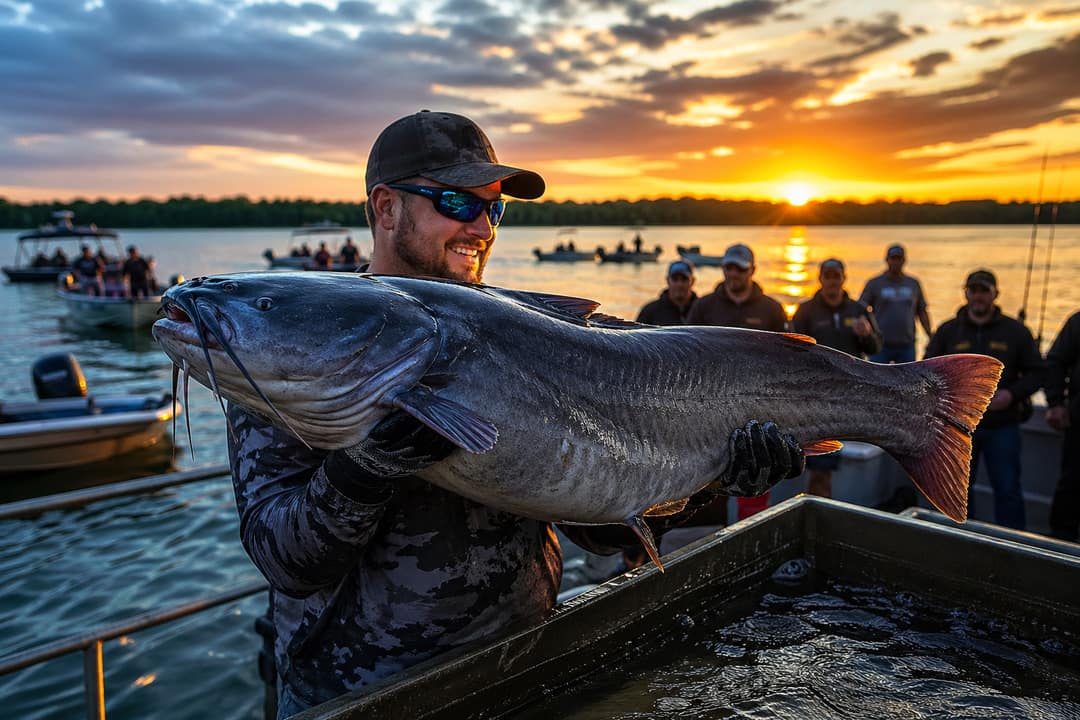

The catfish tournament circuit is no longer a quiet corner of recreational fishing. With summer events offering cash prizes that can climb into the five-figure range, catfish fishing tournaments 2026 are becoming a serious draw for competitive anglers, local sponsors, and waterfront communities looking for seasonal economic momentum.
Why Catfish Fishing Tournaments 2026 Matter Now
I have watched fishing tournaments evolve from local weekend gatherings into structured, sponsor-backed events with real competitive gravity. Bass fishing has long dominated the spotlight, but catfish tournaments are now claiming a stronger position because they combine accessibility, big-fish drama, and prize structures that appeal to both serious anglers and ambitious weekend competitors.
The timing matters. Across the country, summer tournament calendars are filling with events that offer cash awards, merchandise prizes, youth divisions, bank-fishing formats, kayak divisions, and boat-based competitions. That variety is expanding the audience. A participant no longer needs a high-end tournament boat to compete; in many events, a shoreline angler with sound technique and local water knowledge can enter the conversation.
For readers tracking the growth of competitive fishing, catfish fishing tournaments 2026 represent one of the more interesting developments in American outdoor recreation.
The Prize Money Is Changing The Competitive Equation
Cash prizes up to $10,000 and beyond change the psychology of an event. A small trophy tournament invites participation; a substantial payout creates preparation, travel, scouting, sponsorship, and strategy. That is where catfish tournaments are heading.
The rise of higher-value events has given anglers a reason to treat catfishing as a competitive discipline rather than a casual pastime. Competitors are studying seasonal movements, bait presentation, current seams, thermocline behavior, river stages, moon phases, and pressure patterns with the same seriousness associated with other professionalized fishing circuits.
This matters because catfish are not passive targets. Blue catfish, flathead catfish, and channel catfish each demand different approaches. A big blue in open water may require drift strategies and precise bait placement. A flathead near structure can reward patience, live bait selection, and nighttime execution. Channel catfish events often emphasize consistency, weight accumulation, and knowing how to produce fish under pressure.
The best tournament anglers are not simply lucky. They are pattern readers.
A More Accessible Tournament Culture
One reason catfish tournaments are expanding is that the barrier to entry remains relatively low compared with some other competitive fishing formats. While elite teams may use advanced electronics, specialized rods, large livewells, and purpose-built boats, many events still preserve an open-door culture.
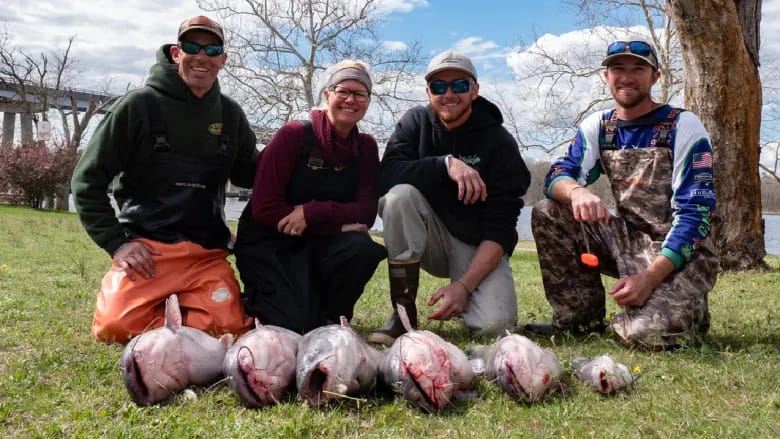
Bank tournaments are especially important. They allow anglers without boats to participate competitively, which broadens the field and strengthens community involvement. Youth divisions serve a similar function by converting tournaments into family events rather than narrow adult-only competitions.
That accessibility gives catfish tournaments a distinctive identity. They are competitive, but not sterile. The weigh-in area often feels like a cross between a sporting event, a county fair, and a neighborhood reunion. There is tension when a heavy fish comes to the scale, but there is also conversation, mentorship, food, sponsor booths, and local pride.
This is the part of the sport that numbers alone do not capture: catfish tournaments succeed because they are both contests and community gatherings.
Why Summer Is The Prime Season
Summer creates the conditions that make major catfish tournaments attractive. Longer daylight, warmer water, vacation schedules, and increased tourism all support bigger participation. For many communities, a summer tournament becomes more than an angling event; it becomes a reason for hotel bookings, restaurant traffic, fuel sales, bait-shop revenue, and waterfront activity.
Warm-weather catfishing also creates compelling competitive drama. Fish behavior can be highly productive but unpredictable. Heat, oxygen levels, water movement, storms, and nighttime feeding windows all influence outcomes. A team that dominates during practice may struggle on tournament day if conditions shift. Another team may unlock a pattern late and climb the standings with one major fish.
That volatility is part of the appeal. Catfish tournaments reward preparation, but they also preserve suspense. One oversized fish can transform an average outing into a winning performance.
The Role Of Conservation And Invasive Species Management
The growth of catfish tournaments is not only about prize money. In some regions, tournament fishing intersects with fisheries management, especially where invasive blue catfish have disrupted local ecosystems.
This creates a more complex public role for tournaments. A well-run event can provide recreation, economic benefit, and ecological pressure on overabundant species. In areas where blue catfish populations threaten native fish, shellfish, or food webs, tournament harvest can align angler enthusiasm with management goals.
That does not mean every tournament is a conservation program. Many are simply competitive events built around sport, tradition, and local culture. Still, the overlap between catfish tournaments and ecological management is becoming harder to ignore. It gives the format a public-interest dimension that many other fishing competitions do not have.
Sponsors Are Paying Attention
Prize growth rarely happens in isolation. It usually reflects stronger sponsorship, better event organization, and a clearer commercial audience. Catfish anglers buy rods, reels, hooks, line, electronics, bait tanks, boats, apparel, coolers, knives, trailers, and travel services. That purchasing power makes them attractive to brands.
The modern tournament ecosystem is increasingly built around visibility. Social media weigh-ins, livestreamed events, tournament pages, team branding, and angler-created video content give sponsors more exposure than a simple banner at a boat ramp ever could. A strong tournament now generates content before, during, and after the event.
For smaller outdoor brands, catfish tournaments offer a practical route into a loyal market. For local businesses, sponsorship can connect them directly with residents and visitors. For organizers, sponsor support helps fund larger payouts, raffle prizes, youth awards, and professional event infrastructure.
The result is a feedback loop: better prizes draw more anglers, more anglers draw more sponsors, and more sponsors improve the event experience.
What Serious Anglers Are Really Competing Against
To outsiders, a catfish tournament may look straightforward: catch the biggest fish and win. In practice, competitors are fighting several battles at once.
They are competing against weather, water conditions, boat traffic, time limits, bait availability, fish mortality rules, check-in deadlines, and the pressure of making decisions quickly. A promising spot may fail. A fish may be lost at the net. A team may have to choose between grinding for one giant fish or building a reliable bag with smaller catches.
Tournament rules also shape strategy. Some events reward the single biggest fish. Others use total weight, multi-fish stringers, or division-based categories. Boat, kayak, and shore divisions can require very different tactical planning. Anglers who ignore the rule structure often lose before the first cast.
This is where experienced teams separate themselves. They do not simply ask, “Where are the fish?” They ask, “What kind of fish wins under these rules, on this water, in these conditions, during this time window?”
That question defines competitive maturity.
Local Communities Have A Stake In The Outcome
The economic value of catfish tournaments is often underestimated. A successful event can bring dozens or hundreds of anglers into a town. Many arrive with family members, buy fuel, purchase bait, eat locally, stay overnight, and return for future events.
For lake towns and river communities, this matters. Outdoor recreation can extend tourism beyond traditional holiday weekends. A well-branded annual tournament can become part of a town’s identity, especially when paired with food vendors, music, raffles, youth activities, and public weigh-ins.
There is also a reputational benefit. When anglers travel to a destination and encounter a professional tournament, healthy waters, clear rules, and strong hospitality, they often become repeat visitors. In that sense, a catfish tournament can operate as destination marketing disguised as sport.
Risks That Organizers Must Manage
The growth of catfish fishing tournaments 2026 also brings pressure. Bigger prizes can increase disputes over rules, boundaries, fish handling, weigh-in procedures, and eligibility. Organizers must be prepared with transparent regulations, clear communication, and consistent enforcement.
Fish care is another critical issue. Competitive legitimacy depends on responsible handling, especially when live-release formats are used. Poorly managed events risk public criticism and angler backlash. The best tournaments understand that professionalism is not optional once money, sponsors, and public attention enter the picture.
There is also the challenge of sustainability. Too many events on the same water, poorly timed tournaments, or weak coordination with local regulations can strain relationships with agencies and communities. Responsible growth will require organizers to balance ambition with stewardship.
The Future Of Competitive Catfishing
I expect catfish tournaments to keep growing because they sit at the intersection of several durable trends: outdoor recreation, regional tourism, social media content, family-friendly competition, conservation awareness, and the appeal of accessible prize money.
The next stage will likely bring more formalized series, stronger angler rankings, improved livestream coverage, standardized rules, and larger sponsor packages. The sport may not mirror professional bass fishing exactly, and it should not try to. Its strength lies in its own culture: gritty, practical, community-driven, and built around fish that can humble even experienced anglers.
For anglers, the opportunity is clear. Those who learn their waters, refine their systems, and treat tournaments seriously can compete in a field that is still developing. For communities, the opportunity is equally strong. A well-run catfish tournament can generate tourism, strengthen local identity, and create a recurring summer attraction.
Conclusion
Catfish fishing tournaments 2026 matter because they show how a once-understated segment of recreational fishing is becoming more organized, more competitive, and more economically meaningful. The rise of big summer events with cash prizes up to $10,000 and beyond is not just a novelty; it signals a broader shift in how anglers, sponsors, and communities value catfishing.
The opportunity is significant, but so are the responsibilities. If organizers maintain fair rules, prioritize fishery health, and build events that welcome both serious competitors and families, catfish tournaments can become one of the strongest growth stories in outdoor sport. The clear takeaway is this: competitive catfishing has moved beyond the margins, and the smartest anglers and communities are already preparing for what comes next.


