
Invasive armored catfish are becoming one of Florida’s strangest freshwater problems because they do not announce themselves like a snake on a levee or a fish kill on the surface. They work below the waterline, scraping, burrowing, multiplying, and turning quiet ponds, canals, and spring runs into a harder problem for property owners, wildlife managers, and anyone who cares about Florida’s native waters.
For anglers who already understand how water levels can change fish behavior, the issue also adds a new layer to Florida catfish coverage beyond the usual trophy bite or tournament story. The same local attention around low-water catfish patterns now has an ecological counterpart: a nonnative catfish that can damage shorelines while most people barely notice it happening.
Invasive Armored Catfish Are Not The Catfish Most Anglers Know
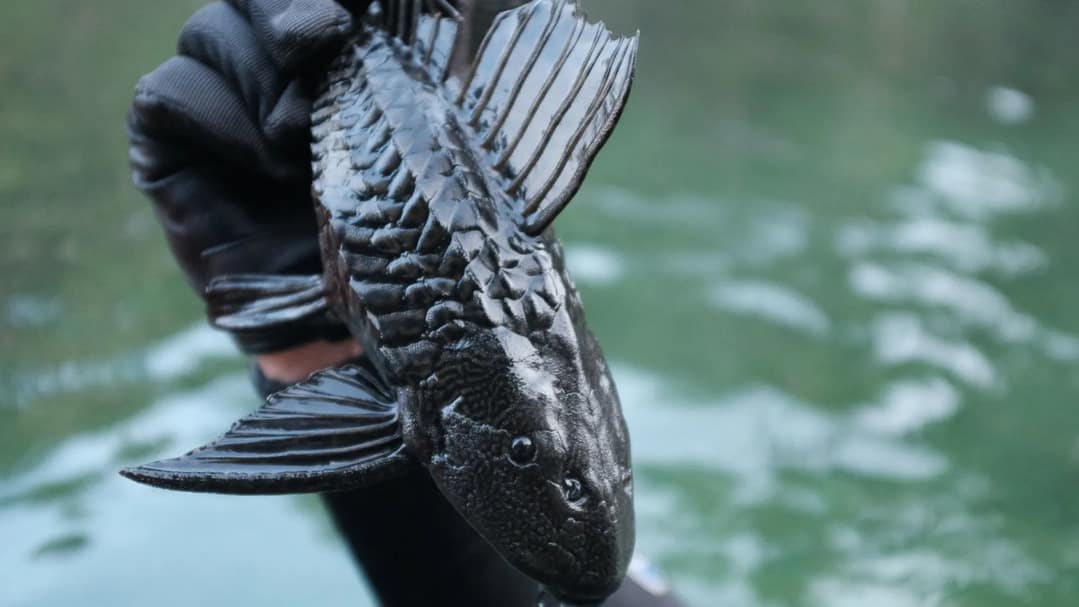
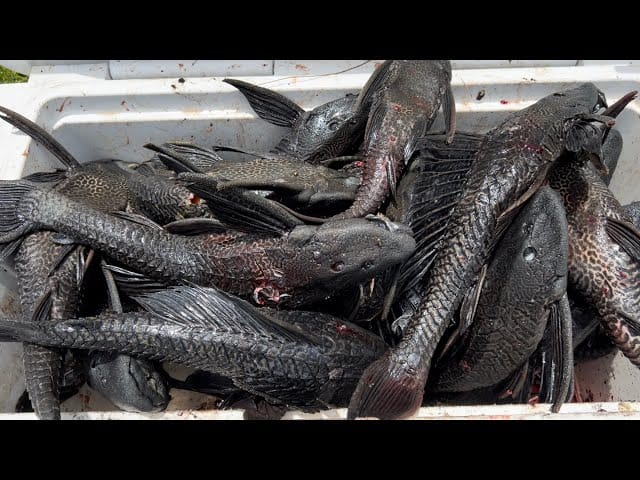
The word “catfish” can be misleading here. These are not blue cats, channel cats, or flatheads — the familiar sport fish that anglers target with cut bait, live bait, or bottom rigs. Armored catfish belong to a different group, often recognized by their sucker-like mouths, bony plates, and prehistoric appearance.
That distinction matters because the public tends to hear “catfish” and think of food, tournaments, bank fishing, or muddy river holes. Armored catfish create a different kind of story. They are not prized sport fish in the usual sense, and their impact is tied less to rod-and-reel excitement than to hidden shoreline damage and ecological pressure.
Florida’s warm climate gives them an advantage. Slow-moving canals, lakes, ponds, and river edges can give these fish enough room to survive, reproduce, and spread. Once established, they become difficult to remove at scale, especially in connected waterways where fish can move, nest, and recolonize problem areas.
The result is a catfish issue that sits somewhere between fishing, invasive-species management, property protection, and wildlife conservation.
The Shoreline Damage Happens Where People Are Not Looking
The most serious problem is not simply that armored catfish exist in Florida waters. It is how they use the shoreline.
Male armored catfish dig burrows into banks and edges for spawning. In large numbers, that behavior can weaken canal banks, lake edges, pond shorelines, and riverbanks. What may start as a few holes under the surface can become erosion, collapsing edges, murkier water, and expensive repair problems for homeowners, HOAs, municipalities, and land managers.
Anglers and property owners trying to identify the fish can use the FWC sailfin catfish profile to separate these armored invaders from the native and sport catfish people are more used to seeing. The difference is more than cosmetic. A channel catfish may be part of a healthy freshwater fishing culture. An established armored catfish population can become underwater property damage with fins.
That is why this issue can be underestimated. Pythons are visually dramatic. Lionfish have a clear saltwater invasion narrative. Armored catfish are less obvious, especially in stained ponds or canals where the damage may show up before the fish themselves become a neighborhood conversation.
Why Manatees Make This More Than A Pond Problem
The shoreline story is only part of the concern. Armored catfish have also become associated with manatee harassment because their sucker-like mouths allow them to attach to manatees and scrape algae from their skin.
That behavior does not mean the fish are hunting manatees in the way a predator attacks prey. The concern is different: irritation, stress, and repeated disturbance. Manatees already face pressure from boat strikes, cold stress, habitat changes, and food availability. A swarm of clinging fish adds one more burden to an animal that often depends on conserving energy, especially during colder periods.
This is where the story becomes more emotionally powerful. A damaged pond bank may interest property owners. A stressed manatee gets broader attention because it turns the armored catfish from a nuisance fish into a visible conservation issue.
The pressure point is manatee stress signal. If people see armored catfish attached to manatees, the problem becomes easier to understand. But the management challenge remains difficult because the fish live in the same warm, slow freshwater areas that can attract manatees and other wildlife.
The Aquarium-Release Lesson Florida Keeps Relearning
Many invasive fish stories in Florida trace back to a familiar pattern: animals bought for aquariums, ponds, or ornamental use eventually become too large, too difficult to keep, or unwanted. When released into the wild, a private decision becomes a public ecological problem.
Armored catfish fit that warning. Their sucker mouths made them popular as algae-eating aquarium fish, but Florida’s climate can turn a released pet into part of a breeding population. Once those fish enter canals, ponds, or connected waters, removal becomes much harder than prevention ever would have been.
The broader USGS Orinoco sailfin catfish profile helps show why this group of fish matters beyond one neighborhood pond. Established populations, burrowing behavior, and movement through suitable waters make them a management issue rather than a simple cleanup task.
This is the uncomfortable lesson: Florida cannot solve every invasive species problem after it becomes visible. The smarter strategy is preventing releases before they create a self-sustaining population. Once a fish is reproducing in the wild, the conversation shifts from prevention to containment.
How Armored Catfish Compare With Florida’s Familiar Catfish
Part of the confusion comes from language. Calling them catfish puts armored invaders next to popular sport species in readers’ minds, even though their role in the water is very different.
| Category | Armored Catfish | Familiar Sport Catfish |
|---|---|---|
| Main identity | Nonnative sucker-mouth fish with bony plates | Blue, channel, or flathead catfish targeted by anglers |
| Angler value | Limited sporting value and difficult to clean | Popular for fishing, tournaments, and table fare |
| Key concern | Burrowing, erosion, spreading, wildlife disturbance | Fishery health, harvest rules, habitat quality |
| Typical habitat focus | Slow water, canals, ponds, lakes, shorelines | Rivers, lakes, reservoirs, holes, current breaks |
| Management issue | Removal and prevention of spread | Sustainable fishing and habitat management |
The key takeaway is that not all catfish stories belong in the same bucket. A trophy blue catfish can be a sign of a productive fishery. A growing armored catfish population can be a warning that a waterbody is absorbing damage below the surface.
The Next Pressure Points Are Local, Not Abstract
The armored catfish issue will not be decided by one dramatic capture or one viral video. The next signals will come from neighborhoods, canals, springs, and ponds where people start noticing bank holes, cloudy water, shoreline collapse, or fish clustering in shallow margins.
That local nature makes the story more urgent. A statewide invasive problem often becomes real only when it shows up behind a home, at a launch ramp, near a spring run, or around a retention pond that someone has to maintain. Once property owners and anglers recognize what they are seeing, the conversation can move from surprise to action.
The practical response starts with identification and responsible handling. Anglers should know the difference between native sport catfish and invasive armored catfish. Aquarium owners should never release unwanted fish into Florida waters. Property owners should treat repeated burrowing and shoreline damage as a warning sign, not just a cosmetic nuisance.
The deeper challenge is that armored catfish do not fit the usual fishing narrative. They are not the fish people brag about landing at sunset. They are the fish quietly changing banks, stressing wildlife, and reminding Florida that invasive species do not need to be famous to be costly.
The invasive armored catfish problem deserves attention because it connects three things Florida cannot afford to separate: waterway health, shoreline stability, and native wildlife pressure. If the state waits for every hidden invasion to become obvious, the damage will already be working below the surface.


