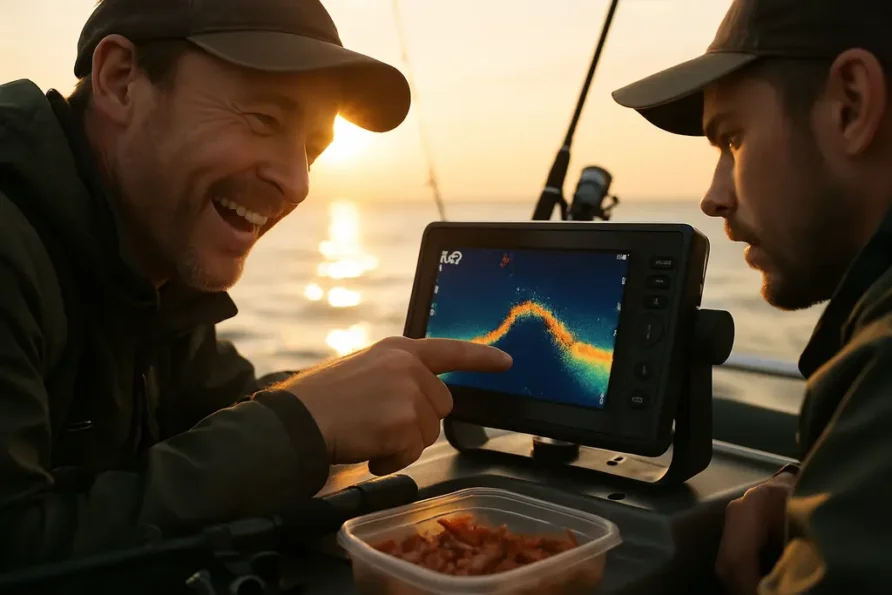
Catfish electronics earned serious attention in CatfishNOW’s September 2026 fishing gear coverage, and for good reason: the best tools are no longer just depth numbers on a small screen. The useful lesson for trophy-cat anglers is simple. Electronics should help you find bait, read structure, control the boat, and decide where a bait deserves time. If a screen does not improve one of those jobs, it is just an expensive dashboard decoration.
The September 2026 conversation touched sonar imaging, mapping, boat-control systems, castable units, and new scout-style devices. Some of the technology was already in practical use on guide-style catfish boats. Some was tied to patents or product announcements, which means anglers should treat it as a signal of direction rather than proof that a specific feature is ready for every boat. That distinction matters. Catfish tournaments are won by decisions, not by owning the newest screen.
Catfish Electronics That Changed Boat Decisions
Modern depthfinders in the September 2026 CatfishNOW gear discussion were framed as fish-finding tools that go beyond basic depth. Down imaging and side imaging were highlighted because they help anglers identify fish-holding habitat and structure, not just water depth. That fits the way many serious catfish crews already fish: find the channel edge, flat, hole, logjam, bait school, or current seam first, then decide whether the marks match the way catfish are likely feeding.
Catfish Electronics Rig Checks Before Launch
Before leaving the ramp, build a short electronics routine. Confirm transducer angle, screen brightness, battery condition, chart card access if you use mapping, and trolling motor connection if your setup ties boat control to your displays. New catfish electronics can show amazing detail, but a crooked transducer or weak battery will make a good unit look foolish. I like to idle past a known dock, piling, or drop near the ramp and confirm that the screen shows what I already know is there. That quick pass keeps you from spending the first fishing hour troubleshooting.
One of the most interesting signals came from Minn Kota and Humminbird. Water Wire reported that the brands had scheduled a major technology announcement for October 6, 2026, and it also described patent activity around sonar, trolling motors, and display coordination Minn Kota and Humminbird patents. Since October 6, 2026 had already passed by the date of this article, but the supplied research does not include the reveal itself, anglers should not guess at what was released. The safer takeaway is what the patents suggest: boat movement, sonar aim, and multi-screen timing are getting closer together.
Why Patents Matter To Catfish Crews
The August 11, 2026 patent described a sonar array mounted on a trolling-motor propulsion unit that can be independently steered by a second motor, allowing the sonar to maintain orientation toward a target while the boat moves. A June 2026 patent application described a precise-time network that uses a common clock and scheduled ping intervals to synchronize sonar pinging among multiple fish finders, with the goal of reducing crosstalk and interference. Another patent application published in August 2026 described a curved transducer with individually controlled electrode segments, allowing sonar energy distribution within the imaging cone to change based on user settings, fishing modes, or environmental conditions.
For a catfish angler, the practical meaning is not “buy whatever comes next.” The practical meaning is: expect electronics to keep pushing toward steadier target tracking, cleaner screen separation, and better control over how sonar energy is used. If you run two or three displays now, start paying attention to interference. If one screen gets noisy every time another unit pings, adjust frequencies where your current gear allows it, spread transducers when practical, and save clean settings for shallow, mid-depth, and deep-water work.
Reading Sonar Without Chasing Ghosts
The easiest mistake with advanced sonar is chasing every pretty mark. Catfish are not bass on a video game map. A blue catfish on a cold deep flat, a flathead tucked close to cover, and channel cats feeding around bait can all demand different decisions. Screens help most when they confirm a pattern: bait plus structure, fish marks plus current, or repeated returns along the same contour.
Side Imaging And Down Imaging Habits
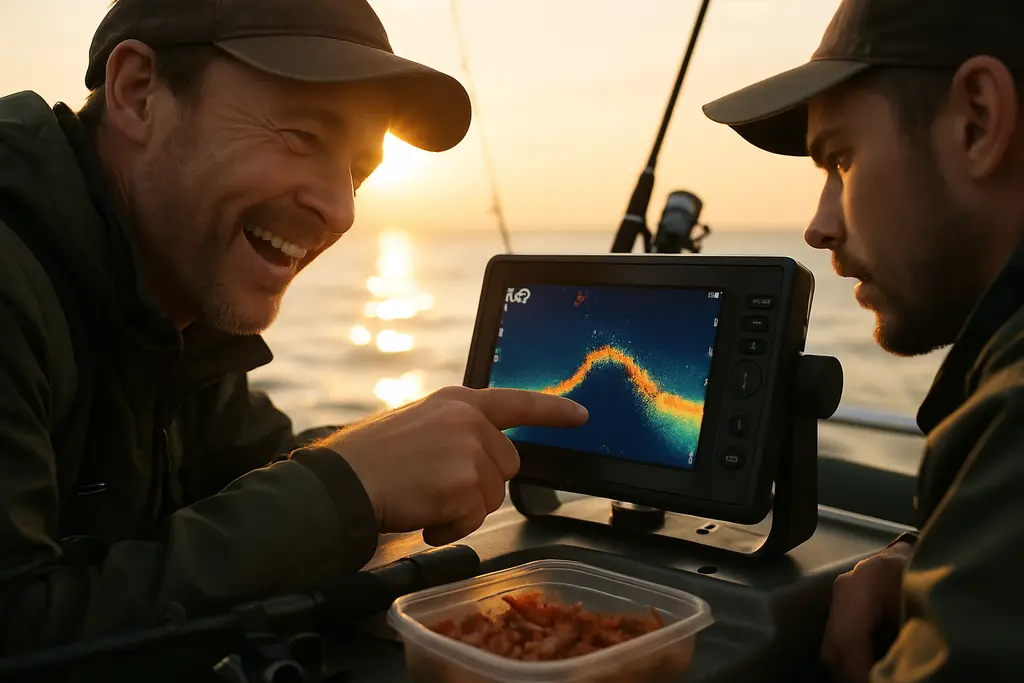
Use side imaging to search, then use down imaging or 2D sonar to verify depth and vertical position. On a reservoir flat, make long passes at a steady idle and mark bait schools, hard breaks, and isolated cover. In river current, resist the urge to zigzag too much; clean passes make it easier to compare one bank seam with the next. If you see bait on the edge of a hole and larger returns slightly downstream, that is more useful than one random mark sitting alone in empty water.
CatfishNOW’s winter-focused electronics examples mentioned color DownScan sonar and side scan use around baitfish schools, including shad, on deep flats. The reported tactic was to look for blue catfish during cold months by spotting suspended marks off bottom and reading elongated color returns as possible catfish. That does not mean every long mark is a cat. It means the angler is using shape, position, bait presence, and season together. That is the kind of screen discipline worth practicing.
Castable smart sonar adds another angle, especially for bank anglers, kayak anglers, or scouts checking a small area before moving a boat. Research notes from Brad Wiegmann’s recent electronics coverage described castable systems with multiple CHIRP frequency bands: a narrow band around 675 kHz with a 7-degree cone, a medium band around 240 kHz with a 20-degree cone, and a wide band around 100 kHz with a 47-degree cone. The same notes described bathymetric mapping, split-screen modes, battery-powered transducers, and smartphone tethering. For bank catfish work, that can help you map a casting lane, confirm a drop, and avoid soaking bait in a featureless stretch.
Boat Control And Screen Discipline
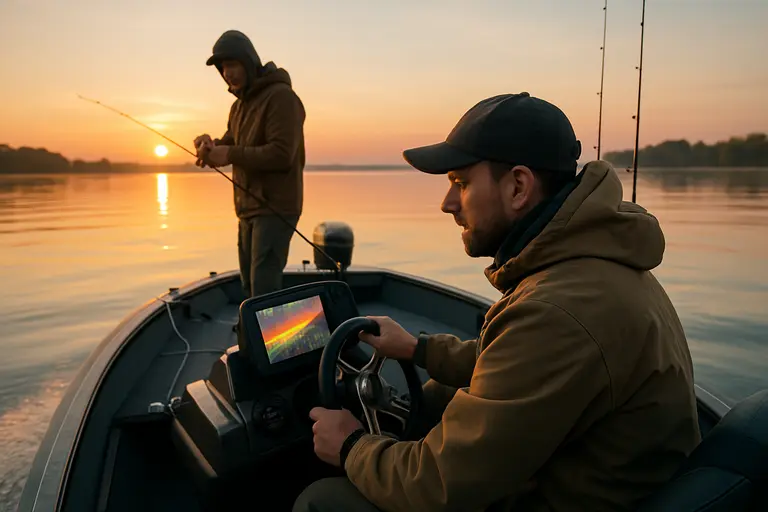
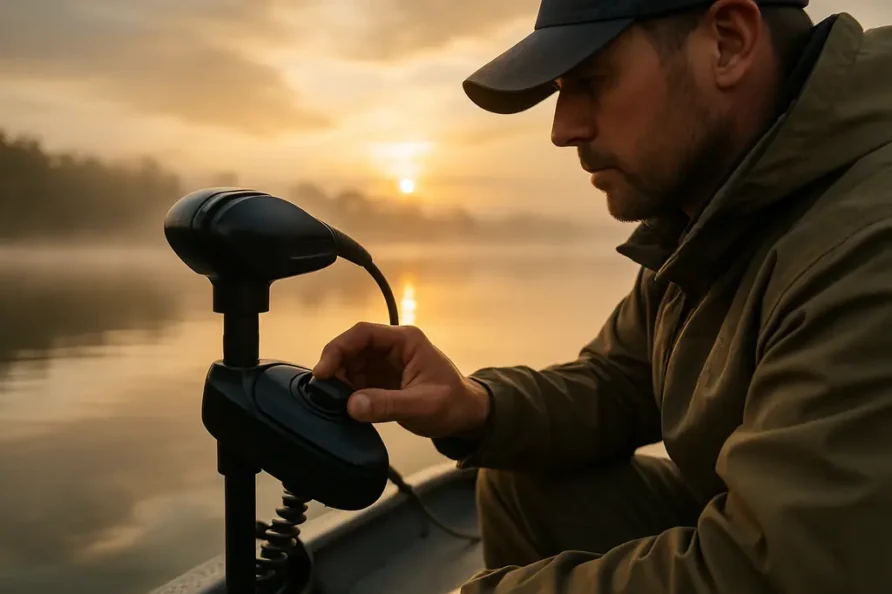
Electronics only pay off if the boat can hold the spot. The September 2026 research included a guide-boat setup using a Minn Kota Ulterra trolling motor, Power-Pole Blade shallow-water anchors, and Garmin electronics to improve fish locating, boat control, and structure targeting. The brand mix is less important than the system idea. Find the feature, control the boat, then fish the bait where the screen told you the opportunity exists.
Use Screens To Set The Drift Or Anchor
Before anchoring, make one search pass and one setup pass. On the search pass, mark bait, cover, depth changes, and fish returns. On the setup pass, decide whether you need to anchor above the target, drift across it, suspend baits, or set rods along a contour. If you drop anchors first and ask questions later, you will waste prime time repositioning.
If your boat uses shallow-water anchors, treat them as precision tools, not parking brakes. In shallow current, anchor just far enough from the marked cover to present baits naturally. In deeper water, a trolling motor can help hold angle while rods cover different lanes. If you fish tournaments, assign one teammate to screen watching and one to bait management during setup. That prevents the classic circus act where everyone stares at the display while the boat slides past the target.
For crews building a full setup, electronics need to match rod layout, battery capacity, and the way the team fishes. A giant display does not help if it blocks rod access or forces the driver to turn away from traffic. A bow screen helps only if someone can use it while managing the trolling motor. If you are comparing imaging systems for catfish-specific setups, this related breakdown on live imaging sonar for catfish pairs well with the September 2026 gear discussion.
What September 2026 Electronics Mean For Catfish Teams
The CHASING CanFish F2, announced on September 30, 2026, added another wrinkle to the gear conversation. It was described as a 3-in-1 AI fishing scout combining dual-frequency sonar, underwater vision through a motorized camera, and AI-assisted Auto Cruise to scan, detect, and visually confirm fish and structure CanFish F2 announcement. For catfish anglers, the phrase “visually confirm” is the key. Sonar can suggest. A camera may help verify structure, cover, or fish presence when water clarity and conditions allow.
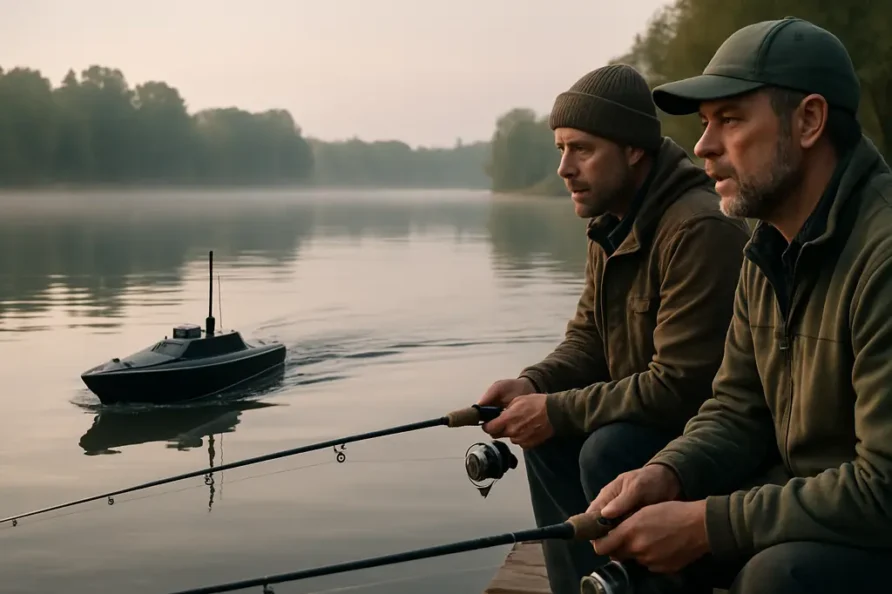
That said, do not let a scout device replace fishing sense. Use it as a pre-fishing tool around docks, bridge areas, marina edges where legal, brush, or specific structure. Keep sessions short. If the device confirms bait, cover, or fish, mark the spot and build a presentation plan. If it shows nothing, move. The value is not entertainment; the value is reducing bad sits.
ICAST was held in July 2026, and CatfishNOW’s September 2026 coverage noted that many new electronics and fishing products were unveiled there with possible benefits for catfish anglers, including sonar imaging, mapping, and boat outfitting. The smart response is not to buy everything. The smart response is to define your weak point. If you miss structure, upgrade imaging or learn settings. If you find fish but cannot stay on them, improve boat control. If bank spots are a mystery, consider mapping and castable sonar. If multiple screens fight each other, focus on frequency management and clean installation.
The real lesson from September 2026 is that catfish electronics reward anglers who practice. Spend a non-tournament afternoon scanning without rods. Save waypoints only when you can explain why they matter. Take notes on water level, current, bait depth, and screen returns. Then fish those spots later and compare what the rods tell you. That feedback loop is where gear turns into skill, and skill is still what puts big cats in the net.