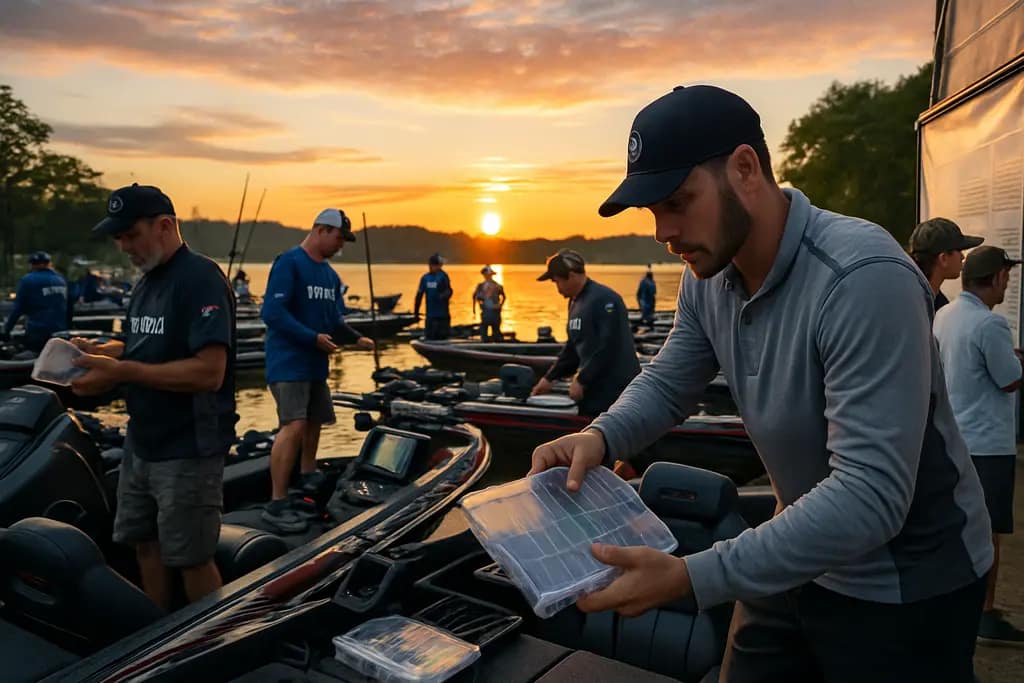

A bass tournament is not a tackle fashion show. It is a timed test of legal gear, fish care, boat control, and quick decisions. Big Bass Classic gear should help you cast cleanly, protect fish, stay within the rules, and keep your boat running without turning the deck into a garage sale. As of August 20, 2026, Big Bass Tour rules include limits on real-time sonar use, artificial bait, casting-only methods, boating safety, and legal fish handling, so your equipment plan needs to start there, not at the lure wall.
Big Bass Classic Gear Starts With Rules
The smartest anglers pack from the rulebook forward. Big Bass Tour rules state that, starting October 14, 2024, only one real-time sonar transducer may be in operation per boat during competition hours, and backup real-time sonar units must be powered off. The rules also require bass to be caught with artificial bait by casting only, prohibit live bait and trolling, and warn that failure to comply can lead to disqualification Big Bass Tour rules. That means your best rod locker does not matter if your electronics, lure choices, or boat operation put you outside the lines.
Big Bass Classic Gear Compliance Check
Before practice, build one checklist for legal fishing and one for boat operation. Keep them separate. Legal fishing covers what is tied on, how the lure is presented, and how many rods are in active use. Boat operation covers engine safety, kill-switch use, legal lighting, life jackets, livewell function, and any insurance or license paperwork your event requires. This is where many anglers lose time: they think preparation means sharpening hooks, then spend the morning hunting for a life jacket or digging for registration papers.
Build your Big Bass Classic gear around a simple tournament flow: launch, idle safely, fish with one active presentation, care for each bass, record weight or length, then return to casting. If a tool does not support that flow, it belongs in storage or in a backup box, not scattered across the front deck.
- One legal active casting setup, with backup rods secured and out of the way.
- Artificial lures only, with no live bait in the boat.
- One operating real-time sonar transducer during competition hours.
- Kill-switch lanyard, approved life jackets, lighting, and required documents.
- Working livewell, aeration, fish-care supplies, and a dependable dip net.
- Digital scale, measuring board, cull tags, log sheet, pliers, scissors, and spare line.
Big Bass Classic Gear For Electronics Discipline
Electronics should help you make faster choices, not tempt you into a rule problem. With the one real-time sonar transducer rule in place, choose your operating forward-facing sonar before takeoff and confirm every backup live unit is off. If you run Humminbird MEGA Live, Garmin LiveScope, or Lowrance ActiveTarget, treat that active transducer like an official piece of tournament equipment, not a casual accessory.
One Live Transducer Means Better Boat Habits
The one-transducer limit pushes anglers to get more value from mapping, side imaging, down imaging, CHIRP sonar, and 360-style information where legal. Use those tools to form a milk run before competition hours: grass edges, brush, points, hard spots, shade lines, and drop-offs. Then use real-time sonar as a confirmation tool rather than a crutch. That keeps your eyes moving between screen, cast angle, wind, and boat position.
Your Big Bass Classic gear should also include power discipline. Screens, pumps, and trolling motors all draw from the same tournament clock. Charge batteries fully, label power switches, and carry basic electrical tools. If electronics are a major part of your setup, review practical battery planning for tournament anglers so a weak connection does not steal your best window.
Livewell Management For Heavy Fish
A big bass is only valuable at weigh-in if it arrives in strong condition. That starts with the livewell. Check pumps before you leave home, then check them again at the ramp. Fill the well with clean lake water, avoid crowding fish, and keep lids closed as much as practical to reduce light and stress. Use a net that protects slime coating, wet your hands before handling fish, and return fish to water quickly after weighing or measuring.
Heat And Oxygen Management
Warm water is hard on bass. Texas Parks & Wildlife states that at water temperatures above 80 degrees Fahrenheit, oxygen can drop to lethal levels below 2 ppm in about 30 minutes without oxygen injection, and the agency discusses oxygen systems, micro-bubble diffusers, and cooling livewell water by 5 to 10 degrees with ice as fish-care tools Texas Parks & Wildlife livewell guidance. For tournament anglers, that is not theory. It is a reminder to test aeration, recirculation, and any oxygen setup before the first cast.
Do not wait until the lake is hot and the livewell smells bad to start caring for fish. Freeze bottles of water or prepare clean ice in advance if your event and local rules allow cooling. Keep additives only if they are accepted by your tournament rules. The best system is boring: steady oxygen, cooler water, clean plumbing, careful handling, and quick weigh-in planning.
Measuring, Culling, And Tackle Control

Hourly big-bass formats reward exact information. A digital scale, legal measuring board, cull tags, and a pencil-and-paper log can save arguments with yourself. Record the time, area, bait, approximate weight, and condition of each fish. Even if the event is built around a single biggest bass rather than a five-fish limit, knowing what you caught and where you caught it helps you decide whether to stay, rotate, or change lure style.
Keep The Deck Ready To Cast
Deck control is part of tackle control. Lay out only the rods you truly plan to use. Secure spare combos so they do not snag clothing, net mesh, or your partner’s line. Keep pliers, scissors, hook file, spare hooks, weights, and leader material in the same tray every time. A bass tournament has enough chaos from wind, boat wakes, and short feeding windows. Your storage system should not add more.
For lures, think in roles: one moving bait for covering water, one bottom-contact bait for targets, one finesse option for pressured fish, and one reaction bait for quick angle changes. The research supports artificial bait and casting-only methods for these events, so leave anything outside that lane at home.
Safety, Weather, And Spare Equipment
Tournament fishing is still boating. Wear the required life jacket when the combustion engine is running, connect the ignition kill switch, and check lights before daylight travel. Keep a small first-aid kit, rain gear, sun protection, polarized sunglasses, gloves, and drinking water where you can reach them. Weather does not need to be dramatic to hurt performance; wet sleeves, burned hands, or glare on the water can turn good decisions sloppy by midday.
Spare Parts Reduce Lost Fishing Time
Carry spare line, hooks, sinkers, split rings, terminal tackle, reel oil, a prop tool, a basic tool kit, and a spare prop if your boat setup calls for it. None of that makes you a better caster, but it keeps a small problem from becoming a long idle back to the ramp. The same thinking applies to sunglasses, gloves, and rainwear. If one item is vital to fish safely or comfortably for a full day, pack a backup or a serviceable alternative.
Good anglers are not lucky because nothing breaks. They look lucky because they can fix the small stuff in three minutes and get back to fishing.
Why Big Bass Classic Gear Wins Clean Weigh-Ins
Big Bass Classic gear is not about owning every tool in the catalog. It is about matching equipment to tournament rules, fish welfare, and fast on-water decisions. The best setup keeps you legal, keeps bass alive, keeps the boat safe, and keeps your hands free to cast.
Practice The Whole System
Run a mock tournament day before competition. Power up electronics under the same one-transducer plan, make casts with only your legal setups, net and measure a practice fish if allowed, open the livewell, log the catch, retie, and move. Time each step. You will find the loose scale, the missing cull tag, the weak pump, or the rod strap that always tangles at the worst moment.
That rehearsal is where equipment becomes confidence. Pack smart, test early, respect the rules, and treat every bass like it is headed to the scales. That is how tournament gear works for you instead of getting in your way.


