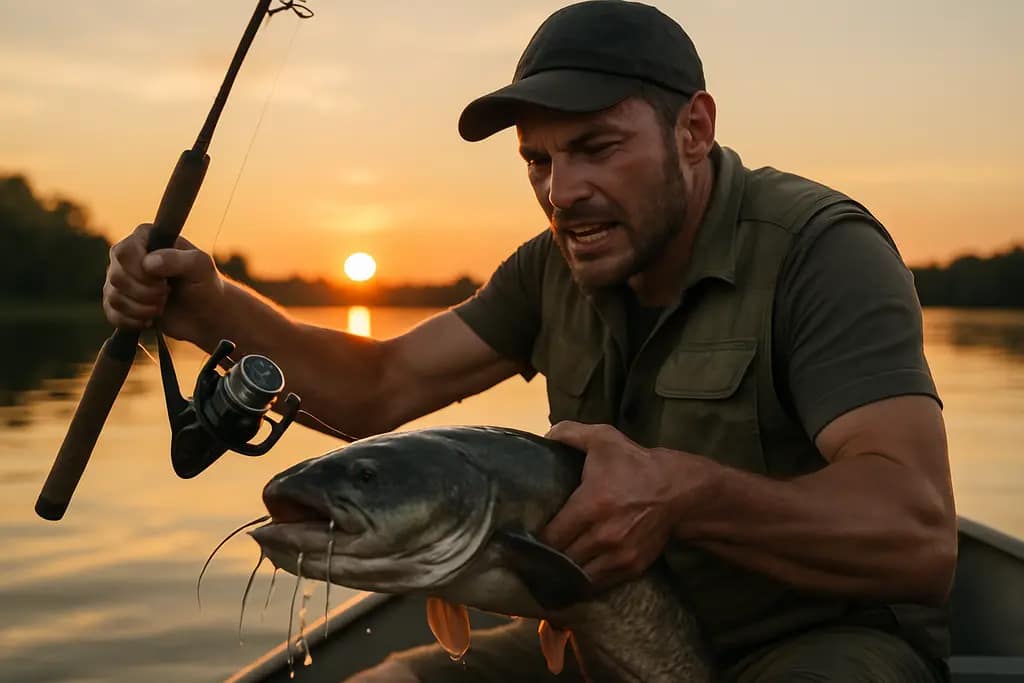

The 2026 MRM MegaBucs Pro Series Catfish Tournament in Vicksburg was listed for July 26, 2026, and the event window in the provided research also pointed to a July 27 championship date. Now that those dates have passed, Trophy Catfish Tactics should be studied like film after a hard tournament day: what matched the river, what wasted energy, and what deserves a spot on the next rig board. The official Vicksburg listing identified the July 26, 2026 event date for the 2026 MRM MegaBucs event.
I’m looking at this through two lenses: competitive fishing and athletic readiness. Big-river catfish work is not just bait, hooks, and hope. It is repeated casting, controlled boat position, safe fish handling, sharp communication, and enough stamina to keep making smart calls after hours of heat, current, and pressure. The research available here supports species-based bait choices, rig changes by water movement, structure-first location work, and slow drift control for blue cats. It does not provide verified final standings, winning weights, or exact productive coordinates from the Vicksburg event, so I will not invent them.
Trophy Catfish Tactics That Fit MegaBuc$
Big prize events reward teams that reduce random decisions. Before the next major catfish stop, I want every angler on the boat to know three things before the first bait hits water: the target species, the structure plan, and the adjustment trigger. If the team is after blue catfish, the research points toward current seams, main river channels, large reservoirs, and baitfish-driven feeding. If the team shifts toward flatheads, the play changes to live prey near heavy cover such as submerged timber, logjams, and undercut banks. Channel cats are described as generalists, so they should not drive the whole strategy unless the event format or conditions make them part of a weigh-in plan.
That species split matters because it changes every part of the system. Blue catfish call for fresh-cut bait such as shad, skipjack, or herring when available. Flatheads are tied much more closely to live bait, especially near cover and at night. The species, bait, habitat, and rig all need to talk to each other. If they do not, you are training hard but fishing loose.
Build The First Two-Hour Plan
My tournament warmup starts before launch. I like a two-hour opening plan because it is long enough to test a real pattern and short enough to prevent stubborn fishing. Pick one primary species, one bait style, and one structure type. For example, a blue-cat opening plan might mean fresh-cut bait on channel edges and current seams. A flathead opening plan might mean live bait near heavy cover with enough boat control to keep the bait in the zone.
Write down the trigger for change. That trigger could be no quality bite after a full rotation, bait getting fouled, current pushing the presentation out of position, or marks and baitfish not matching what you expected. For more event-specific planning context from an earlier Vicksburg catfish stop, the site’s MegaBuc Vicksburg lessons piece is a useful companion.
Read Species Before You Rig
A rig is not just tackle; it is a decision about how a catfish will meet the bait. Angler’s Pro Tackle describes blue cats as fish that use current seams, main river channels, and schooling baitfish, while flatheads are described as ambush predators that favor live prey around heavy cover; the same guide also lays out bait and rig options for channel, blue, and flathead catfish in its catfish species and rigs guide.
That tells me the pre-tournament checklist should start with a species read, not a favorite rig. Too many teams rig from habit. That is like doing the same gym workout for every sport and wondering why matchday movement feels off. If the water says blue cats are feeding on baitfish along current breaks, fresh-cut bait and controlled drift or anchor sets make sense. If the read says flatheads are tucked into cover, the team needs live bait, stronger abrasion planning, and a way to keep fish from turning into wood or rock.
Trophy Catfish Tactics Rig Check
Trophy Catfish Tactics become cleaner when every rig has a job. Use a slip sinker, often called a Carolina rig, in calmer water when you want a fish to take bait with little resistance. Use a three-way rig in current when the bait needs to stay pinned near a target zone. Use a slip-float rig around snaggy structure or when you need to lift bait off the bottom. Those are not fancy choices. They are simple equipment answers to water movement and cover.
| Condition | Supported Rig Choice | Team Cue |
|---|---|---|
| Calm Or Still Water | Slip Sinker Rig | Let the bait feel natural and reduce resistance. |
| Current Or Holding A Spot | Three-Way Rig | Keep bait near the strike zone without uncontrolled drag. |
| Snaggy Cover Or Suspended Bait | Slip-Float Rig | Lift bait off bottom and manage hang-ups near structure. |
For trophy-class gear, the research supports main line in the 40- to 60-pound range, braid or heavy mono, with leaders of similar strength when cover is part of the equation. Hook sizing also needs to match bait size. The research lists 5/0 to 8/0 circle hooks or wide-gap hooks for larger blue and flathead baits. The practical training cue is simple: every angler should be able to tie, inspect, and replace the chosen rig under time pressure without turning the deck into a knot workshop.
Rig And Boat Control Drills
Boat control is where the athlete side of catfishing shows up. Anchoring, bumping, drifting, and fan-casting all ask for timing and repeatable movements. When fish are concentrated on structure, anchoring or controlled bait placement gives the team a chance to work a specific target. When fish are scattered, drifting or fan-casting lets the boat cover more water. For blue cats, the research supports a slow drift under about 1 mile per hour so sinkers tick bottom rather than plow through it.
That slow-drift detail is not small. If the sinker is dragging hard, the bait may look wrong, the hook may foul, and the angler may confuse bottom contact with a bite. If the rig never touches, the bait may be above the feeding lane. The crew needs a shared language: tick, drag, lift, reset. Say it out loud. The best teams are not silent heroes; they are coordinated athletes who report what the rod is telling them.
Practice Like A Boat Team
Build Trophy Catfish Tactics around drills, not wishes. On a practice day, run ten-minute stations. One angler controls speed, one monitors depth and structure, one watches rod angle, and one tracks bait condition. Rotate jobs. A strong catfish team should not collapse because only one person knows the setup.
- Drift-Speed Reps: Practice holding a slow drift and call out when the sinker ticks instead of drags.
- Anchor Reset Reps: Set above a target, fish the lane, then reset cleanly without crossing lines.
- Rig Swap Reps: Change from slip sinker to three-way to slip-float with a timer running.
- Bait Check Reps: Inspect fresh-cut or live bait on a schedule so dead water time does not pile up.
These drills sound basic until tournament pressure hits. Then the team that practiced them looks calm while everyone else is doing deck yoga around tangled leaders.
Tournament Fitness For Long Catfish Days
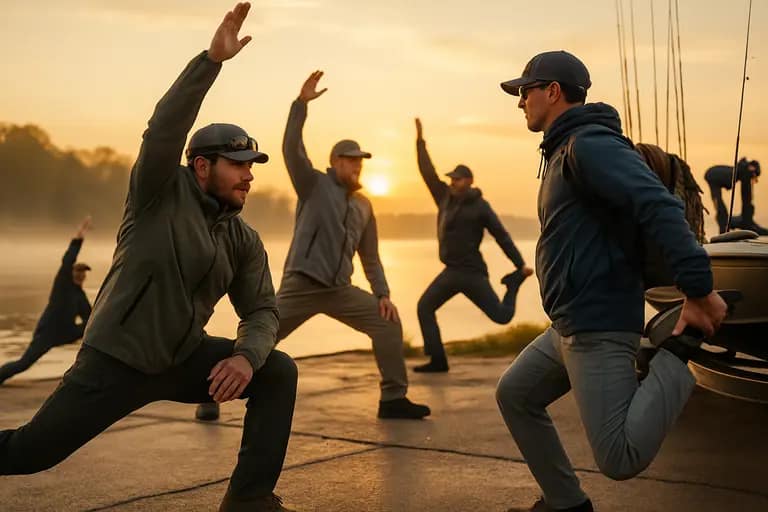
For MegaBuc$ review, Trophy Catfish Tactics should include the body. A big-river catfish day asks for grip endurance, hip strength, shoulder control, and enough conditioning to stay alert. This is not medical advice; it is practical preparation from someone who treats fishing like competition. If you cannot squat safely to lift gear, brace while fighting a fish, or handle repeated casts without sloppy form, your decision quality drops right when the bite window gets interesting.
My favorite off-water circuit is simple: loaded carries for grip and posture, band rows for upper-back control, hip hinges for safe lifting mechanics, and light rotational core work for rod control. Keep the effort moderate enough that you can repeat it week after week. On the water, use the same mindset. Trade jobs before fatigue turns into mistakes. The angler who has been staring at a rod tip for hours may need to move, hydrate, and reset while another teammate takes the watch.
Fish Handling Is Part Of Performance
The research recommends paying attention to legal, safety, and conservation factors, including circle hooks where required or encouraged, live-bait regulations, and proper trophy fish handling. From a performance standpoint, fish handling is not separate from tactics. A trophy catfish that reaches the boat still has to be controlled, supported, and managed without chaos.
Practice the landing sequence before the event: who clears rods, who gets the net, who controls the leader, who documents the fish if rules allow, and who checks the deck for hazards. Support large fish laterally rather than hanging them vertically for long periods. Watch spines, hooks, and swinging sinkers. Tournament crews lose time and focus when the first big fish turns the boat into a wrestling mat.
What Trophy Catfish Tactics Mean After MegaBuc$
What should teams carry forward from the July 26-27, 2026 MegaBuc$ window? First, do not treat Vicksburg as a mystery box. The supported tactical themes are clear: match species to habitat, keep bait fresh or alive based on the target, choose rigs by water movement, focus on structure and current, and adjust boat control when fish are concentrated or scattered. The exact winning spots and final weights were not verified in the supplied high-authority sources, so the honest move is to build transferable habits instead of copying rumors.
Second, make the post-event review specific. Ask what species you truly targeted, whether the bait matched that species, whether the rig matched the current, and whether the boat stayed in the strike zone. Treat Trophy Catfish Tactics like a training block: test, record, adjust, repeat. That is how competitive anglers turn one tournament weekend into sharper decisions for the next one.


