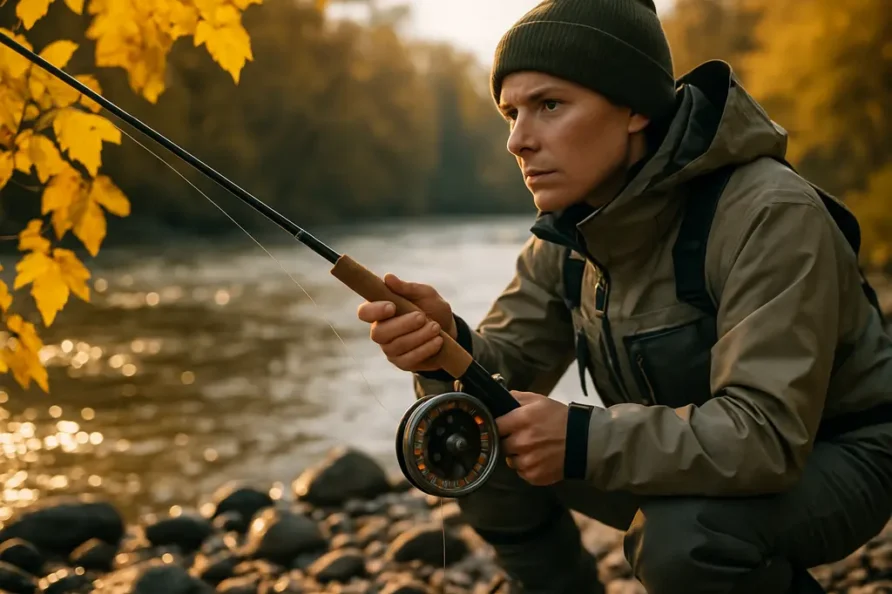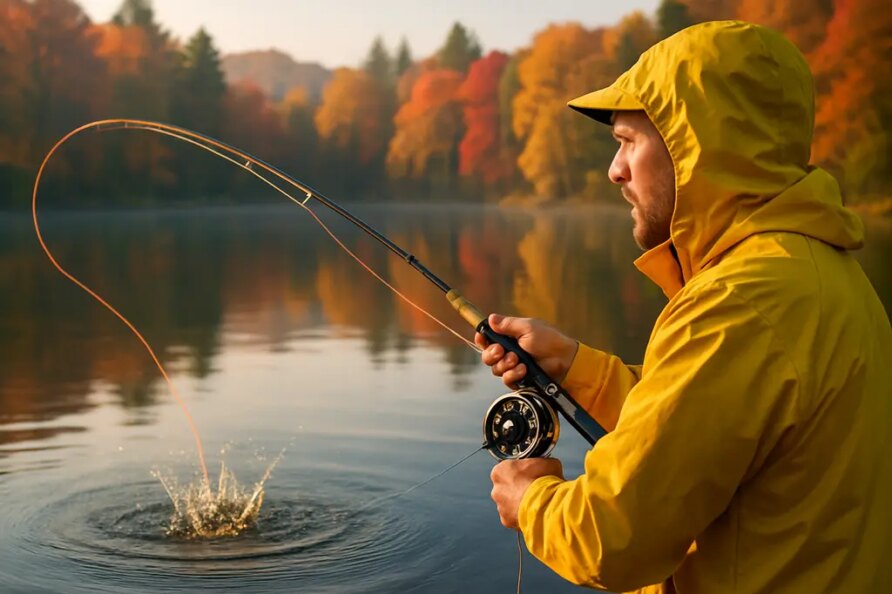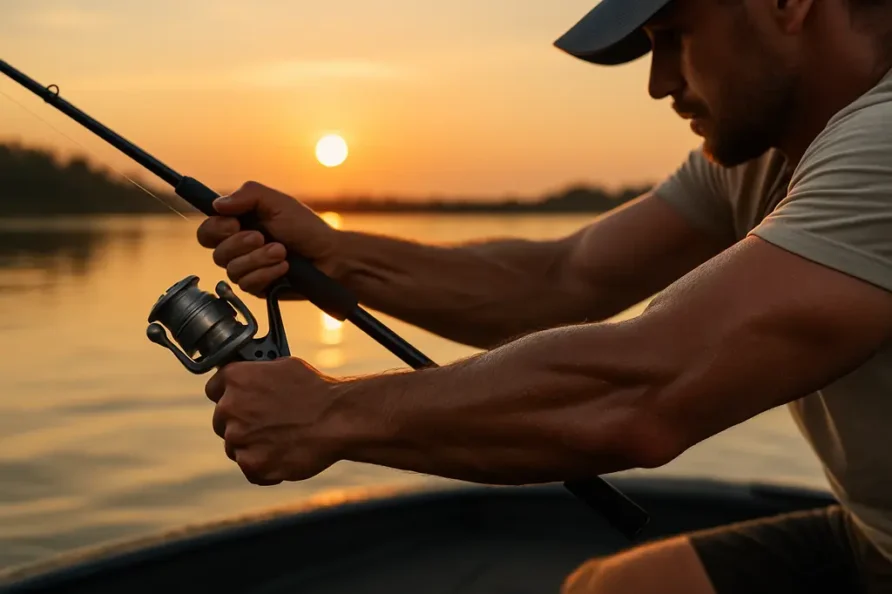
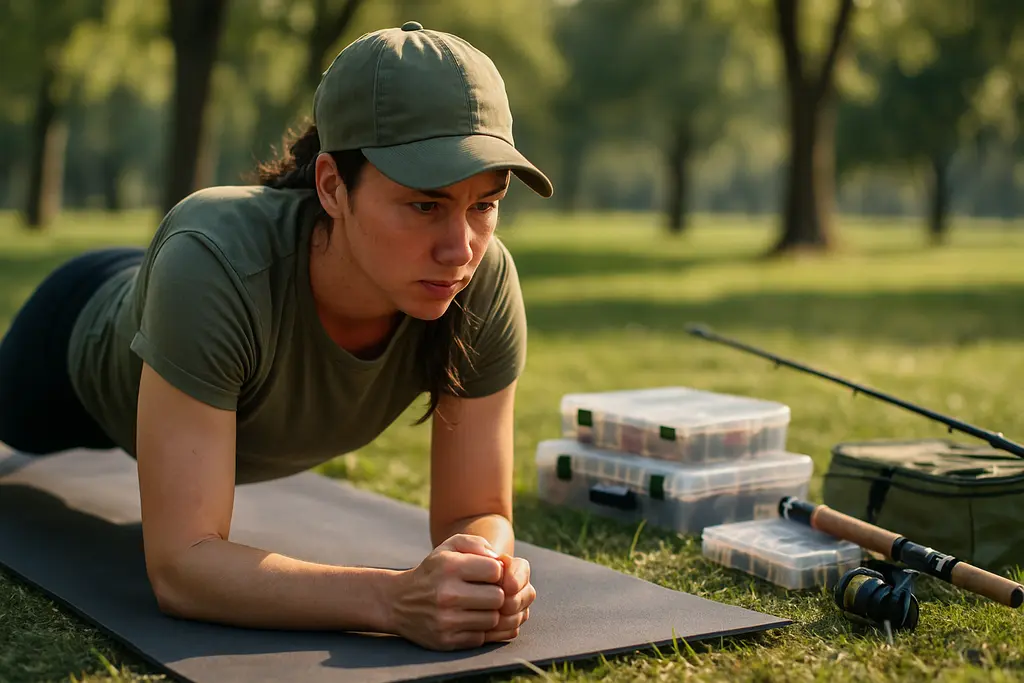
Catfish angler fitness is not gym vanity; it is boat control, rod control, and decision control after hours of standing, bracing, lifting gear, and fighting fish. I look at it through fish behavior: the best bite window does not care if your back is tight, your grip is cooked, or your balance disappears when the deck shifts. If you want cleaner hooksets and calmer pressure during a long fight, train the body that has to make those decisions.
Catfish Angler Fitness Starts With Core Control
Your core is the hinge between the rod and the ground. If that hinge wobbles, your shoulders and lower back start paying the bill. That matters in catfish competitions because anglers often hold awkward positions: knees bent on a boat deck, feet planted on uneven bank, torso rotated while keeping steady pressure. The goal is not to look like a powerlifter. The goal is to brace, breathe, rotate, and repeat without turning sloppy after the first hard run.
A useful research point comes from an 8-week unstable core-training program using tools such as BOSU balls, Swiss balls, and wobble boards among kayakers ages 14-19. The unstable-surface group made greater gains in trunk stability strength and dynamic trunk strength than traditional stable-surface core training, and the program also translated to better 200-meter sprint performance with p < 0.001 kayaker core study. Kayakers are not catfish anglers, so do not stretch the finding too far, but the overlap is useful: seated or standing athletes must transfer force through the trunk while water and body position keep changing.
Catfish Angler Fitness Core Drill Progression
Start simple, then make the surface less predictable. A smart progression is floor dead bugs, side planks, bird dogs, then controlled holds on a balance pad or wobble board. Keep each rep slow enough that you can breathe through it. If you cannot control your ribs and hips, the drill is too advanced for that day. A fish does not care how hard the exercise looked; it only exposes whether you can stay organized under pressure.
Use short sets before fatigue ruins form. For example, hold a side plank for 15 to 30 seconds, rest, then repeat on the other side. Add a light band row from a half-kneeling stance to mimic the pull-and-brace pattern of rod work. Keep catfish angler fitness specific by asking one question after every drill: did this improve my ability to stay stable while my hands are working?
Brace Before You Pull
Many anglers pull first and brace second. That is backward. Practice setting your feet, tightening your trunk, and then applying force. On the water, this can keep your rod angle steadier when a fish surges. During training, pair a core hold with a slow cable row or band row. Pause at the strongest position, then release with control. That pause teaches patience, and patience is often the difference between steady pressure and panic pressure.
Balance And Boat Stability Under Pressure
Balance is not just for kayak anglers or young athletes. It shows up every time you step over an anchor rope, shift around a cooler, reach for a net, or plant a boot on slick clay. Once fatigue hits, balance turns into a mental issue too. Anglers get rushed, shoulders rise, and the rod starts steering them instead of the other way around.
A systematic review of 22 studies with about 588 team-sport athletes found that core training more than twice per week produced larger gains in balance than two or fewer sessions per week, with a standardized mean difference of about 0.97 versus about 0.20 and a subgroup difference of p = 0.015 core training review. Again, team-sport athletes are not a one-to-one match for catfish crews, but the training lesson fits: frequent, controlled core work can support steadier movement when footing changes.
Catfish Angler Fitness On The Bank And Boat
Build balance in positions you actually use. Stand in an athletic stance and practice reaching to both sides without letting your knees cave inward. Step onto a low box, pause, and step down under control. Hold a rod or broom handle while you do it so your upper body learns to stay quiet. If you fish from a boat, practice turning your hips while keeping your feet planted. If you fish from the bank, train single-leg control because uneven shoreline footing rarely gives you a perfect platform.
Do not turn balance work into circus work. If the drill forces you to flail, it is not building competition skill. You want calm control. In fish terms, think like a heavy catfish holding steady rather than a baitfish scattering in panic.
Endurance, Grip, And Recovery For Long Events
Competition days punish small weaknesses. A weak grip can make you clamp too hard early, which burns forearms before the best window arrives. Poor endurance can make you sit when you should reset baits or check gear. A tired lower back can shorten your patience during the one fight that matters. Fitness for catfish anglers should blend upper-body strength, walking or cycling endurance, and recovery habits that let you train again without dragging soreness into the next session.
Strength That Carries To Rod Work
Train the pulling muscles: upper back, lats, rear shoulders, forearms, and trunk. Rows, farmer carries, dead hangs, and band pull-aparts are practical choices. Keep the grip work controlled. Crushing a gripper for random high-rep sets may make your forearms angry without helping your rod hand stay relaxed. Better: carry moderate weight for distance, then practice opening and closing the hand after each set. That teaches your hand to recover, which matters during long periods of bait checks, casting, and fish handling.
For endurance, use brisk walking, easy cycling, or similar aerobic work. You are training your ability to keep making good choices late in the day. If your competition setting includes heat, humidity, long walks, or repeated gear hauls, prepare for that gradually. A good plan does not bury you; it makes the last two hours feel less chaotic. For a deeper tournament-season angle, this piece on angler fitness tips fits the same performance mindset.
Fueling And Recovery Without Guesswork
Use common-sense fueling before and during long events. The research notes support carbohydrate intake before endurance efforts lasting more than 90 minutes and carbohydrate intake during longer activity if tolerated. For anglers, that means do not show up underfed and expect concentration to stay sharp. Pack foods you already know your stomach accepts. Competition morning is not the time to test a heroic snack plan.
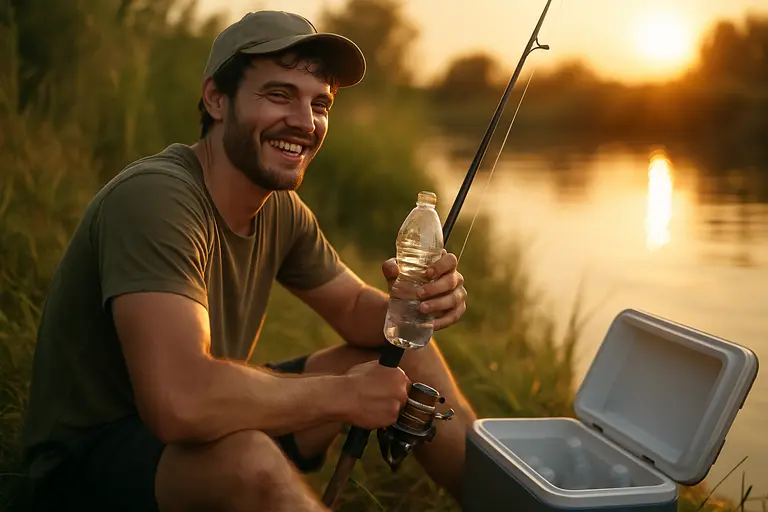
Hydration deserves the same respect. Long hours outdoors can mean steady fluid loss, especially in heat or humidity. Sip consistently instead of waiting until thirst gets loud. Include electrolytes when conditions call for it, and keep a spare bottle where you can reach it without digging through the boat. Recovery is just as plain: sleep, light mobility, rest days, and a hard stop if sharp pain shows up. Training through fatigue can build capacity; training through pain can cost you practice time.
- Three days per week: core stability, balance drills, and upper-back pulling strength.
- Two days per week: brisk walking, cycling, or low-intensity endurance work.
- Daily: short mobility for hips, trunk, shoulders, and wrists.
- Competition week: reduce heavy volume, keep movement crisp, and protect sleep.
Catfish Angler Fitness For Competition Readiness
The strongest competition plan is boring in the best way: repeatable, specific, and easy to trust under pressure. Train your core so your rod pressure has a solid base. Train balance so waves, mud, or a shifting deck do not steal your focus. Train endurance so the late bite window does not catch you sitting down mentally. Train grip so your hands stay useful instead of locked up.
Treat catfish angler fitness like part of your tackle system. You would not wait until launch time to learn a knot, and you should not wait until weigh-in week to learn how your body handles fatigue. Build the habits early, taper the workload near competition, and step onto the bank or boat with a body that lets your fish-reading skills do their job.