
Every serious catfish angler eventually faces the same question: drift fishing vs anchor fishing for catfish which one actually works better? I’ve spent enough time on rivers and lakes to know that there’s no simple answer. What works one day can fail the next, and what works in one location might not translate to another.
But that’s exactly what makes this debate so important. These two techniques represent fundamentally different approaches to finding and catching catfish. One is active and exploratory; the other is patient and precise. Understanding when and how to use each can be the difference between a slow day and a full cooler.
Understanding Drift Fishing for Catfish
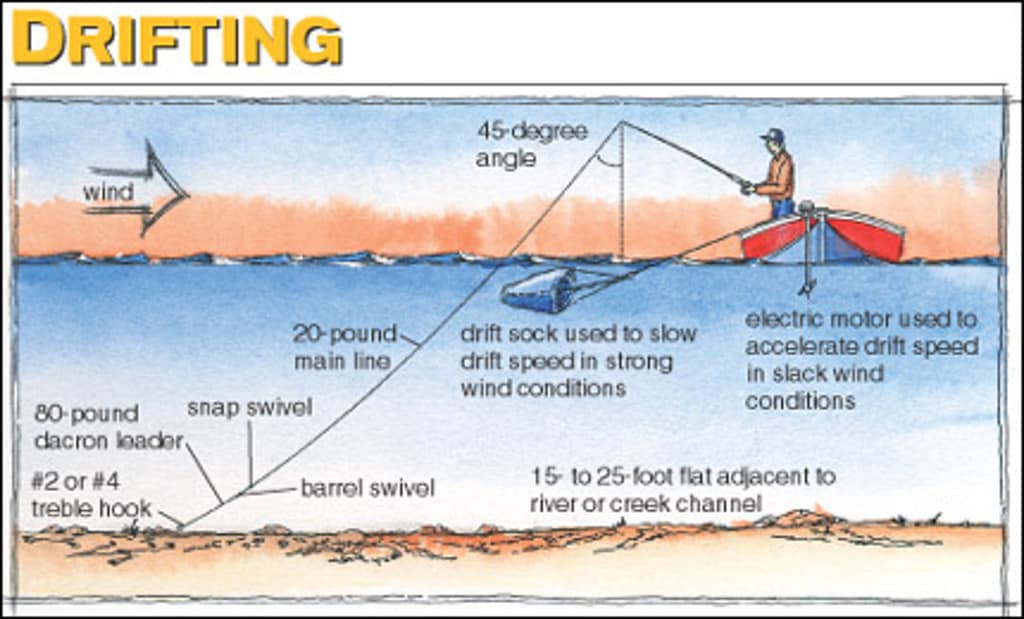
Drift fishing is all about movement. Instead of staying in one place, you allow your boat to drift naturally with the current or wind while dragging bait across large sections of water.
From my experience, this method excels when fish are spread out and actively feeding. By covering more ground, you increase your chances of locating productive zones. It’s a technique that rewards adaptability and awareness.
The setup is relatively straightforward: weighted rigs, multiple rods, and a steady drift across flats, channels, or ledges. The key is maintaining control over speed. Too fast, and your bait loses effectiveness. Too slow, and you’re not covering enough water.
What stands out most about drift fishing is its efficiency. You’re not waiting for fish to come to you you’re going to them.
The Strength of Anchor Fishing
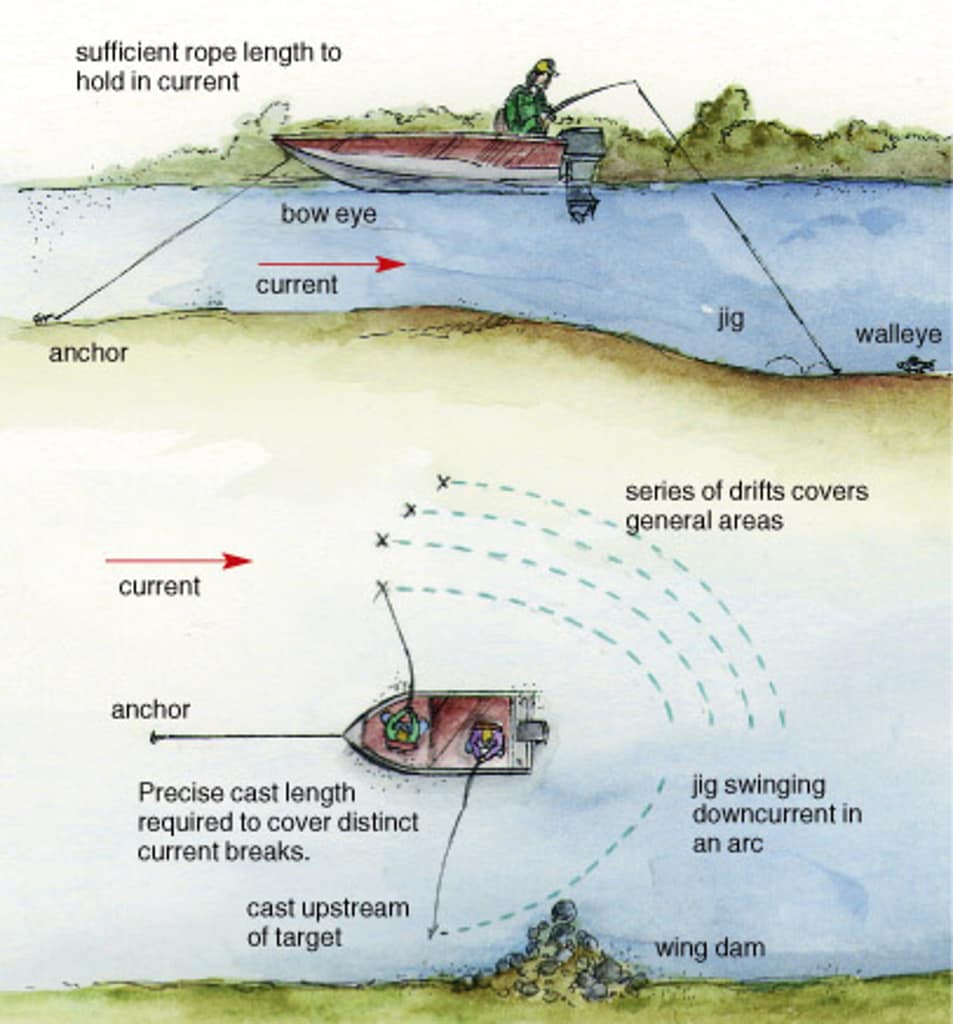
Anchor fishing takes the opposite approach. Instead of moving, you position your boat in a strategic location and let the fish come to you.
This method works best when you know where catfish are holding deep holes, structure, or current breaks. Once anchored, you can present bait precisely and keep it in the strike zone for extended periods.
I’ve found that anchor fishing shines when fish are less active or tightly grouped. In these situations, patience often outperforms movement. By staying put, you give catfish time to locate your bait through scent and movement.
There’s also a certain rhythm to anchor fishing. It’s slower, more deliberate, and often more relaxing. But don’t mistake that for being less effective. When conditions are right, it can produce some of the biggest catches of the day.
Key Differences: Movement vs Precision
When comparing drift fishing vs anchor fishing for catfish, the core difference comes down to strategy.
Drift fishing is about searching. You’re scanning the water, looking for signs of activity, and adjusting as you go. It’s dynamic and requires constant attention.
Anchor fishing, on the other hand, is about targeting. You rely on knowledge of the water and fish behavior to position yourself in the right spot. Once there, it’s about execution and patience.
Neither approach is inherently better. Each has its own strengths, and the real skill lies in knowing when to switch between them.
When Drift Fishing Wins
There are certain conditions where drift fishing clearly has the advantage. In my experience, it performs best when catfish are roaming and feeding aggressively.
Open water areas, large flats, and expansive reservoirs are ideal for this method. In these environments, fish are often scattered, making it difficult to target them from a fixed position.
Drift fishing allows you to:
- Cover more water efficiently
- Locate active fish faster
- Adapt quickly to changing conditions
It’s particularly effective during warmer months when catfish are more active and willing to chase bait.
When Anchor Fishing Takes the Lead
Anchor fishing becomes the better choice when fish are concentrated in specific areas. Rivers with strong current, deep channels, and structure-heavy environments often favor this approach.
In colder conditions or during periods of low activity, catfish tend to hold in predictable locations. This is where anchor fishing excels.
By staying in one spot, you can:
- Keep bait in the strike zone longer
- Build a scent trail that attracts fish
- Focus on high-probability areas
From my perspective, this method often produces larger, more consistent catches when fish aren’t actively moving.
The Role of Conditions and Environment
One of the biggest lessons I’ve learned when comparing drift fishing vs anchor fishing for catfish is that conditions matter more than technique.
Wind, current, water temperature, and structure all influence which method will be more effective. A strong current might make drifting difficult but ideal for anchoring. Calm water might favor a controlled drift.
For a deeper understanding of how environmental factors influence fish behavior, the National Oceanic and Atmospheric Administration provides insights into drift fishing vs anchor fishing for catfish and broader aquatic ecosystems.
Understanding these variables allows you to make smarter decisions on the water.
Can You Combine Both Methods?
One approach I’ve come to rely on is combining the two techniques. Starting with a drift allows you to locate fish. Once you identify a productive area, switching to anchor fishing lets you exploit it fully.
This hybrid strategy offers the best of both worlds. You use drift fishing to gather information and anchor fishing to maximize results.
In many ways, this reflects the modern approach to fishing flexibility over rigidity. The more tools you have, the better equipped you are to handle changing conditions.
Common Mistakes to Avoid
While both methods are effective, there are common pitfalls that can limit success.
With drift fishing, the biggest mistake is poor speed control. Without proper adjustment, your bait won’t perform as intended.
With anchor fishing, the issue is often location. Anchoring in the wrong spot can lead to long periods without bites.
In both cases, attention to detail is critical. Small adjustments can make a significant difference.
Which Method Really Wins?
So, in the debate of drift fishing vs anchor fishing for catfish, which one comes out on top?
The truth is, there’s no single winner. Each method has its moment, shaped by conditions, location, and fish behavior. Drift fishing offers mobility and discovery, while anchor fishing provides precision and consistency.
From my experience, the most successful anglers aren’t loyal to one method they’re adaptable. They read the water, understand the conditions, and choose the approach that fits the situation.
In the end, the real advantage isn’t in the technique itself. It’s in the ability to know when to use it. And that’s what separates a good day on the water from a great one.


