
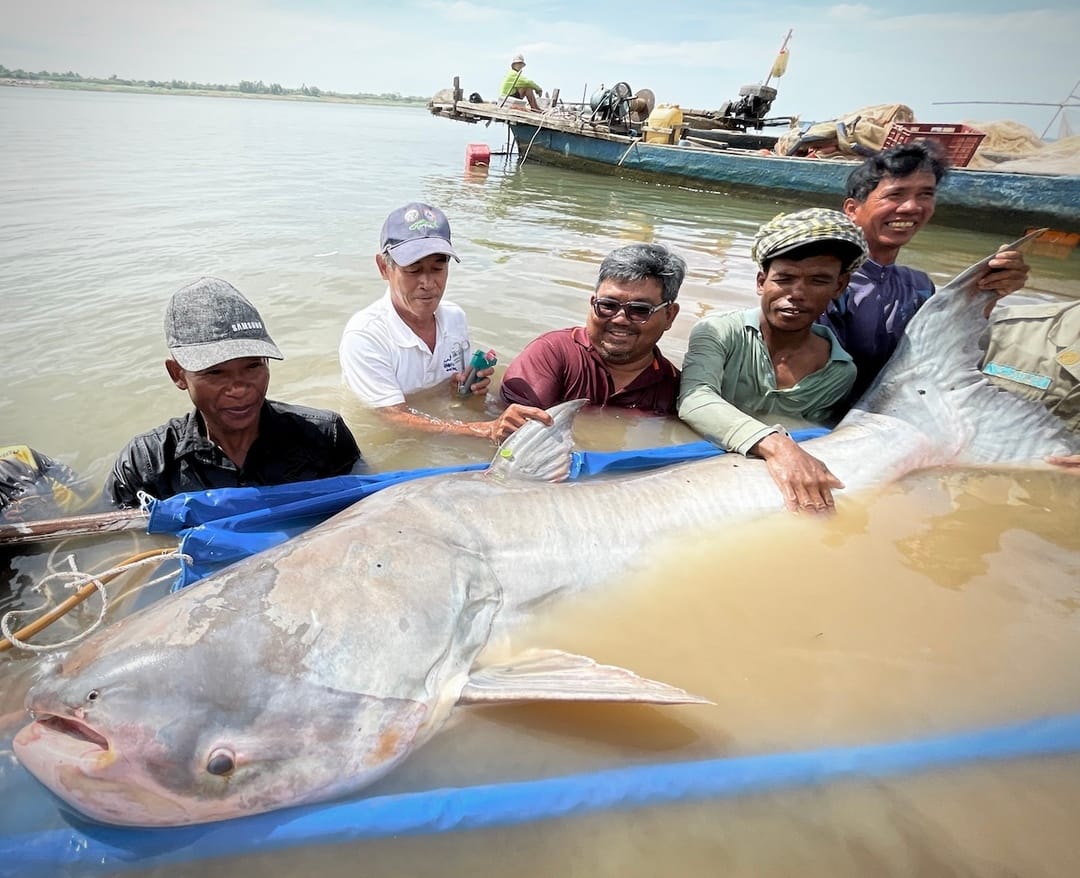

Catfish have long occupied a unique place in the global fishing economy. They feed families, support commercial harvests, attract sport anglers, and anchor traditions that stretch across entire river basins. Right now, though, the debate around catfish is becoming more urgent, because the health of the fishery is increasingly tied to the health of the rivers themselves.
I have been watching this tension sharpen in freshwater systems where demand for fish, energy, and development now collides with the ecological realities of migration, spawning, and habitat survival. The most revealing example is in the Amazon, where migratory catfish species are under growing pressure and the stakes extend far beyond one fishery.
Why The Debate Has Become So Urgent
When people hear the phrase fishing versus conservation, they often imagine a conflict between access and restriction. In practice, the real conflict is usually between short-term extraction and long-term viability. Catfish are resilient in the public imagination, but many populations are far more vulnerable than anglers or policymakers like to assume.
That vulnerability becomes especially clear with migratory species. Some Amazonian catfish travel extraordinary distances through connected river systems during their life cycles, depending on uninterrupted waterways, seasonal flooding, and intact nursery habitats. When those systems are altered, the damage is not always immediate and obvious. It can appear gradually, through weaker recruitment, fewer mature fish, and declining catches that are easy to misread as temporary fluctuations.
This is why Catfish Fishing vs Conservation is not an abstract environmental slogan. It is a practical question about whether the fishery can remain productive under mounting ecological pressure.
The Amazon Has Become A Defining Test Case
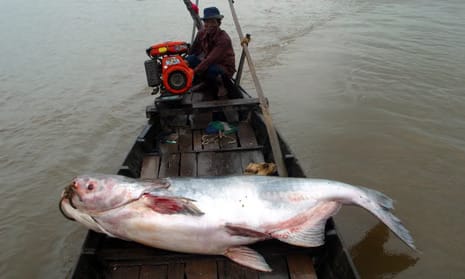
In the Amazon, large migratory catfish such as gilded catfish and laulao illustrate the scale of what is at risk. These fish are not simply residents of one lake or one short river stretch. They are part of a system that depends on movement across immense distances, linking spawning grounds, feeding areas, and floodplain habitats in ways that make river connectivity essential.
That is what makes infrastructure expansion such a consequential issue. Dams and hydropower projects can interrupt migration routes, alter the timing and volume of river flow, change water temperature, and reshape the flood pulses that many aquatic ecosystems need to function properly. Even when a river still appears substantial on the surface, its ecological logic may already be breaking down beneath it.
The result is a fishery under pressure from multiple directions at once. Habitat fragmentation is one threat, but it is rarely the only one. Overfishing, pollution, deforestation, sediment disruption, and climate stress can all compound the decline. What I find most striking is how often these forces reinforce one another. A population already weakened by habitat loss becomes less resilient to harvest pressure. A river already stressed by pollution becomes less capable of supporting juvenile survival. The cumulative effect can be severe.
The Costs Reach Beyond Ecology
The conservation case is compelling on biological grounds, but the human dimension is just as important. Catfish in the Amazon are not niche species admired only by specialists. They are part of working fisheries that supply food, income, and market activity across the region. When populations fall, the damage does not stop at biodiversity loss. It reaches fishing communities, traders, and households that depend on consistent supply.
That reality is worth laying out plainly:
| Pressure on Amazonian Catfish | Immediate Effect | Long-Term Risk |
|---|---|---|
| Dams and river fragmentation | Blocked migration routes | Population decline and fishery instability |
| Overfishing | Reduced breeding stock | Lower future harvests |
| Pollution and habitat degradation | Poor water quality and nursery damage | Weaker juvenile survival |
| Deforestation and climate stress | Altered river conditions | Reduced ecological resilience |
What this table makes clear is that the fishery and the ecosystem are not competing priorities. They are functionally inseparable. Once that becomes visible, the usual framing of conservation as an obstacle begins to look outdated.
What Responsible Management Actually Looks Like
In my view, the most constructive response is not to romanticize untouched rivers or vilify fishing communities. It is to treat fisheries management and river protection as a single policy challenge. That means moving beyond symbolic commitments and focusing on the conditions that allow catfish populations to reproduce, migrate, and remain harvestable over time.
The priorities are straightforward, even if the politics are not:
- Protect river connectivity so migratory routes remain open
- Set harvest rules that reflect breeding cycles and stock health
- Improve monitoring across borders and throughout the supply chain
- Reduce pollution and habitat degradation in critical nursery areas
These measures are not anti-fishing. They are the groundwork of a credible fishing future. Regions that fail to act now may preserve access in the short term, only to face sharper restrictions later when depleted stocks leave regulators with fewer options.
Why Regional Cooperation Matters
Amazonian catfish do not recognize national boundaries, and that alone changes the scale of the challenge. A species that migrates across multiple jurisdictions cannot be protected by isolated local rules. One country may tighten management while another expands disruptive development upstream. Without coordination, gains in one stretch of the basin can be erased elsewhere.
That is why cross-border conservation planning matters so much right now. The emerging regional response reflects a growing recognition that these migratory fish require shared standards, compatible monitoring, and a more unified view of freshwater governance. I see this as one of the most important shifts in the conversation. The focus is no longer just on preserving a species in principle. It is increasingly about preserving ecological function so the fishery itself remains economically and socially viable.
The Real Choice Facing Fisheries
The most misleading part of the public debate is the assumption that conservation and fishing stand on opposite sides. In reality, the real choice is between managed sustainability and unmanaged decline. Rivers can absorb pressure only up to a point. Once migration corridors are broken and breeding systems destabilized, restoration becomes more expensive, slower, and less certain.
That is why this matters right now. The warning signs are already visible, and the Amazon offers a clear lesson for catfish fisheries everywhere: when rivers lose connectivity, fisheries lose reliability. For anglers, commercial operators, and governments alike, the future of catfish will depend on whether conservation is treated not as a restraint on fishing, but as the operating condition that makes fishing possible at all.


