
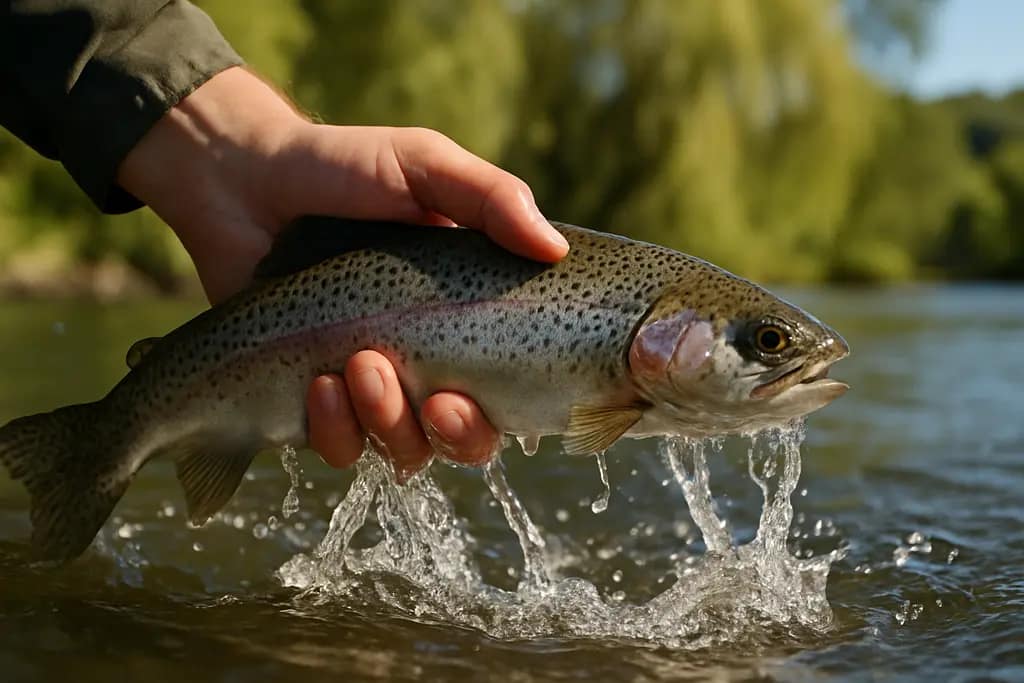

Extreme heat trout fishing demands a different mindset: catch rates matter less than fish survival, timing, and restraint. Trout are coldwater fish, so a hot afternoon can turn a normal catch-and-release trip into a stress test. As a fish behavior specialist, I want anglers thinking like coaches on a tough tournament day: read the conditions, adjust the plan, and know when sitting out is the smartest play.
Heat changes trout behavior because warm water reduces the margin for recovery after a fight. On July 16, 2026, the Wyoming Game and Fish Department asked anglers on the Green River, from Flaming Gorge Reservoir upstream to Slate Creek, to stop catch-and-release fishing during hotter hours from noon to sunrise because stream temperatures regularly exceeded 70°F, increasing mortality of released trout Wyoming heat advisory. That is not a casual suggestion; it is a field-level signal that technique alone cannot always offset heat stress.
Extreme Heat Trout Signals To Read First
Extreme Heat Trout Temperatures
The first tool in your summer trout kit is not a new fly box or lure tray. It is a stream thermometer. Northern Ireland’s fisheries authority, DAERA, published warm-weather angling advice on June 22, 2026, stating that water temperatures above 20°C are too hot for salmon and trout, and that mortality risk rises even with correct catch-and-release practice warm-weather angling advice. That gives anglers a clear decision point: if the water is at or above that heat-stress zone, switch species, move to cooler water where fishing remains legal, or call the trout session.
An extreme heat trout plan should start before the first cast. Check the water at the bank, then check again where you intend to fish. Shallow riffles, slow slicks, exposed tailouts, and backwaters can warm at different rates. If your reading is near the danger range early in the day, do not assume the bite window will stay safe for long. Trout may still eat under stress, but a feeding fish is not always a resilient fish.
Flow, Shade, And Oxygen Clues
Trout behavior in warm spells is often conservative. Fish tend to search for thermal relief, current, shade, and water that lets them recover with less energy cost. That does not mean every deep pool is safe. A deep hole with little flow can feel like a packed locker room after double overtime: cooler in one corner, stale in another. Watch for clean current seams, shaded banks, spring influence where legally accessible, and areas where trout can hold without fighting heavy current all day.
Look at the fish before you look at your fly or lure. Trout sitting low, refusing to move far, or sliding back slowly after a near miss may be conserving energy. Trout that roll weakly after release, hover sideways, or fail to kick down quickly are telling you the conditions are already past your comfort zone. One poor release is enough evidence to change the session.
Time Your Fishing Around Cooler Water
Dawn Windows And Stand-Down Hours
Early starts are not just about beating other anglers to a run. During hot spells, dawn is often the best chance to fish while water is still cooler from the night. Keep the session short, measure temperature more than once, and set a hard stop before the day warms. If a local agency has posted a closure or restricted hours, treat that as the play clock, not a suggestion.
During extreme heat trout conditions, I like a simple trip format: arrive in the low light, fish only water that allows fast landing and release, and leave before the river starts absorbing the day’s heat. That may feel strict, but it preserves both the resource and your own quality of fishing. Tired, heat-stressed trout rarely reward sloppy persistence. If you need a fuller planning framework for heat and fish stress, this related piece on water temperature fish stress tactics pairs well with a thermometer-based approach.
Spot Selection That Reduces Stress
Pick spots where you can land fish quickly without dragging them through warm shallows or over dry rocks. A steep bank, tangled shoreline, or long-distance cast across conflicting currents can turn a modest trout into a prolonged fight. In cool spring conditions, that may be part of the fun. In hot water, it is poor clock management.
- Fish close enough that you can control the fight from the first few seconds.
- Favor current edges where trout can return to moving water immediately after release.
- Avoid sight-fishing to trout trapped in shallow, sunlit pockets with no easy escape route.
- Stop after a missed strike if the fish shows slow recovery or repeated weak movements.
Good heat tactics often look boring from the outside. Short casts, heavier tippet or line where appropriate, fewer hero shots, and fewer casts to visibly stressed fish. That is not timid fishing. That is smart resource management.
Release Adjustments For Warm Water
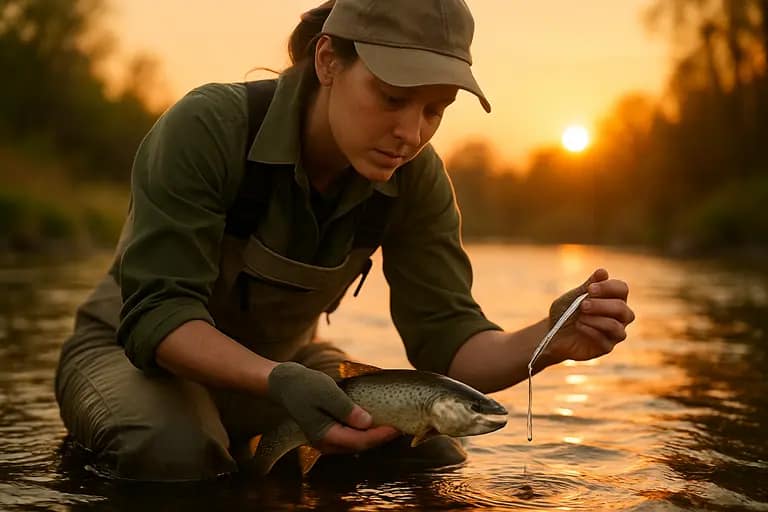
Short Fights And Wet Hands
In warm water, every second of the fight matters. Use tackle that can turn fish efficiently, not gear chosen only for sport. If you normally fish ultra-light tippet for a technical presentation, consider whether that choice will stretch the fight too long. A trout that takes two minutes to land in cool water might take the same two minutes in warm water, but its recovery margin is not the same.
Keep the fish in the water as much as possible. Wet your hands before contact, use a rubber or fish-friendly landing net, and have forceps ready before you cast. The goal is to make release a practiced drill, not an improvised scramble. If the hook is deep or removal will take too long, cut the line close rather than extending handling. Your hands should move like a pit crew: calm, fast, and focused.
Barbless Rigs And Quick Decisions
Barbless hooks or pinched barbs help shorten release time. Single-hook presentations are easier to manage than multi-hook rigs when a fish is rolling in the net. That matters in hot conditions because release speed is part of your technique, just like casting accuracy or drift control.
Skip grip-and-grin photos during heat-stress periods. If you need a record, take a quick in-net water shot without lifting the fish. Better yet, let the release be the reward. Anglers sometimes treat photos as proof of success, but the real proof is a trout that kicks away strongly and settles back into current.
Do not keep fishing just because the first few releases looked good. Heat builds through the day, flows can drop, and one shaded reach can become marginal faster than expected. Recheck temperature, watch fish response, and make the next decision from what the river is showing you.
Extreme Heat Trout Decisions On The Water
A Practical Stop-Fishing Rule
Make extreme heat trout decisions before emotions get involved. Tell your fishing partner the stop point at the truck: a temperature threshold, a posted agency restriction, poor fish recovery, or a time of day. That shared rule prevents the classic angler mistake of letting one more cast become one more hour.
If conditions cross your stop point, shift the day instead of forcing it. Scout access, practice casting on grass, clean gear, fish for a warmwater species where legal, or plan a return after cooler weather. Trout populations are not protected by good intentions alone. They are protected by repeated choices from anglers who understand behavior, stress, and timing.
The strongest anglers I know are not the ones who fish through every condition. They are the ones who can read a river like a coach reads tired players. They see when the system is strained, make the adjustment, and save the aggressive tactics for a safer window. That is how sport fishing keeps its edge without spending the resource that makes it worth playing.


