
Water temperature fish stress should be on every angler’s trip plan as of September 1, 2026. Warm water does not just make fish “less bitey.” It can push trout, salmonids, and other heat-sensitive species toward stress before anglers see dead fish or obvious die-offs. During summer 2026, many rivers across the U.S. West recorded water temperatures high enough to be lethal for trout, and state wildlife agencies used afternoon fishing restrictions from mid-June into early September to reduce added pressure on rainbow and cutthroat trout, according to an AP report.
I look at warm water like a bad scoreboard late in the fourth quarter: you may still have time to adjust, but stubbornly running the same play can cost you. Fish under heat stress have less room for a long fight, rough handling, or a slow release. The good news is that anglers can make smart, practical changes without quitting the sport they love. Start earlier, measure water temperature, shorten fights, target cooler habitat, and know when to walk away. That is not soft fishing. That is disciplined fishing.
Why Warm Water Changes Fish Behavior
Stress Starts Before Fish Die
The first mistake anglers make is waiting for obvious disaster. By the time fish are floating, the decision window has closed. Heat stress can show up well before lethal thresholds. Research on redside dace found that critical thermal maximum values ranged from about 27°C in winter to about 34°C in summer, and agitation behaviors began 5–6°C below those maximum limits, according to a redside dace study. That matters because behavior can warn you before physiology fails.
For sport fishing, this means a fish that still eats may already be stressed. That trout sipping in a warm glide may not be “fine.” It may be using a feeding lane because food is easy, while its recovery margin is shrinking. Fish psychology on hot days is often defensive and energy-conscious. They may avoid fast chases, hold near cooler inflow, or feed in short windows. Anglers who read that mood catch more responsibly because they stop forcing fish into long fights in bad conditions.
Cold-Water Species Have Narrower Margins
The research notes for this topic point to a clear pattern: cold-water species such as trout and salmonids are more sensitive to high temperatures than many anglers assume. Brook trout show pronounced physiological stress around 22.5°C and negative growth above 23.4°C. Brook trout populations also decline sharply in streams with 60-day mean summer temperatures above about 21°C, while habitat above 20–22°C is rarely occupied. Salmonids such as steelhead and Chinook can enter sub-optimal to stressful ranges above 18–20°C, depending on life stage.
Do not turn those numbers into a macho challenge. Treat them as a caution light. If your thermometer reads in the 20–22°C range for cold-water fish, your decision should change. That may mean fishing a different species, moving to a cooler tributary, switching to a lake zone with better temperature conditions, or ending the session. For broader planning around temperature layers and fish location, pair this decision process with water temperature tactics before your next trip.
Reading Water Temperature Fish Stress On The Water
Water Temperature Fish Stress Signals
Water temperature fish stress often announces itself through behavior. Watch for increased surface respiration, gasping, agitation, reduced activity, reduced feeding, avoidance behavior, or fish leaving shelter. Those signs do not prove a single cause every time, but research tied them to fish approaching upper thermal stress thresholds. If the surface looks like a locker room after overtime, with fish working too hard just to recover, your presentation choice is no longer the main issue.
I want anglers to build a simple habit: observe first, cast second. Before making the first pitch, watch the water for a few minutes. Are fish holding tight to shaded edges? Are they avoiding open sun? Are they stacked where a cooler tributary enters? Are hooked fish taking too long to swim off after release? Those details tell you whether the session deserves a green light, a lighter-touch approach, or a full stop.
Use A Thermometer, Not A Guess
Air temperature can fool you. A cool breeze at sunrise does not guarantee safe water by noon, and a shaded bank may still sit above a stress threshold after several hot days. Carry a stream thermometer or temperature-capable electronics and take readings where you actually plan to fish. Surface water near shore can differ from deeper runs, tributary mouths, and spring-fed pockets. Your goal is not to create a science project. Your goal is to stop guessing.
Take one reading at the start, then repeat after the sun gets higher. In restricted rivers, obey the posted hours first. In unrestricted water, use the same mindset. If cold-water species are your target and readings move into that 20–22°C caution range, the ethical play is to change the plan. Fish earlier, relocate, or chase a species better suited to warmer conditions if local regulations allow.
Timing And Location Tactics For Hot Water
Fish The Coolest Legal Window
Morning is not magic, but it is often your best legal and practical window during heat. Afternoon closures in heat-sensitive rivers exist because water temperature and fish stress can rise as the day builds. If your local agency has a noon or afternoon cutoff, treat that as a hard whistle. Do not squeeze in “one last fish” after the clock. Fish do not care that you drove two hours, and wardens do not score points for creative excuses.
Plan like a tournament angler managing limited practice time. Rig rods the night before. Pick access points before leaving home. Keep leaders, hooks, pliers, and measuring gear ready so you are not wasting the coolest hour untangling a mess in the parking area. Short, efficient sessions are often the smartest way to fish during heat.
Find Cooler Refuges Without Crowding Fish
Cool water refuges can include shade, deep pools, and tributaries with cooler inflow. The key is to use them with restraint. If every angler piles onto the same small cold-water pocket, stressed fish may get pressured repeatedly in the only place they can recover. That is like sending a blitz at a quarterback who is already limping; it may work once, but it is not good stewardship.
Approach these spots carefully. Make fewer casts. Use gear that can land fish quickly. If you hook one fish and it struggles to recover, stop. If multiple fish are packed tightly into a cool inflow, consider watching instead of casting. Observation teaches you more than forcing a bite from fish using that area as a heat shelter.
| Condition You See | What It Suggests | Angler Adjustment |
|---|---|---|
| Cold-water stream reads 20–22°C | Stress risk for trout or salmonids is elevated | Fish early, move to cooler water, or stop |
| Fish gasp or breathe at the surface | Behavior may signal thermal stress | Do not target those fish |
| Fish hold near cool tributary inflow | They may be using a refuge | Limit casts and avoid repeated pressure |
| Fish recover slowly after release | Handling and fight stress may be too high | End catch-and-release for that spot |
Release Decisions During Heat
Shorten The Fight
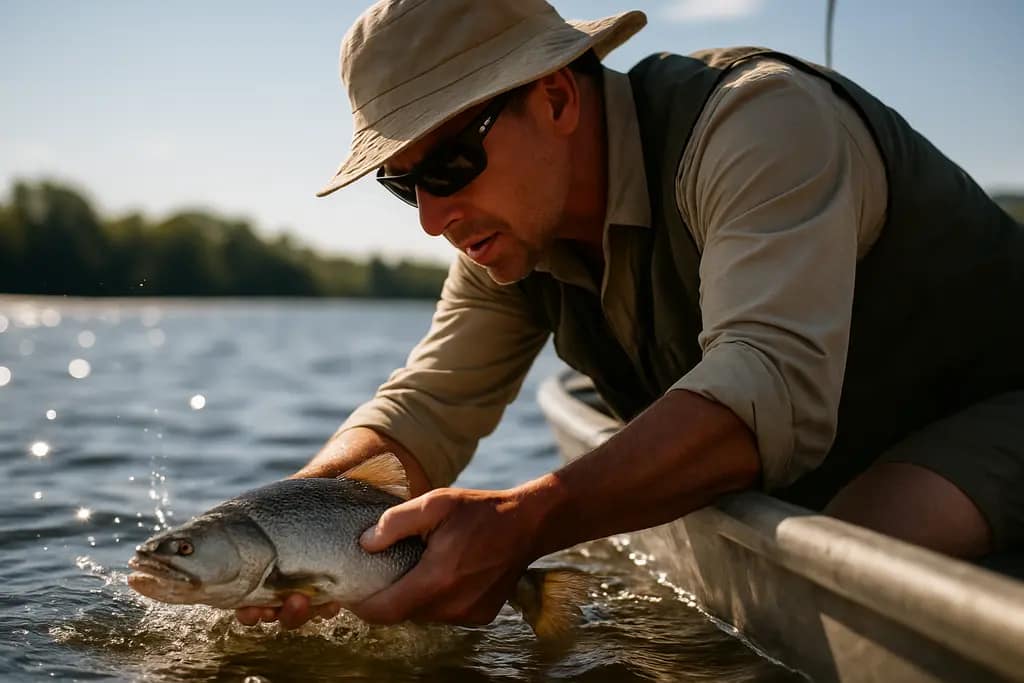
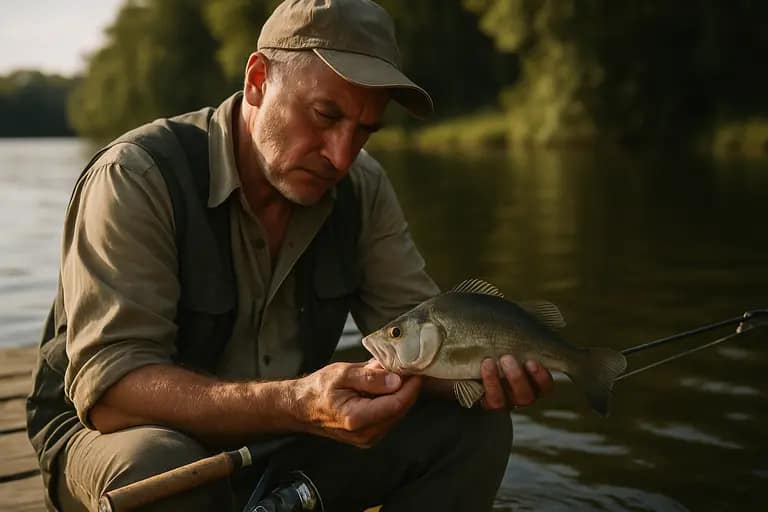
Warm-water catch-and-release demands a different mindset. Use tackle strong enough to bring fish in quickly. Avoid ultralight setups that turn every trout into a marathon. Keep fish in the water while removing the hook. Have pliers ready. If you need a photo, make it fast, wet your hands first, and skip the grip-and-grin routine when water is near a stress threshold.
Water temperature fish stress is not only about the hookset. It is the full sequence: chase, strike, fight, net, air exposure, hook removal, and recovery. Every extra second adds cost. The better angler is not the one who stretches the drama. The better angler is the one who lands, releases, and lets the fish recover with the least added strain.
Know When Catch-And-Release Is The Wrong Play
Catch-and-release can still lead to mortality in warm water because heat-stressed fish are more vulnerable. That does not mean every warm-water trip is reckless. It means conditions decide the tactic. If the species is heat-sensitive, the water is in the caution range, and fish show stress behavior, the right move is to stop targeting them.
Here is the practical checklist I use with anglers during late-summer heat:
- Check current local fishing restrictions before leaving home.
- Carry a thermometer and record water temperature where you fish.
- Use heavier tackle than usual to shorten fights.
- Keep fish in the water during hook removal whenever possible.
- Move away from crowded cool-water refuges if fish are stacked tightly.
- Stop fishing cold-water species when readings and behavior point to stress.
That checklist may feel strict, but it keeps you from making decisions based on hope. Hope is a terrible boat captain. A thermometer, clear observation, and a willingness to quit are much better partners.
Putting Water Temperature Fish Stress Into Practice
Build A Heat Plan Before You Launch
Putting water temperature fish stress into practice starts before the first cast. Pick a target species that matches the conditions. Check regulations. Set a personal cutoff for cold-water species. Decide where you will go if your first spot reads too warm. Pack gear for quick releases. If you fish with friends, agree on the plan before anyone hooks a fish. Peer pressure gets weaker when the whole crew has already chosen the standard.
For competitive anglers, guides, and serious weekend fishers, this is performance work as much as conservation. Fish under stress are harder to pattern because their behavior becomes less about feeding and more about survival. The angler who understands that will stop blaming lure color and start adjusting time, depth, shade, current, and handling. That is where skill shows up.
Make The Responsible Call This Season
As of September 1, 2026, heat-related restrictions and warm-water concerns are not abstract. They have shaped real fishing access in Western rivers during summer 2026, and the research on thermal stress gives anglers a clear message: fish can be in trouble before they look helpless. Your job is to read the water like a coach reads tired legs late in a game.
If conditions are safe, fish with purpose. If the water is too warm, shift species, shift locations, or call it. Water temperature fish stress is not a reason to lose enthusiasm; it is a reason to fish smarter. The anglers who adapt will protect the resource, respect the season, and still find satisfying days on the water.


