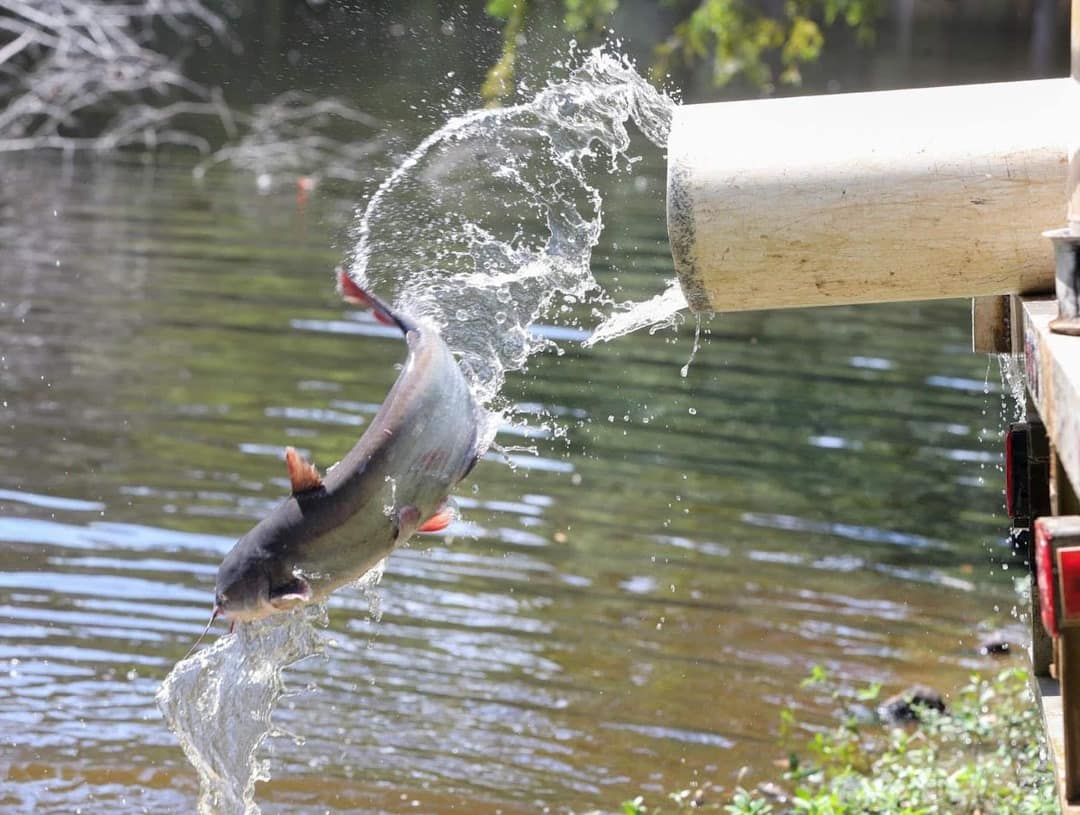

Florida channel catfish stocking is one of the state’s most useful fishing programs and one of its most misunderstood. The headline is not simply that hatchery fish enter public water; it is that managers use different fish sizes, different waters, and different release patterns to build opportunities that bank anglers can actually reach.
For anglers sharpening their Florida catfish tactics, stocking records offer a better starting point than a generic “best lakes” list. They reveal where fish were intentionally placed, whether the release was built for near-term catchability, and which urban ponds or Fish Management Areas deserve a closer look.
How Florida Channel Catfish Stocking Works
Florida does not scatter catfish into every convenient pond. The state stocks carefully selected public waterbodies after regional fisheries staff identify a biological, recreational, or outreach need. Requests move through a hatchery production cycle, with fish raised for release as small fingerlings or held longer until they reach a larger sub-adult stage.
That distinction is central to the program. Fingerlings can support a fishery over time, but larger fish can create a more immediate opportunity in waters where natural channel catfish reproduction may be limited or fishing pressure is high. In other words, stocking is not just population management; it is public-access infrastructure.
FWC operates two freshwater hatcheries and publishes completed stocking histories through its freshwater hatchery program. Its long-run figures list channel catfish among the state’s major hatchery products, while annual totals rise and fall with management requests, production, and available destinations.
Why the Size of the Stocked Fish Changes the Opportunity
A raw stocking number can mislead. Ten thousand fingerlings and ten thousand sub-adults are not the same angling event, even though both add the same number of fish to a spreadsheet.
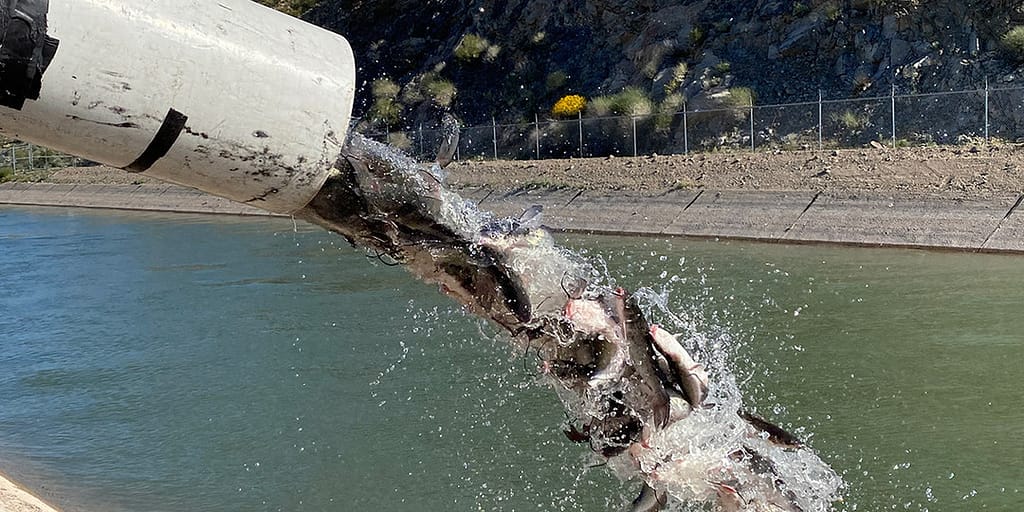
A recent completed stocking year recorded 225,642 channel catfish placed in Florida public waters. Of those, 196,082 were sub-adults longer than six inches, while 29,560 were fingerlings measuring roughly one to three inches. For an angler planning a near-term trip, fish size matters as much as the total.
Sub-adults are more likely to be catchable sooner and less vulnerable than tiny fingerlings. Fingerling releases can still become valuable, especially in managed lakes with food and cover, but they should be read as a longer-horizon investment rather than proof of an instant bite.
The table below turns stocking data into a practical decision tool.
| Stocking signal | What it suggests | Best angler response |
|---|---|---|
| Recent sub-adult release | Nearer-term catch potential | Check access, feeders, piers, and deep shoreline edges |
| Recent fingerling release | Future fishery potential | Look for repeat stockings before making a special trip |
| Stocking in multiple years | Ongoing management commitment | Put the water higher on the scouting list |
| FMA with feeders or attractors | Fish may concentrate within bank range | Start near marked feeding or habitat areas |
| One older stocking record | Historical evidence, not a current guarantee | Verify recent activity and local conditions |
The strongest lead is usually not the biggest single number. It is a bank-friendly water with recent, repeated stockings and active management.
Where Florida Puts Stocked Channel Cats
Stocking records show clear clusters around population centers and managed public access. Jacksonville-area FMAs have repeatedly received channel cats, including Bay Meadows, Bethesda, Hanna Park, Oceanway, and the St. Augustine Road ponds. Central Florida records include Barnett Park, Bear Creek Park, Clear Lake, Bithlo Park, and MLK Jr. Park.
The program also reaches beyond the largest cities. Panhandle destinations have included Lake Victor, Lake Stone, Karick Lake, Lake DeFuniak, and park ponds in Bay County. South Florida examples include Tropical FMA, Okeeheelee FMA, and Caloosa FMA, while the Tenoroc complex in Polk County has received fish across several individual lakes.
These names are not a promise that every bank is currently productive. They show the larger pattern: Florida often directs channel catfish toward community ponds, park lakes, FMAs, and other waters where anglers can fish without a boat. In this fishery, access beats acreage.
How to Find a Stocked Pond Near You
The fastest method is to use the state’s fish stocking map, filter for channel catfish, and compare several recent years. Clicking a location reveals the waterbody, county, stocking year, fish count, and available size or phase information.
Do not stop at the closest map pin. Favor waters with sub-adult stockings, repeat entries, legal bank access, and features that concentrate fish. Automatic feeders, baited fishing zones, aerator diffusers, fishing piers, culverts, and marked attractors can all narrow the search area.
Then check the named water’s current regulations and operating status. Many stocked ponds are Fish Management Areas, where bag limits, legal methods, access hours, motor rules, or temporary closures may differ from general statewide expectations.
The Signals That Separate a Lead From a Good Trip
A stocking record is not a live inventory. Fish disperse, grow, die, and get harvested; water levels change; vegetation expands; and heavy fishing pressure can shrink the easy window after a release.
Recent information therefore matters. A current fishing forecast, posted park notice, conversation with local staff, or quick call to a nearby tackle shop can confirm whether access is open and whether anglers are seeing fish. On arrival, look for practical evidence: active feeders, clean bank openings, recent angler use, deeper water within casting range, and signs marking managed habitat.
Weather and timing still decide plenty. During hot periods, deeper water and early or late sessions often outperform shallow midday banks. After a stocking, pressure can build quickly, so moving away from the obvious pier or feeder may uncover fish that have already shifted.
Why Florida Channel Catfish Stocking Changes How You Pick Spots
Florida channel catfish stocking works best for anglers who treat it as a system, not a shortcut. The opportunity is real, but it depends on reading the details—fish size, timing, repeat stockings, and access rather than chasing a single headline number.
That is the advantage. Instead of guessing which lake “should” be good, you can focus on waters where fish were intentionally placed for public use. When you combine recent stocking signals with bank-friendly structure and current conditions, Florida channel catfish stocking becomes less about luck and more about informed positioning.


