
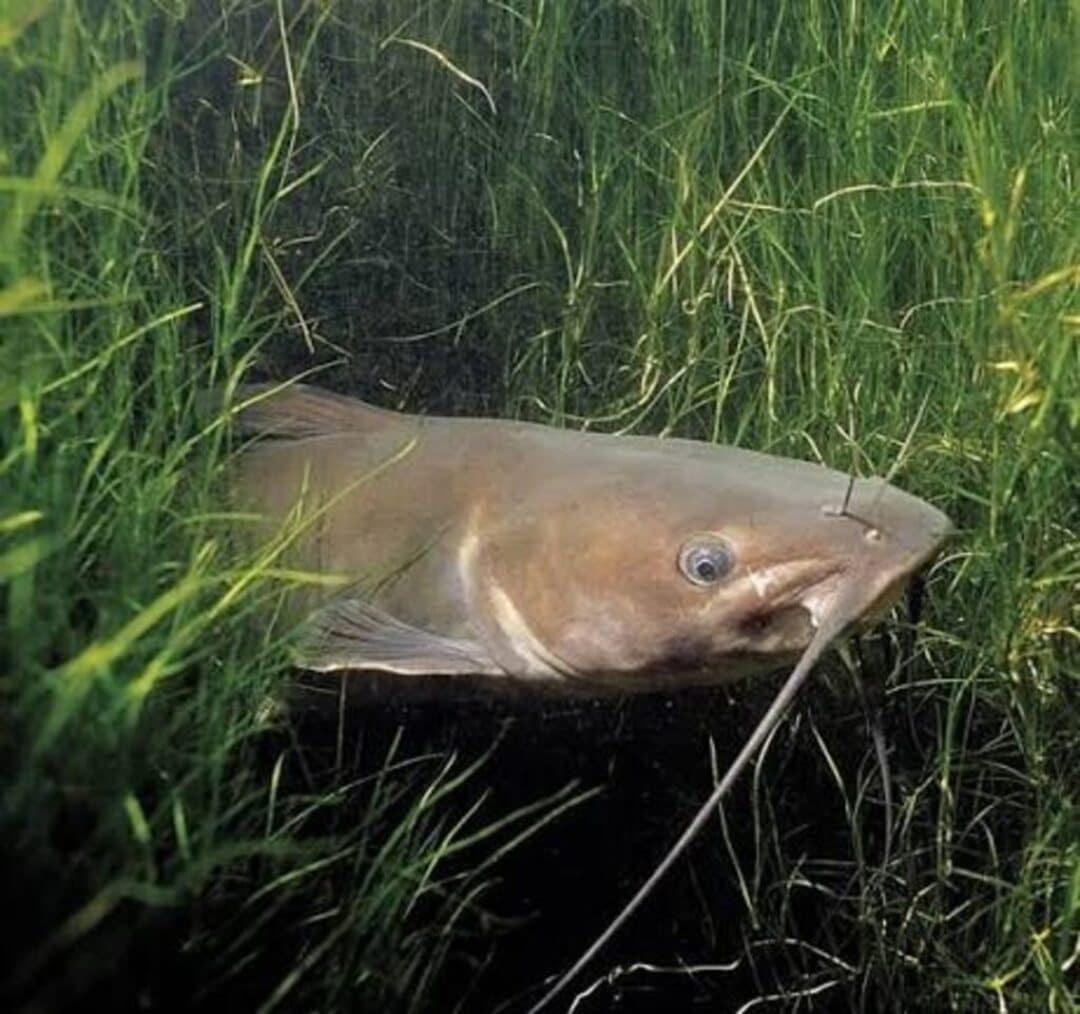

Catching catfish in heavy vegetation is less about forcing bait into the thickest cover and more about finding the first lane a fish can use without fighting through plants. Hydrilla, eelgrass, lily pads, and floating mats may hold shade and forage, but the highest-percentage cast is usually where that cover gives way to usable water.
The placement logic behind natural catfish feeding zones becomes even more valuable in grass-heavy lakes, ponds, canals, and backwaters. Instead of asking whether catfish are “in the weeds,” ask which edge lets them move, detect bait, and reach clean bottom with the least effort.
Heavy Vegetation Is a Boundary, Not a Destination
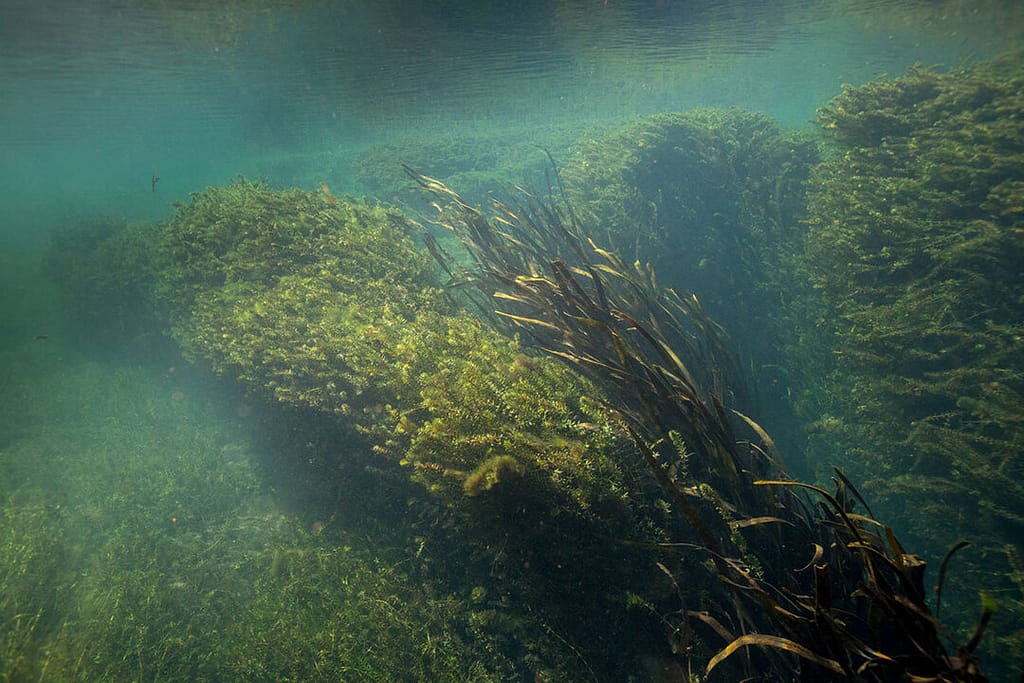
Aquatic plants can support productive water by providing structure for small fish, insects, and other forage. Florida lakes and ponds commonly contain water lilies, eelgrass, hydrilla, pondweed, and other plant communities, as shown in the state’s freshwater habitat types.
That does not make every green patch a good target. Bait dropped into a dense canopy may disappear beneath leaves, collect grass, or settle in decaying material where scent and movement are restricted. The practical rule is to fish the seam, not the jungle.
Prioritize outside edges, isolated holes, narrow cuts, grass points, and places where one plant type changes into another. A straight wall of weeds may hold scattered fish, but a notch beside deeper water gives catfish a repeatable route.
Find the First Clean Bottom Beside the Grass
The most valuable target is often the first clean bottom beyond the vegetation. It may be sand, firmer mud, shell, or simply a patch where stems stop growing. That strip allows catfish to follow cover while reaching a bait that is not buried.
From a boat, work parallel to the grassline and watch for changes in depth, plant height, and bottom hardness. Without electronics, make short test casts. A rig that returns coated in hydrilla is still inside the canopy; one that lands firmly and comes back mostly clean has found the lane.
Bank anglers should cast at several angles rather than repeatedly throwing straight out. Weed edges often run diagonally from shore, so a small change in direction can move the bait from tangled grass to open bottom. Grass points, inside turns, and small pockets near deeper water deserve the first casts.
How to Fish Catfish in Heavy Vegetation Without Burying the Bait
Use the lightest sinker that will keep the bait in place. Streamlined shapes pass through scattered grass more cleanly than bulky weights, while flat no-roll sinkers help when wind or current would otherwise drag the rig into vegetation.
Leader length matters more here than on open bottom. A long leader can wrap around stems or let bait settle into soft growth. A shorter leader keeps control; 8 to 18 inches is a useful starting range, adjusted for plant height and density.
When short grass carpets the bottom, lift the bait with a small peg float on the leader. Around lily pads, submerged weed tops, or narrow openings, a slip float offers tighter depth control. Set the bait high enough to remain clean but low enough to intercept catfish traveling beside the cover.
Keep cut bait compact so it casts accurately and does not spin around the leader. Leave the hook point exposed, inspect it after every retrieve, and replace bait that has become wrapped in plant fragments.
Match the Presentation to the Plant Type
Different vegetation creates different access problems. Let the plant shape determine the target and presentation.
| Vegetation type | Highest-value target | Best starting presentation | Main failure to avoid |
|---|---|---|---|
| Hydrilla or submerged weeds | Outside edge, holes, abrupt canopy end | Lifted bait on a short leader or slip float | Dropping bait into the canopy |
| Eelgrass or tape grass | Clean troughs and down-current edges | Light slip-sinker rig with a short leader | Letting the leader wrap around blades |
| Lily pads | Open pockets near depth or a defined edge | Suspended bait under a slip float | Fighting fish through multiple stems |
| Floating mats | First open water beyond the mat or beside flow | Bottom rig just outside the cover | Assuming water under the mat is productive |
| Sparse mixed grass | Hard-bottom patches and isolated clumps | Controlled bottom rig with fan casts | Staying on one patch too long |
The pattern is consistent: the rig should solve a location problem. Do not choose a float merely because it is considered weed-friendly or add excessive weight because the cover looks intimidating. Choose the setup that keeps bait in the cleanest reachable feeding lane.
Oxygen Swings Can Move the Bite
Dense vegetation is not automatically healthy water. Hydrilla can provide habitat at lower coverage, but heavy canopies may restrict access, degrade water quality, and contribute to low-oxygen conditions. Florida’s hydrilla management guidance warns that excessive coverage can create oxygen-related risks for fish.
This is why oxygen can overturn the pattern. A strong-looking mat may go quiet after a hot, still night, a plant die-off, or recent vegetation control. Watch for baitfish activity, wind, inflowing water, fresher edges, and sour-smelling debris on the rig.
If the inside edge is lifeless, move toward open water, a windblown grassline, a drain, or the nearest depth change. Early morning can expose weak water after nighttime oxygen consumption. Catfish may remain close to vegetation while shifting to the side with better circulation.
Newly opened lanes can also create short-lived opportunities. A storm-created pocket, receding grassline, or cleared edge may expose clean bottom and reconnect cover with a travel route.
The Best Weedline Is the One You Can Repeat
A useful vegetation pattern becomes more precise with every cast. Note the edge depth, whether the sinker reached clean bottom, and whether bites came from a point, pocket, turn, or open-water side. Then look for the same combination elsewhere.
The central lesson for catfish in heavy vegetation is simple: cover attracts life, but access creates the bite. Keep bait clean, control its height, shorten the leader when necessary, and prioritize the first usable lane beside the plants. That approach produces fewer weeds on the hook and more presentations a catfish can actually reach.


