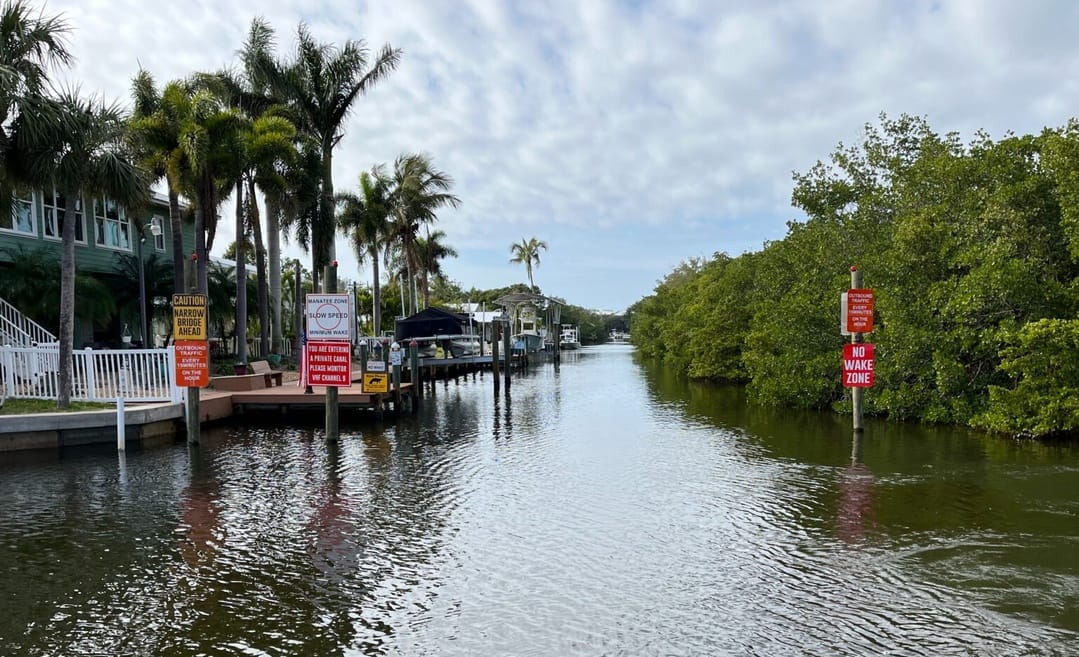

South Florida canal catfishing is easy to overlook because the water rarely looks wild. It runs behind shopping centers, beside subdivisions, and under highways where most anglers are thinking about peacock bass or snook—not catfish holding along the bottom.
That is the opportunity. The same fundamentals behind successful Florida catfish tactics still apply, but urban canals reward a different discipline: reading engineered current, finding legal access, and refusing to treat every straight bank as identical.
Why Engineered Canals Hold More Catfish Than They Show
South Florida’s canal network was built for drainage, flood protection, and water storage. Across Palm Beach, Broward, and Miami-Dade counties, canals connect ponds, lakes, culverts, gates, and waterways that move water and forage.
Southern canals are often deep and sharply cut, while many northern canals are shallower and more bowl-shaped. Both designs create bottom routes, depth changes, shade, and places where food collects.
The mistake is judging a canal by its surface. A plain seawall can hide a ledge, scour hole, submerged pipe, or hard-bottom transition. In these waters, water movement is the map. Even a slight push through a culvert can gather insects, small fish, shrimp, and scraps into a compact feeding lane.
The Best Spots Are Where the Canal Stops Being Uniform
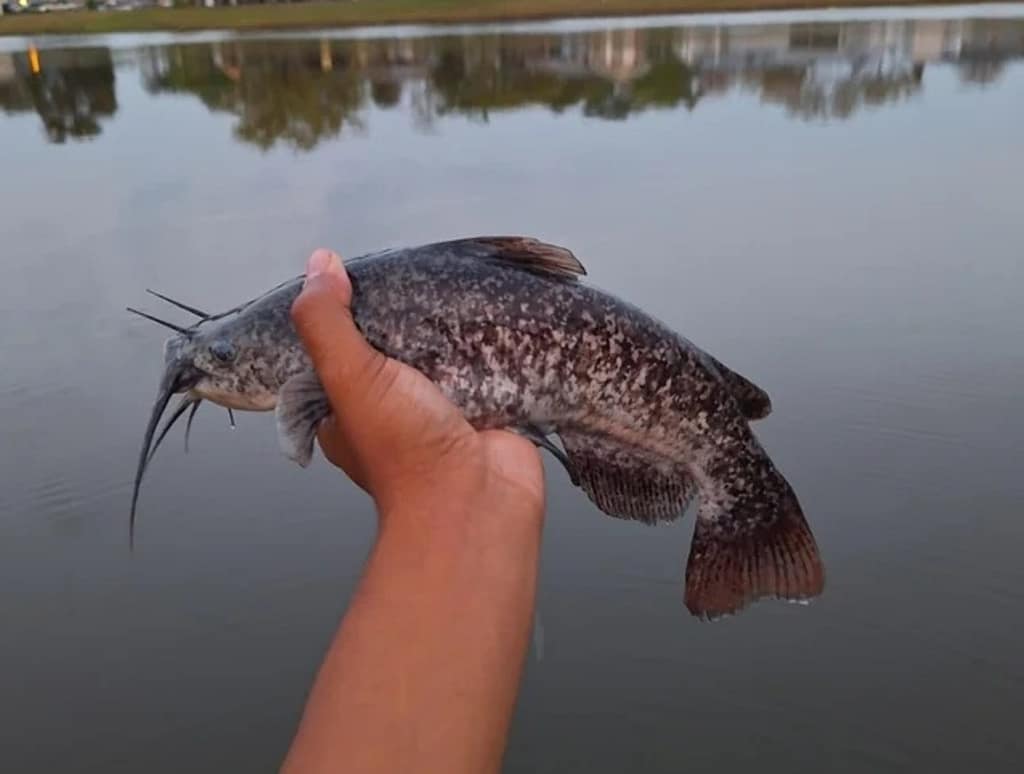
Long, featureless stretches can produce fish, but they are poor places to begin. Catfish become more predictable where the channel changes shape or current loses speed.
Start with bridge corners, culvert mouths, canal intersections, riprap, spillway approaches, and bends that create a softer inside edge. A feeder canal entering a larger canal can be especially useful after rain because the new flow carries scent and loose forage into the main channel.
Shade matters, too. Bridge shadows, docks, and steep walls can create cooler holding water during the hottest part of the day. After dark, fish may leave those areas and move onto nearby shelves or shallow margins.
The best cast is often beside the obvious structure, not directly into it. Catfish frequently hold on the downstream seam or slack-water edge where they can intercept food without fighting the strongest flow. Find small structural changes, then place the bait on the transition.
A Simple South Florida Canal Catfishing Setup
A medium-heavy rod, a reel with a dependable drag, and 15- to 25-pound line will handle most urban canal situations while remaining easy to carry.
A sliding egg sinker, swivel, short leader, and circle hook form a practical bottom rig. Use only enough weight to hold position. Excess lead deadens the presentation; too little lets the rig roll into rocks, roots, or debris.
Fresh cut bait, shrimp, nightcrawlers, chicken liver, and prepared baits can all work. Cut bait is useful for larger channel or white catfish, while worms and shrimp often produce bullheads and smaller cats. In warm water, fresh bait matters more because soft offerings wash out or spoil quickly.
Carry several sinker sizes. Canal flow can change after rainfall or when a control structure begins moving water.
Match the Rig to the Water in Front of You
The best setup is the one matched to the exact piece of water, not the one left tied on from the previous trip.
| Canal clue | Likely holding area | Best starting presentation | Common mistake |
|---|---|---|---|
| Flowing culvert | Downstream seam or scour hole | Sliding sinker with fresh cut bait | Casting into the strongest current |
| Bridge shadow | Drop-off beside pilings | Short leader with shrimp or cut bait | Fishing only the center span |
| Canal junction | Slack edge below the merge | Bottom rig just outside current | Setting up too far from the seam |
| Straight bank | First depth break or pipe outlet | Light sinker with worm or prepared bait | Waiting too long without a bite |
| Riprap wall | Base of the rocks | Compact rig with abrasion-resistant leader | Using a long leader that snags |
Make two or three casts across different depth lines, then move if the spot shows no bites, bait taps, or line movement. In urban canals, mobility beats patience when a location lacks a clear feeding reason.
Timing the Bite Around Heat, Rain, and Managed Flow
Dawn, dusk, and the first hours after dark are dependable windows because catfish can move shallower with less light and lower surface heat. Night fishing reduces shoreline disturbance, though posted hours and personal safety should decide whether a location is suitable.
Summer rain can improve a canal quickly where feeder channels create fresh current. The useful window is often after the storm passes and water begins moving—not during lightning, flooding, or unstable bank conditions.
Control structures add another layer. Gates can turn quiet water into a feeding corridor, but they also create turbulence, slippery concrete, changing water levels, and restricted zones. Fish the safe current edge from legal ground. Never cross barriers to gain a better angle.
Access, Closures, and Mixed-Water Rules Can End a Trip Early
South Florida canals cross public land, private property, utility corridors, parks, and water-management areas. A visible bank is not automatically open. Signs, fences, posted hours, and maintenance closures control access, so access is never assumed.
Restrictions can change quickly. As of July 2026, public access along the L-29, L-67A, and L-67C canals near Tamiami Trail was closed for maintenance, with reopening expected in August. Check current canal access notices before driving to a structure or remote bank.
Licensing can become complicated where freshwater and saltwater species overlap. Florida license requirements follow the species being targeted, not simply canal salinity. Catfish anglers need the proper freshwater license; targeting snook or another saltwater species requires the applicable saltwater license and permits.
FWC reported no new statewide freshwater regulation changes for 2026–2027, but Fish Management Areas and individual waters can carry special rules. Review the current freshwater rules before keeping fish, and check consumption guidance when harvesting from unfamiliar urban water.
South Florida canal catfishing works best when anglers stop searching for a famous destination and start reading the system in front of them. The opportunity is close and often underfished, but the edge belongs to anglers who follow moving water, respect access, and leave when a spot gives catfish no reason to stay.


