
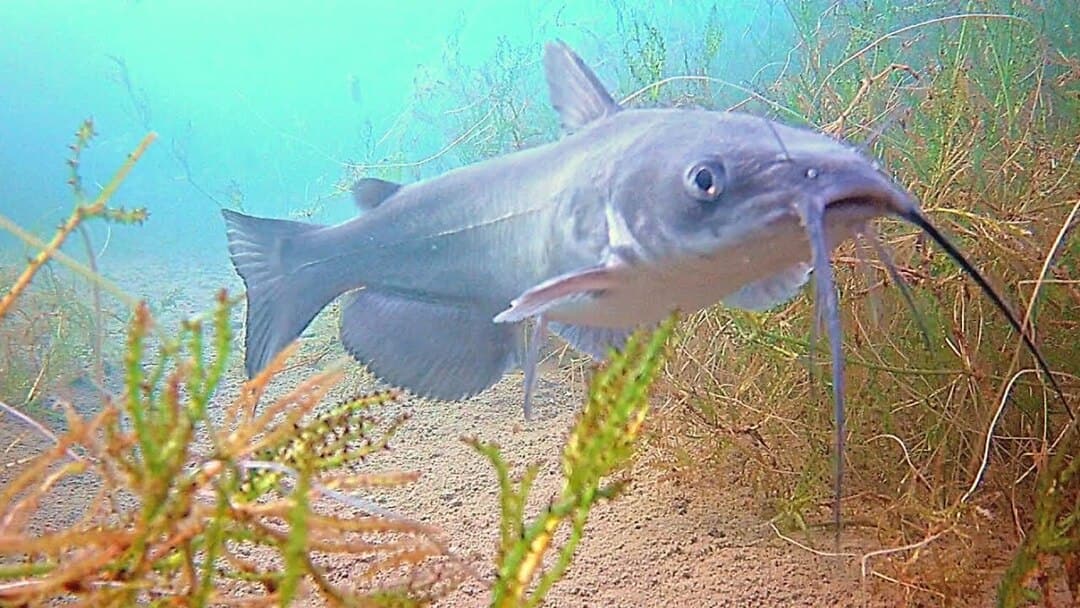

Summer catfish oxygen levels can overturn the most familiar hot-weather rule in fishing: go deeper when the water gets hot. Deep water may be cooler, but when summer stratification cuts it off from surface mixing, it can become the least usable part of the lake.
That makes oxygen a better starting point when building Florida catfish tactics. Catfish are balancing temperature, oxygen, food, current, and the energy required to feed—not simply choosing between shallow heat and deep comfort.
Deep Water Can Become an Oxygen Trap
In a stratified lake, warm surface water sits above a cooler lower layer, with a transition zone between them. Wind and waves keep adding oxygen near the surface, while the deepest layer receives little new oxygen. Organisms continue consuming what remains as organic material decomposes.
The result is a deep-water trap. A hole, channel bend, or submerged tree may look perfect on a map yet hold few active fish if the surrounding water cannot support feeding. Catfish tolerate difficult conditions better than many species, but tolerance is not preference.
Controlled pond work summarized in channel catfish hypoxia research found reduced appetite when daily minimum dissolved oxygen dropped below 3.0 milligrams per liter. That is not a universal field rule for every species, but it shows why the bite can fade before conditions become visibly dangerous.
How Summer Catfish Oxygen Levels Reshape the Lake
Oxygen loss does not always push catfish to the bank. More often, it compresses them into the part of the water column where temperature and oxygen are both tolerable. Fish that normally relate to bottom structure may suspend above it, slide onto a shallower channel lip, or use the side of a point instead of its deepest end.
This creates an invisible oxygen ceiling over unproductive bottom water. If baitfish stop at one depth, fish marks stack above the same band, or bottom rigs remain untouched while suspended baits get attention, the usable zone may be higher than expected.
Deep lakes can stratify clearly, while shallow ponds, canals, and wind-exposed lakes may mix more often. Even without a strong thermocline, stagnant coves, dense vegetation, decomposing plants, and low-flow backwaters can develop local oxygen problems.
Where Oxygen Concentrates Feeding Fish
Creek inflows deserve an early look because they add movement, carry food, and can create a more livable lane than the surrounding basin. The best position is often where incoming water slows, spreads, or meets a channel edge—not in the strongest flow.
Windblown banks can improve for the same reason. Wind mixes the upper water, pushes forage, and creates broken-water feeding opportunities. A bank that is awkward to fish may be biologically better than the calm side.
In rivers and canals, current continually reshapes oxygen and food delivery. Outside bends, bridge constrictions, spillways, culverts, and feeder creeks can stay productive through heat. In summer, water movement over depth is often the better rule.
Put Baits Above the Dead Water
A bottom rig is only effective when the bottom lies inside the usable zone. Once catfish suspend, a bait beneath them may as well be in another lake.
Use slip floats, controlled drifting, three-way rigs, or short dropper systems to place bait where fish and forage are showing. On a point or channel edge, stagger baits: one near bottom, one several feet higher, and one over the adjacent flat. That spread tests the water column instead of assuming every fish is pinned down.
Sonar should be read as a pattern rather than proof. A recurring band of clutter, a sharp stop in baitfish depth, and suspended fish above deeper structure can suggest stratification. A dissolved oxygen meter is more direct, but most anglers can still find the first usable depth by watching where life disappears.
Summer Oxygen Signals at a Glance
The strongest clues usually appear as combinations. Use this table to decide where to make the next move.
| Condition | Likely Oxygen Effect | First Area to Check | Presentation Change |
|---|---|---|---|
| Hot, calm weather | Weak mixing and possible bottom depletion | Inflows, narrows, exposed points | Raise one or more baits |
| Fish suspended above structure | Bottom may be below the active zone | Channel lip or top of cover | Use floats or controlled drift |
| Several cloudy days | Less daytime oxygen production | Moving water and open banks | Avoid stagnant vegetation |
| Strong afternoon wind | Better mixing along exposed shoreline | Windblown bank or point | Fish the upper half of the break |
| Sudden cool rain | Mixing may improve or disrupt the pattern | Creek mouths and transition zones | Recheck depths before settling |
| Fish at the surface near dawn | Possible severe oxygen stress | Leave stagnant water and seek flow | Avoid targeting distressed fish |
The table is not a substitute for observation. Its value is forcing a location change when the evidence says the deepest-hole plan is no longer connected to active fish.
The Pattern Can Change Before the Weather Does
Dissolved oxygen follows a daily rhythm. Aquatic plants and algae produce oxygen in daylight, then consume it after dark. That is why the pre-dawn warning matters: oxygen may be lowest just before sunrise, even though the air feels coolest.
Florida fish-kill guidance identifies warm, stagnant water and early morning as common danger conditions, while extreme heat compounds the problem because warmer water holds less oxygen. Those low-oxygen warning signs should change an angler’s decisions. Gasping fish, unusual surface concentration, foul water, or a sudden absence of bait activity are reasons to relocate, not cast harder.
Storms can reset the pattern in either direction. Wind and fresh inflow may improve mixing, while prolonged clouds, muddy runoff, and decomposing vegetation can drive oxygen lower. After a major weather change, treat yesterday’s productive depth as unverified.
Summer catfish oxygen levels explain why good-looking structure can turn empty and why inflows, windblown banks, and suspended forage become disproportionately valuable. The best summer anglers are not simply searching for cooler water. They are finding the narrow part of the system where catfish can breathe, feed, and move efficiently—and placing bait there first.


