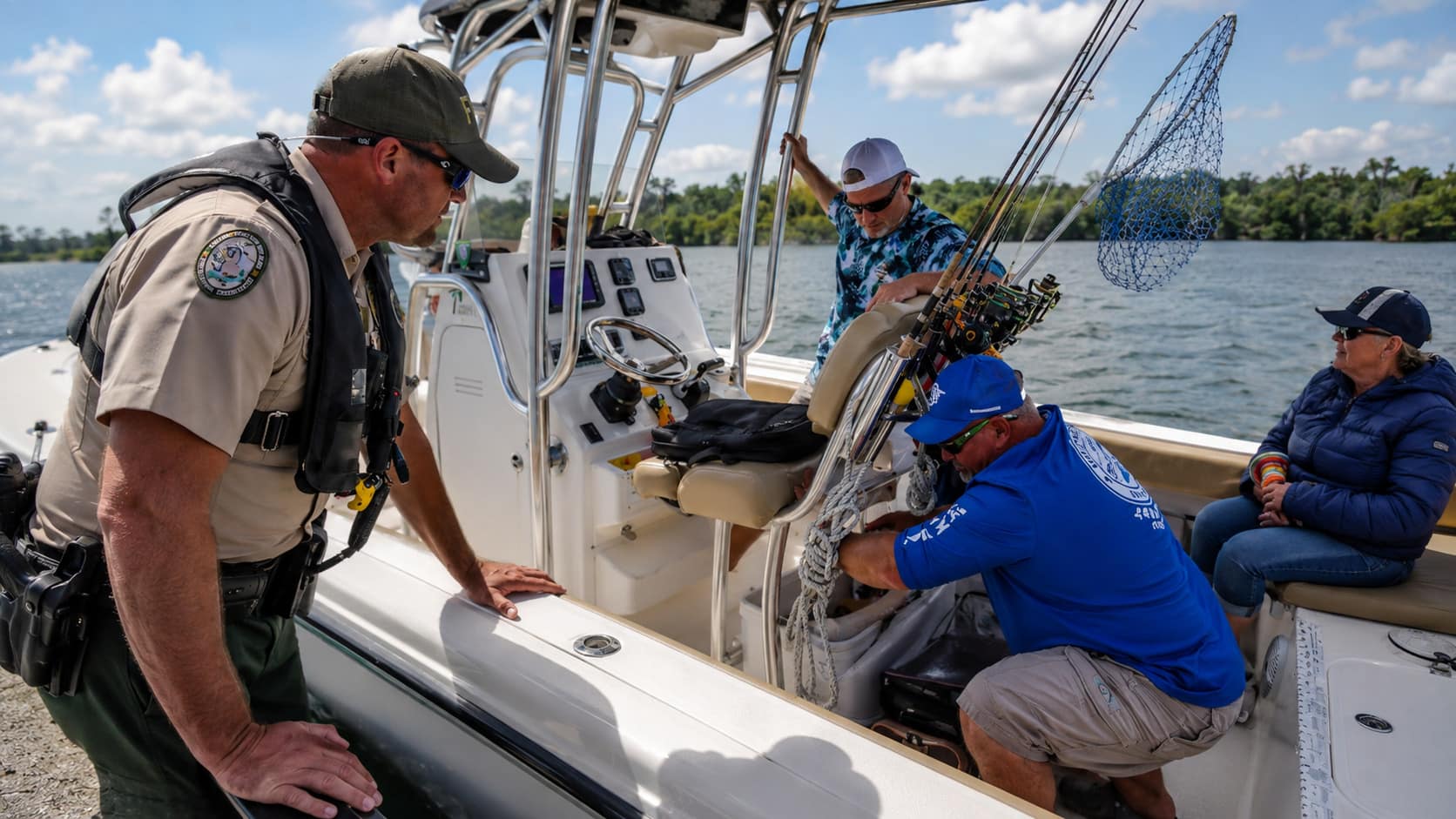

Florida Boater Freedom Act fishing rules have changed one part of tournament day: state officers generally can no longer stop or board a vessel solely to conduct a routine safety-equipment inspection. For catfish competitors, that can mean fewer interruptions on the run to a spot—but it does not make safety gear, registration, fishing rules, or lawful enforcement disappear.
That distinction matters when a missed launch window or ten lost minutes can alter a weigh-in plan. Good competitive tournament preparation now includes understanding both what must be aboard and what the new stop rules actually cover.
Florida Boater Freedom Act fishing rules changed the stop, not the standard
Florida’s Boater Freedom Act took effect July 1, 2025. Under the current vessel-stop language, an officer may not board a vessel or perform a stop unless there is probable cause to believe a Chapter 327 violation has occurred or is occurring. The law also bars stops or boardings made solely for safety or marine-sanitation equipment inspections.
For anglers, the practical change is about routine safety stops, not an exemption from boating law. Safety and marine-sanitation equipment violations are secondary offenses, while officers may still stop a vessel for another lawful purpose when the required probable cause exists.
The issue is still active in 2026. FWC put implementation of the Boater Freedom Act on its August 5 Commission agenda, giving tournament boaters a reason to follow how the law is applied.
Required gear did not vanish with random inspections
The easiest bad assumption is that restricted random inspections make safety equipment optional. They do not. The operator remains responsible for carrying, maintaining, storing, and using required gear.
FWC’s size-specific safety equipment guidance is the better pre-launch reference because requirements vary by vessel size and configuration. Recreational vessels need an approved wearable life jacket for each person aboard, while vessels 16 feet or longer also need an approved throwable flotation device that is immediately available.
Certain boats must carry a marine fire extinguisher, and vessels need an efficient sound-producing device and proper navigation lights. Visual distress-signal requirements apply on coastal waters, so freshwater competitors should check the rules for their actual vessel and waterbody rather than copying another boat’s checklist.
The takeaway is compliance still matters even though the trigger for a routine state safety inspection has changed.
Tournament morning is where small failures become expensive
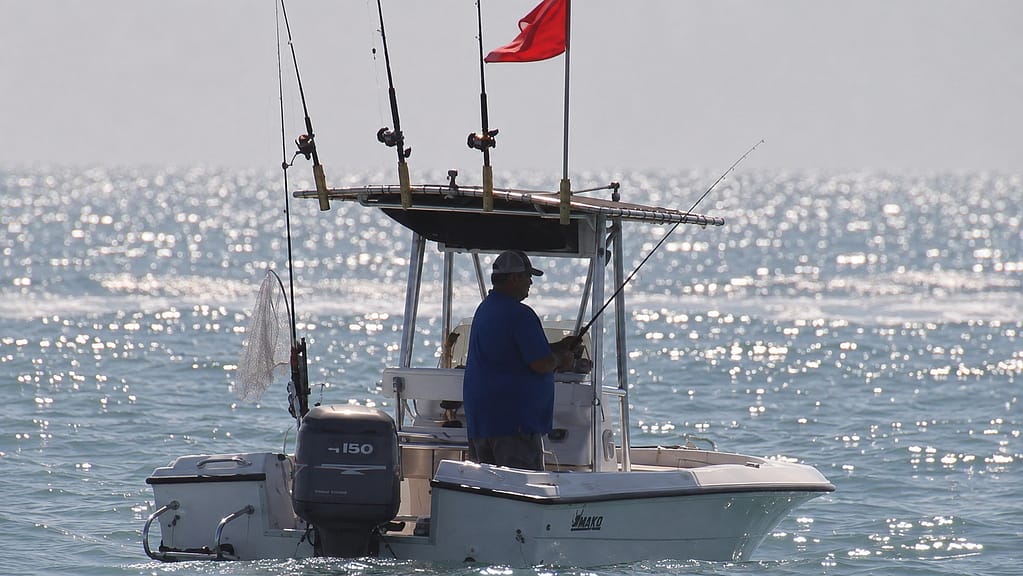
A competitor should treat legal readiness the same way as fuel, bait, batteries, sonar, and livewell checks. The best time to find an expired registration, buried PFD, dead bow light, or missing whistle is the evening before the event.
Florida requires a vessel’s registration certificate to be aboard and available for inspection. Operators subject to the state boating-safety education requirement should also have the required proof and photo identification available.
A compact tournament-day check keeps the legal side from competing with the fishing side.
| Check | Before launch | Why it matters |
|---|---|---|
| Registration and operator documents | Put current documents where the operator can reach them | Prevent paperwork from becoming a delay |
| PFDs and throwable device | Confirm serviceable gear is aboard and accessible | Catch missing safety gear before launch |
| Fire extinguisher | Verify whether the vessel requires one and that it is serviceable | Match equipment to vessel design |
| Lights and sound device | Test navigation lights and horn or whistle | Early starts expose failures quickly |
| Fishing compliance | Recheck licenses, bait, harvest and event rules | The boating law does not erase fisheries rules |
| Freedom Boater decal | Confirm proper placement if one has been issued | Keep vessel records and displayed decals orderly |
The Freedom Boater decal is issued at registration or renewal after an attestation of safety-equipment compliance. It must sit within six inches of the vessel registration decal. Having it does not replace the required equipment.
The enforcement boundary is bigger than a safety check
Tournament anglers can get into trouble by reading the law too broadly. The Boater Freedom Act narrows a category of state vessel-safety stops under Chapter 327; it is not a blanket right to refuse every lawful enforcement contact on the water.
Fishing remains regulated under separate fish-and-wildlife laws. Licenses, legal methods, bait rules, harvest restrictions, protected resources, and other requirements do not disappear because a safety-only stop is restricted. FWC also has enforcement authority under Chapter 379.
That means the purpose of the contact matters. A competitor should not assume the Act shields fish, bait, coolers, livewells, or harvest practices from lawful fisheries enforcement merely because routine safety inspections are treated differently.
Federal authority creates another boundary. Florida’s state law does not eliminate U.S. Coast Guard law-enforcement authority on waters under federal jurisdiction. Teams fishing beyond familiar inland waters should remember that state vessel-stop rules and federal boarding authority are not the same thing.
Implementation is now the pressure point to follow
FWC’s August 2026 agenda makes implementation worth monitoring. Anglers and tournament organizers should watch for updated agency guidance, decal procedures, changes affecting decal validity, and clearer explanations of how Chapter 327 vessel-safety rules interact with separate resource enforcement.
The smarter response is not to build a strategy around avoiding a stop. It is to build a boat that is ready for one. Current documents, correct gear, legal bait, compliant fishing practices, and an organized deck reduce the risk that an enforcement contact becomes a tournament problem.
Competitors cross county lines and launch at unfamiliar ramps, where different authorities may operate. Ready before daylight remains the better habit.
A cleaner stop rule still rewards a cleaner boat
The Florida Boater Freedom Act fishing change can reduce one kind of disruption: a state stop made solely for a routine safety or marine-sanitation equipment inspection. It does not lower the standard for the boat, the operator, or the fishing taking place aboard it.
For catfish tournament anglers, the advantage is clarity. Know what Florida changed, carry what the law still requires, keep documents accessible, and separate boating-safety rules from fisheries enforcement. The strongest use of the new freedom is not less preparation; it is fewer reasons for being unprepared when the clock starts.
Frequently asked questions
Can FWC still stop my boat under the Boater Freedom Act?
Yes. The Act restricts stops or boardings made solely for safety or marine-sanitation inspections, but officers may still stop a vessel for another lawful purpose when statutory requirements are met.
Does the Freedom Boater decal replace required safety equipment?
No. The decal follows an attestation made during registration or renewal. Florida boaters must still carry and maintain all safety equipment required for their vessel and operating conditions.
Does the Act prevent FWC from enforcing fishing laws?
No. The Boater Freedom Act addresses vessel-safety enforcement under Chapter 327. Fishing licenses, bait restrictions, harvest limits, protected species rules, and other fish-and-wildlife laws remain enforceable.
What should catfish tournament anglers check before launching?
Competitors should verify registration documents, required PFDs, throwable flotation devices when applicable, navigation lights, sound-producing equipment, fire extinguishers when required, fishing licenses, legal bait, and event-specific rules.
Does the Boater Freedom Act apply to U.S. Coast Guard boardings?
No. Florida’s law does not eliminate federal enforcement authority. The U.S. Coast Guard retains its own boarding and law-enforcement powers on waters under federal jurisdiction.


