
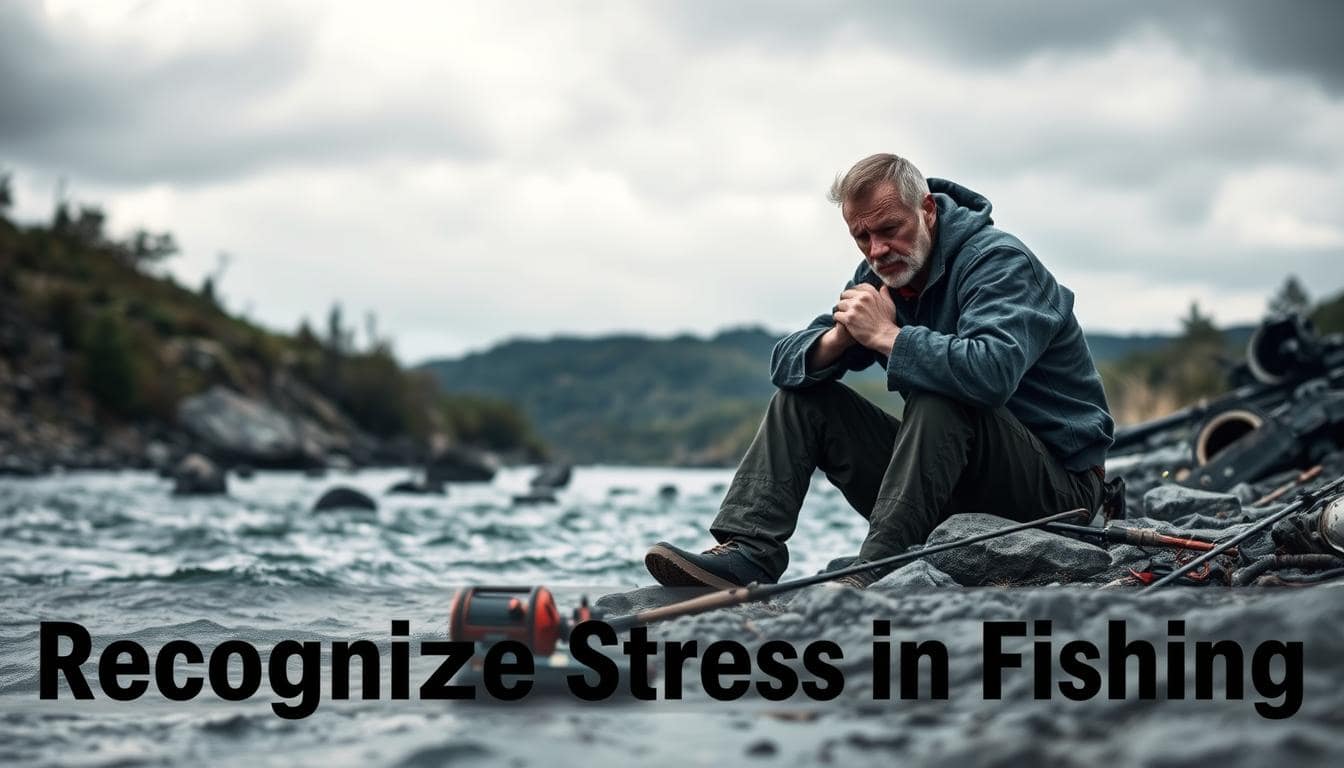

Fishing isn’t always the calm escape we see on social media. Tangled lines and lost lures can trigger our stress response quickly. It’s like a bass hitting a topwater frog fast.
I’ve been in those moments – my heart racing, frustration building, and wondering why I spent so much on gear. It’s not just about pride; it’s our biology.
Our stress systems were made for saber-toothed tigers, not fishing mishaps. When cortisol hits us, we focus less. We miss important signs and make bad choices, becoming worse anglers.
But here’s the twist: fishing can also be a source of stress relief. The secret is knowing when our ancient instincts take over what should be a calming activity.
Being tense like a spinning reel after a big catch isn’t just uncomfortable. It’s also a missed opportunity. Being calm doesn’t just feel good; it makes us better at fishing.
Breathing Exercises for Calm
Ever notice how your breathing changes when you lose a fish? Your chest tightens, and your breaths get shallower. It’s like your body forgot to breathe.
This isn’t just frustration. It’s your body’s fight-or-flight response taking over. It’s preparing you for a threat that doesn’t exist.
The solution is simple. Controlling your breathing can calm your body. Long, slow exhales activate your vagus nerve. This tells your body to relax.
I learned this from Jake, a former Marine. He used breathing to stay calm during combat. If it works in real danger, it can handle your fishing frustration.
Here’s a simple tactic I’ve learned:
- 4-7-8 Technique: Inhale for 4 counts
- Hold your breath for 7 counts
- Exhale for 8 counts
- Repeat 3-4 times between casts
This isn’t just for relaxation. It’s a way to fight your stress response. The long exhale lowers your heart rate and blood pressure. It helps you stay focused.
Another method is square breathing. Breathe in for 4 seconds, hold for 4, out for 4, hold for 4. This creates a calming rhythm.
Proper breathwork is your secret weapon against fishing frustration. It helps you manage stress. The fish don’t care about your emotions, but your technique does.
The goal isn’t to become Zen. It’s to keep your body from sabotaging your technique. Losing control can happen when you’re under pressure.
Mindful Casting Practice
Fishing becomes a moving meditation when you cast with intention. It’s not about throwing lures without care. It’s more like a mindful exercise.
Feel the rod load with energy. Listen to the sound of line leaving the spool. Watch your lure’s arc in the sky.

Fishing this way is like a Japanese tea ceremony. Every movement is deliberate. Every moment is fully present.
When I fish mindfully, I see things I never noticed before. I notice current seams and structure. My accuracy improves because I’m actually seeing what’s happening.
This is similar to a study on meditators seeing more visual information. Mindfulness practice lets you see beyond the obvious.
Your casting becomes more about finesse than force. It’s about the process, not just catching fish. The irony is, when you stop trying so hard, you catch more.
That’s the beauty of mindful angling. The less you struggle, the more the river reveals its secrets.
Staying Present Under Pressure
Ever notice how fishing pressure turns grown adults into emotional toddlers? One missed strike and suddenly we’re contemplating career changes. It’s clear: the fish aren’t the problem – our brain’s drama department is working overtime.
The moment truth arrives with a tug on your line, everything changes. Your palms sweat. Your heart races. Suddenly you’re not just fishing – you’re defending your entire self-worth against a creature with a three-second memory.
Here’s the cognitive hack I’ve stolen from therapists: ask yourself the five-year question. Will this missed fish matter in five years? Five months? Five minutes? The answer usually hits like a cold splash of water – it’s just a fish, not a final exam on your humanity.
Stress makes us ridiculously self-focused. We become the main character in our own fishing tragedy. But calmness? That creates space for empathy – for the fish, for other anglers, even for yourself when you inevitably screw up.
I developed a three-step reset for those pressure-cooker moments:
- Pause – literally stop moving for ten seconds
- Perspective – remember you’re participating in a 400-million-year-old dance
- Presence – return to what’s actually happening, not what might happen
The bass isn’t keeping score. The pike isn’t judging your life choices. This realization is more liberating than landing the fish itself. It transforms fishing from performance art into actual stress relief.
Fishing, like life, isn’t about controlling outcomes. It’s about how we respond to the things we can’t control. The fish that gets away teaches us more than the one that ends up on the wall.
Next time you feel the pressure mounting, remember: you’re not being tested. You’re just fishing. And sometimes, the best catch is the perspective you reel in when things go wrong.
Resetting After a Bad Run
Ever had a fishing day that made you doubt your choices? The kind where you’re fishing for no one? Welcome to the club – we all have bad days.
Here’s a truth: beating yourself up hurts your performance. It’s like trying to fix a problem by breaking it. It doesn’t work.

Instead of getting angry, I use the “hard reset protocol.” It starts with accepting that even pros have bad days.
My three-step reset system:
- Physiological reboot: Sit down. Have a snack. Low blood sugar makes us angry
- Mental reframe: Be kind to yourself instead of being hard on yourself
- Strategy shift: Try something new – like a different spot or lure
This way, fishing anxiety doesn’t ruin your trip. It’s like a reset button for your mind.
| Healthy Coping Mechanism | Unhealthy Response | Result Difference |
|---|---|---|
| Self-compassion break | Self-criticism spiral | +47% faster recovery |
| Strategic pause | Frantic casting | +62% focus improvement |
| Physiological reset | Ignoring fatigue | +81% endurance boost |
Morning rituals are key. Starting with a plan helps a lot. It’s like playing chess instead of reacting.
The secret is to treat yourself well. This mental shift saves more trips than any lure. For more on burnout recovery techniques, the science is interesting.
Remember, fishing anxiety is about your story, not the fish. Change your story, change your day.
Pro Angler Quotes
Ever notice how top anglers seem to meditate while others argue with their ex? Tournament pros and guides share wisdom on the mental game. They say it’s what separates the good from the great. Their advice isn’t just for inspiration; it’s tested strategies for staying mindful when fishing gets tough.
A Florida guide once said, “The fish don’t care how frustrated you are – they only care how your presentation looks.” It’s like the fish are always right, even if they’re tiny and cold-blooded.
One bass pro found success by changing his mindset: “I stopped fishing to win and started fishing to enjoy the process.” This simple shift boosted his earnings by 37% in one season. Enjoying the process leads to better decisions.
These anglers fish like Michael Jordan played basketball – with calm focus. They don’t throw their hat after a missed strike. Instead, they calmly tie on a new fly, reviewing what happened.
| Angler Type | Typical Mindset | Mindfulness Approach | Result Pattern |
|---|---|---|---|
| Tournament Pro | Process-focused | Breathing between casts | Consistent performance |
| Recreational Angler | Result-focused | Frustration cycling | Inconsistent catches |
| Fishing Guide | Client-focused | Observational calm | Adaptive strategies |
| Weekend Warrior | Equipment-focused | Distracted thinking | Missed opportunities |
Top anglers see mindfulness as a competitive edge, not a spiritual practice. They’re not sitting in meditation; they’re using tactical awareness. This keeps them present and responsive.
Another pro shared, “The water tells you what’s working if you’re quiet enough to listen.” It’s not poetry; it’s practical wisdom. When you’re calm, you notice changes in the water that others miss.
This level of mindfulness is what I call the “effortless effort” paradox. The less you try to force things, the more naturally they happen. It’s like dating: desperation repels, confidence attracts.
Remember these quotes when you’re fishing. They’re not just nice thoughts; they’re wisdom from those who’ve made millions by staying calm. Your mindset affects your enjoyment and catch rate.
Conclusion
Fishing will always have its ups and downs. The tangled lines, missed strikes, and the one that got away. These moments test our patience. But that’s exactly the point.
True angling mastery isn’t about avoiding frustration. It’s about learning to handle it. Your breathwork practice becomes your anchor. Mindful casting turns into a moving meditation. Staying present turns frustration into fascination.
The most valuable piece of gear isn’t your $500 reel or custom rod. It’s the space between your ears. Master that through consistent breathwork and awareness, and you’ll find something remarkable happens.
You’ll feel the excitement of the strike. You’ll feel disappointment when lines snap. But these moments won’t control your day. You’ll recover faster. You’ll adapt quicker. You might even enjoy untangling that bird’s nest.
The fish become almost secondary to the process. Almost. Now if you’ll excuse me, I’m going to practice what I preach and head to the water. The bass are calling, and my breathing exercises are ready.


