
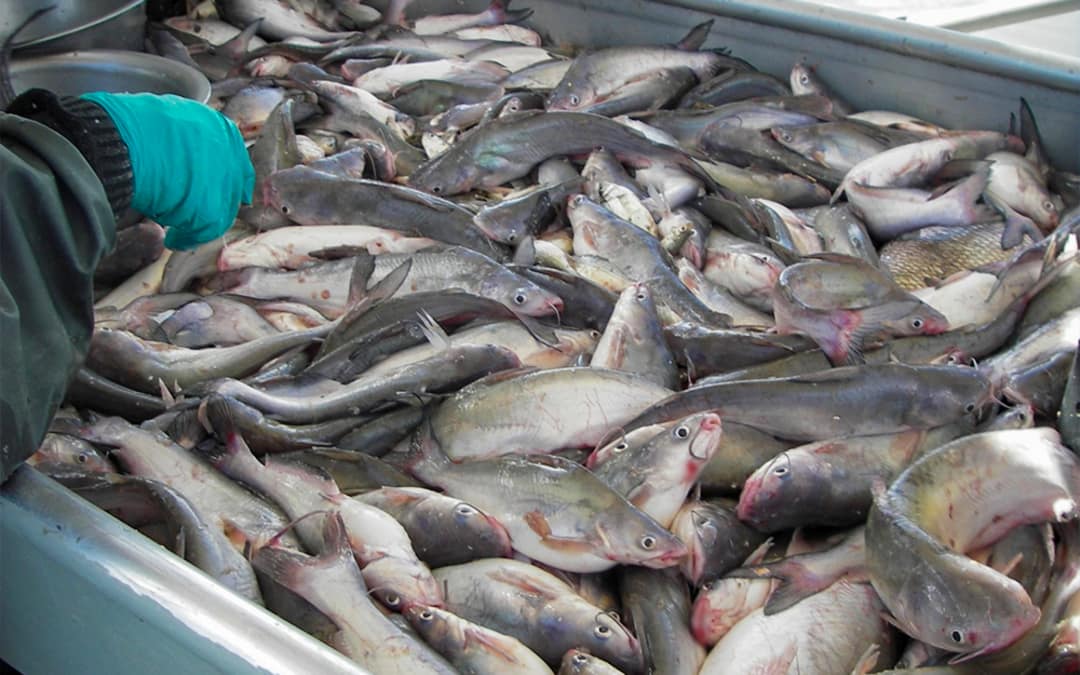

The debate around blue catfish in the Chesapeake Bay has entered a new phase, and from where I stand, it is no longer just about identifying an invasive species or warning anglers about ecological damage. The conversation now is more practical, more economic, and in many ways more consequential. Policymakers, fishery managers, and industry groups are increasingly asking a different question: what happens if the best way to control blue catfish is to make catching and selling them more profitable?
That shift in thinking changes the entire story. For years, blue catfish were mostly discussed as a growing threat to native fish and crab populations in Chesapeake tributaries. They were viewed as aggressive predators with few natural checks, capable of spreading across tidal systems and disrupting habitats where restoration has already required major public investment. But now the policy response is becoming more market-driven. Instead of relying only on awareness campaigns or localized removal efforts, officials are trying to create stronger commercial demand so harvest pressure rises naturally and consistently.
From Ecological Concern to Market Strategy
What makes this issue so compelling is that it blends environmental management with economic planning. Blue catfish are not native to the Chesapeake watershed, and their expansion has raised concern because of how efficiently they adapt. They grow to impressive sizes, tolerate varied water conditions, and feed on a wide range of prey. That combination has made them especially difficult to contain. As their numbers have increased, so has the concern that they are adding stress to a Bay ecosystem already under pressure from habitat loss, warming waters, pollution, and other invasive species.
For that reason, the policy response is shifting toward something broader than simple removal. Officials are increasingly treating the blue catfish population not only as an ecological problem but also as a harvest opportunity that could be scaled. The logic is straightforward: if more buyers want the fish, more watermen will target it. If more processors can handle it, more fish can move through the supply chain. And if those pieces connect efficiently, fishing pressure could become a real management tool rather than a limited side effort.
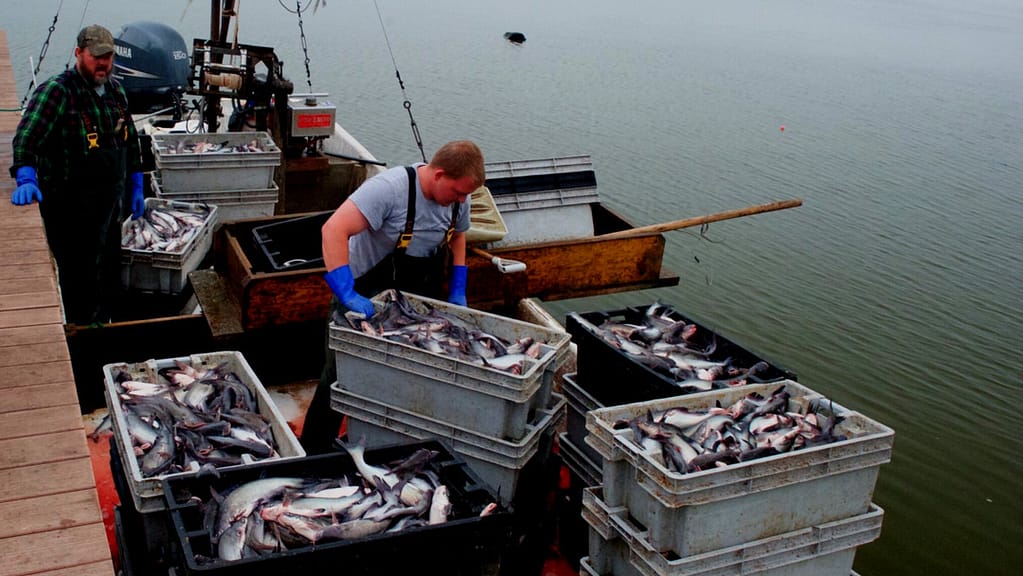
Why Demand Could Be the Deciding Factor
In my view, the most important part of the new approach is the understanding that demand drives effort. Commercial fishermen do not target species at scale simply because regulators want them removed. They do it when the economics make sense. That means price matters, transportation matters, processing capacity matters, and so does the reliability of the market on the other end.
This is why new Chesapeake policy discussions have focused so heavily on expanding uses for blue catfish beyond restaurants and local seafood counters. Selling the fish for human consumption has helped introduce it to more consumers, and that has value. A growing number of chefs and seafood sellers have shown that blue catfish can be presented as a mild, versatile product rather than an unwanted catch. But dining demand alone may not be enough to remove the fish in the volume needed to influence the population significantly.
That is where new ideas around pet food, animal feed, and other bulk-use markets become so important. A broader commercial outlet could absorb far larger quantities than traditional restaurant demand. If such a market becomes stable and profitable, harvest pressure may no longer depend on seasonal menus or niche marketing campaigns. It could become embedded in a much larger supply chain.
What This Could Mean for Fishing Pressure
If the policy works as intended, the biggest change will likely be seen on the water. Harvest pressure could become more deliberate, more frequent, and more organized. Instead of landing blue catfish opportunistically, commercial operators may begin targeting them as a serious business line. Charter captains and watermen would have stronger incentives to retain more fish, invest in more effective gear strategies, and treat blue catfish as a central target rather than a secondary catch.
That could have real implications for how the species is managed across the region. More targeted effort means more removals, and more removals could help reduce the ecological pressure the fish places on native species. It would not solve the problem overnight, and it would not affect every tributary equally. River conditions, fuel costs, local processing access, and market pricing will still influence what is practical. But a stronger market could at least create the sustained pressure that has long been missing from blue catfish control efforts.
This is the crux of the policy idea: build enough economic incentive so the fishing industry itself helps carry out the management goal.
The Opportunity and the Risk
Still, this strategy comes with a built-in tension that deserves attention. The more successful the blue catfish market becomes, the more businesses may start depending on that supply. That creates an unusual paradox. Managers want fewer invasive fish in the system, but processors and sellers may eventually benefit from a reliable stream of fish to keep business moving.
That does not mean the strategy is flawed, but it does mean policymakers need to be careful. The goal must remain population reduction, not long-term dependence on a thriving invasive species. If commercial success becomes the only measure of progress, the conservation purpose can become blurred. The challenge is to build demand strong enough to encourage removal while keeping the larger ecological objective at the center of the policy.
In many ways, that is what makes this Chesapeake debate so fascinating. It is not just about whether people should catch more catfish. It is about whether a regional fishery can be shaped in a way that supports restoration instead of undermining it.
Why the Chesapeake Is at a Turning Point
This moment feels different because the issue is no longer being approached from only one direction. Environmental concern, commercial strategy, processing support, and legislative attention are starting to align. That kind of coordination gives the issue more momentum than it had in earlier years, when the response often felt fragmented.
What I see now is a wider recognition that controlling blue catfish in the Chesapeake Bay will require something more durable than public messaging. It will require infrastructure, investment, and a policy framework that turns harvest into a realistic and repeatable part of the solution. In other words, the Bay is moving from simply acknowledging the problem to actively engineering a response around it.
That is a meaningful change. It suggests the region is beginning to treat invasive fish management with the same seriousness it applies to other long-term restoration efforts. And it reflects an important truth: when an invasive species becomes deeply established, controlling it often depends less on one-time intervention and more on whether institutions can create steady pressure over time.
Conclusion
The future of blue catfish in the Chesapeake Bay may come down to whether policy can successfully connect ecology with economics. The species has already proven that it can thrive in the Bay’s tidal systems, and its expansion has raised legitimate concern about the added strain on native fish, crabs, and restoration work. What is new is the strategy now taking shape around it. Instead of viewing blue catfish solely as a problem to be discussed, Chesapeake policymakers are increasingly trying to turn it into a fish that is worth catching, selling, and removing at scale.
That approach has promise because it recognizes a simple reality: lasting fishing pressure follows market incentives. But it also requires discipline, because the goal cannot be to normalize the invasive species as a permanent success story. The real aim is to reduce its impact and help restore ecological balance. If the Chesapeake gets that balance right, this could become one of the more interesting examples of commerce being used as a conservation tool. If it gets it wrong, the region risks building an industry around the very species it is trying to control.
Either way, this is no longer a minor fisheries story. It is a serious test of how modern policy responds when environmental pressure and economic opportunity collide.


