
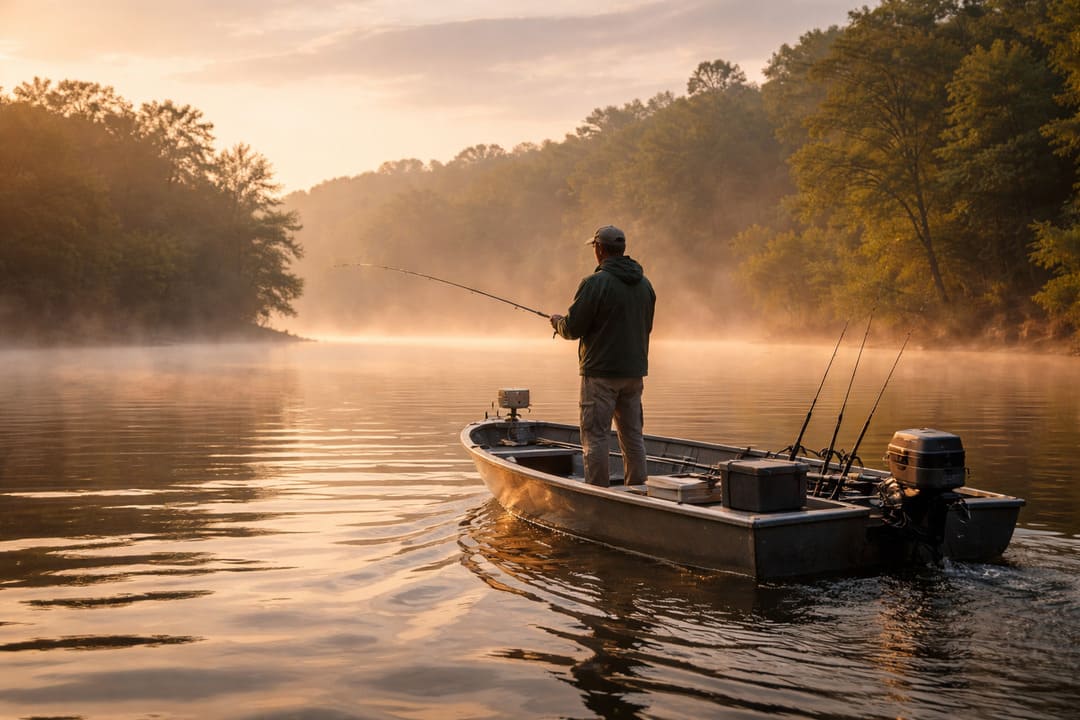

For generations, catfishing has been defined by patience long hours, still rods, and the quiet expectation that fish would eventually come. That model is rapidly changing. A new, more dynamic approach is taking hold, and it is redefining how serious anglers think about success on the water.
What’s emerging is not just a tweak in technique but a shift in philosophy. In today’s conditions, micro-mobility catfish fishing is proving far more effective than the traditional strategy of staying put and waiting.
Rethinking the “Sit and Wait” Tradition
The image of a catfish angler has long been tied to stillness: rods planted, bait soaking, and time passing slowly. That approach worked in less pressured waters and under more predictable conditions. But modern fisheries are different.
Increased fishing pressure, changing ecosystems, and more educated fish populations have altered behavior patterns. Catfish are no longer as predictable in their feeding habits, and relying on a single location for hours often leads to diminishing returns.
From my own time on the water, the pattern is unmistakable. Spots that once produced consistently can now go quiet for long stretches. Meanwhile, small adjustments sometimes just a few meters can completely change the outcome.
The Rise of Micro-Mobility
At its core, micro-mobility is about constant, deliberate adjustment rather than passive waiting. Instead of committing to one location, anglers actively probe an area, testing different zones, depths, and presentations.
This doesn’t mean covering miles of water. It means working a specific area with precision:
- Recasting every 10 to 20 minutes
- Shifting position 10 to 30 meters when there’s no activity
- Fan-casting to explore multiple depth layers
The difference is subtle but powerful. Rather than hoping fish find the bait, the angler systematically finds the fish.
This approach mirrors techniques used in other forms of fishing, where mobility has long been recognized as a competitive advantage. Catfishing is simply catching up.
Thinking Like a Hunter, Not a Watcher
The most important shift is mental. Micro-mobility requires abandoning the idea that time alone produces results. Instead, it demands intentional movement and observation.
I’ve found that treating each cast as part of a search pattern changes everything. You begin to read the water more carefully watching for subtle changes in current, structure, and depth. Each reposition becomes a hypothesis: if the fish aren’t here, where are they feeding instead?
This is the key insight: success now comes from engagement, not endurance.
When anglers adopt this mindset, they stop waiting for bites and start creating opportunities.
Why Movement Works in Today’s Waters
There are several reasons why micro-mobility is outperforming traditional methods.
First, catfish are often on the move themselves. Feeding patterns are influenced by temperature, current, and available prey. Remaining stationary assumes the fish will pass through a fixed point, which is increasingly unreliable.
Second, modern fishing pressure conditions fish to avoid heavily targeted areas. A spot that looks ideal may have already been worked repeatedly, making fish more cautious.
Third, environmental variability plays a larger role than many anglers realize. Small differences in depth, bottom composition, or current speed sometimes within just a few meters can determine whether fish are present.
By moving frequently, anglers effectively sample these micro-environments until they locate active fish.
Precision Over Distance
One common misconception is that being mobile means covering large distances. In reality, micro-mobility is about precision, not range.
The most effective anglers often stay within a relatively small zone but work it thoroughly. They adjust casting angles, vary distances, and reposition incrementally.
This method allows for a detailed understanding of a specific area. Over time, patterns emerge: where fish hold, how they move, and which zones produce under certain conditions.
For those looking to refine their technique further, resources like Take Me Fishing provide broader context on evolving angling strategies, though the practical application ultimately comes from time on the water.
The Role of Timing and Efficiency
Micro-mobility also improves efficiency. Instead of committing hours to an unproductive spot, anglers quickly identify whether an area holds active fish.
This has a compounding effect. More productive time leads to more data, which leads to better decisions. Over the course of a session, the difference can be dramatic.
Rather than a single long wait, the day becomes a series of calculated adjustments. Each move builds on the last, creating a feedback loop that sharpens both skill and results.
Adapting Without Overcomplicating
Despite its advantages, micro-mobility does not require complex gear or advanced technology. Its strength lies in simplicity.
A basic setup, combined with awareness and willingness to move, is often enough. The real challenge is breaking old habits resisting the urge to “give it more time” when conditions clearly aren’t producing.
In practice, the approach becomes intuitive. After a few sessions, the rhythm of movement and observation starts to feel natural.
Why This Shift Matters Now
Catfishing is entering a new phase. As conditions evolve, so must the methods used to pursue it. The days of relying solely on patience are giving way to a more active, strategic style of fishing.
Micro-mobility represents a broader trend toward adaptability in angling. It reflects a deeper understanding of fish behavior and a willingness to respond in real time.
For anglers willing to embrace this shift, the payoff is clear: more consistent results, greater engagement, and a more dynamic experience on the water.
In today’s environment, success doesn’t belong to those who wait the longest. It belongs to those who move with purpose.


