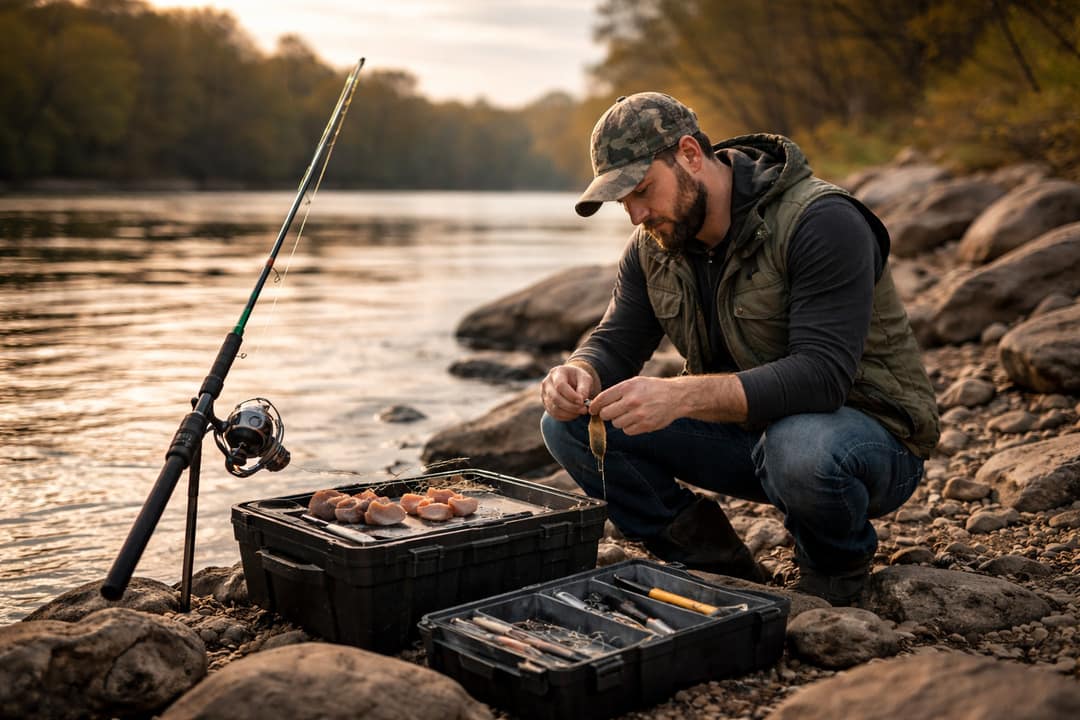

Every fishing season seems to bring a new promise: stronger rods, smoother reels, sharper hooks, and rigs marketed as the missing piece between an average trip and a trophy catch. Yet the core truth of catfishing remains much simpler, and far more useful. The anglers who stay consistent are usually not the ones carrying the most equipment, but the ones who understand where fish are holding, what bait will move them, and how little complexity is actually needed to fish effectively.
I have come to see catfishing as a sport where restraint often outperforms obsession. Good gear matters, absolutely, but it matters in a supporting role. What drives results most often is the decision-making that happens before the cast: selecting fresh bait, reading the water correctly, and avoiding the trap of overbuilding rigs that do not need to be complicated in the first place.
The Real Value Of Catfish Gear
The market for catfish fishing gear is built around upgrades. That makes sense on a commercial level, because rods, reels, line, and tackle are easy to package as performance tools. In practice, though, the biggest gains rarely come from chasing every new product cycle. They come from getting the basics right and using dependable equipment that can handle pressure without distraction.
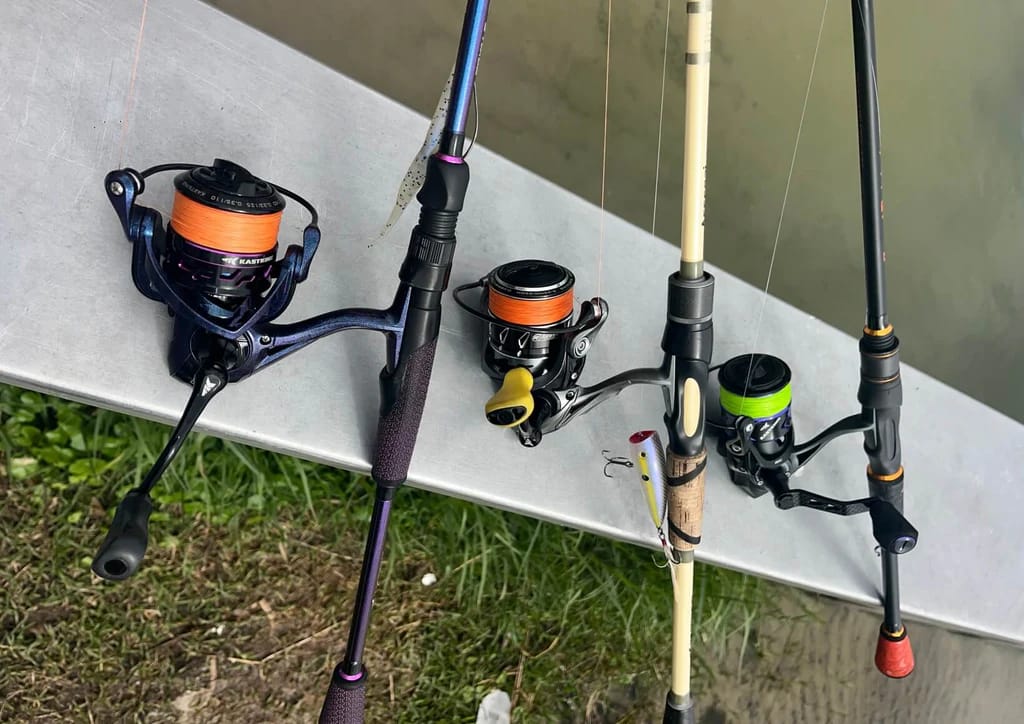
A strong rod and reel should be the first priority. Catfish are powerful fish, and poor equipment shows its weakness fast. A rod without backbone can make it difficult to control a fish near cover or current. A reel with inconsistent drag can ruin the best hookup of the day. Durability matters here, not because it sounds impressive, but because catfishing puts real strain on tackle.
Hooks deserve that same practical attention. I view them as one of the few truly non-negotiable pieces of the setup. A good hook penetrates cleanly, holds under pressure, and eliminates one of the most preventable causes of lost fish. In that sense, gear absolutely matters. The mistake is assuming that more expensive or more elaborate automatically means more effective.
Why Bait And Location Still Decide The Outcome
The most valuable lesson in catfishing is also the least glamorous: bait and location matter more than tackle. That is not a slogan. It is a pattern that repeats itself across rivers, reservoirs, lakes, and bank-fishing spots. A basic setup fished in productive water with fresh bait can outperform an expensive setup placed in dead water for hours.
Catfish rely heavily on scent, vibration, and opportunity. They respond to bait that is fresh, natural, and well presented. Whether the angler is targeting channels, blues, or flatheads, the same broader rule applies. If the bait is right and the placement is right, the rig does not need to do much beyond staying efficient and keeping that bait where fish can find it.
Location is where many anglers lose the plot. They adjust terminal tackle repeatedly when the real issue is that they are not fishing active water. Catfish use edges, ledges, current breaks, deep holes, timber, bridge structure, and transition zones with enough regularity that reading water becomes more important than endlessly modifying hardware. I have seen anglers change sinkers, leaders, and hooks three or four times when what they really needed was to move twenty yards and fish a better seam.
If there is one insight that deserves more attention, it is this: no piece of gear can compensate for poor location.
A Simple Setup Often Fishes Better
One of the more damaging myths in modern catfishing is that sophisticated rigs automatically produce better results. In reality, a simple setup is often the more professional choice. It is easier to manage, easier to cast, easier to troubleshoot, and more likely to keep the bait behaving naturally in the water.
Overcomplication usually enters when confidence disappears. When bites slow down, many anglers start adding hardware, changing leader lengths repeatedly, or experimenting with rig combinations that do more to create confusion than fish-catching advantage. Some adjustment is part of fishing, of course. But more often than not, slow action is not a rig problem. It is a location problem, a timing problem, or a bait problem.
That is why I continue to believe simplicity is an edge rather than a limitation. A clean rig keeps the entire system focused on what matters: putting fresh bait in a productive zone and letting it work without unnecessary interference.
Where To Spend Money First
For anglers trying to improve their results without wasting money, the smartest approach is to think in terms of return on performance rather than novelty. Some gear upgrades offer meaningful value. Others simply create the feeling of progress.
The clearest priorities are these:
- A strong rod and reel that can handle heavy fish and demanding water
- Good hooks that stay sharp and hold firm under pressure
- Fresh bait that gives catfish a real reason to commit
That order matters because it reflects what actually influences success on the water. Rod and reel reliability determine whether the system can withstand the fight. Hook quality determines whether opportunity becomes a landed fish. Fresh bait determines whether the fish is interested in the first place.
To make that hierarchy even clearer, here is how I would rank the essentials.
| Priority | Investment Area | Why It Matters Most |
|---|---|---|
| 1 | Strong rod and reel | Provides control, durability, and confidence when fighting big fish |
| 2 | Good hooks | Improves hookups and reduces preventable failures |
| 3 | Fresh bait | Increases attraction and often has more impact than any accessory |
| 4 | Advanced rigs and extras | Useful only after the fundamentals are already working |
Why This Matters Right Now
Catfishing is increasingly surrounded by the same consumer pressure affecting much of the outdoors industry: the idea that more products equal more preparedness. That mindset is understandable, but it is not always helpful. Buying another piece of tackle feels productive because it is immediate. Learning a stretch of river, understanding where fish transition during changing conditions, and choosing bait with discipline require more patience and less visible reward.
Yet that quieter work is still what separates productive anglers from frustrated ones. The best catfish fishing is not built on a mountain of accessories. It is built on a reliable setup, a sharp understanding of water, and the discipline to keep things simple when the market is pushing complexity.
That is why this matters right now. As gear options continue to multiply, the essential advice becomes even more valuable: invest first in tackle that will not fail, use good hooks, fish the freshest bait possible, and do not mistake rig complexity for expertise. In catfishing, the smartest anglers are often the ones who realize that simplicity, not excess, is what keeps producing results.


