
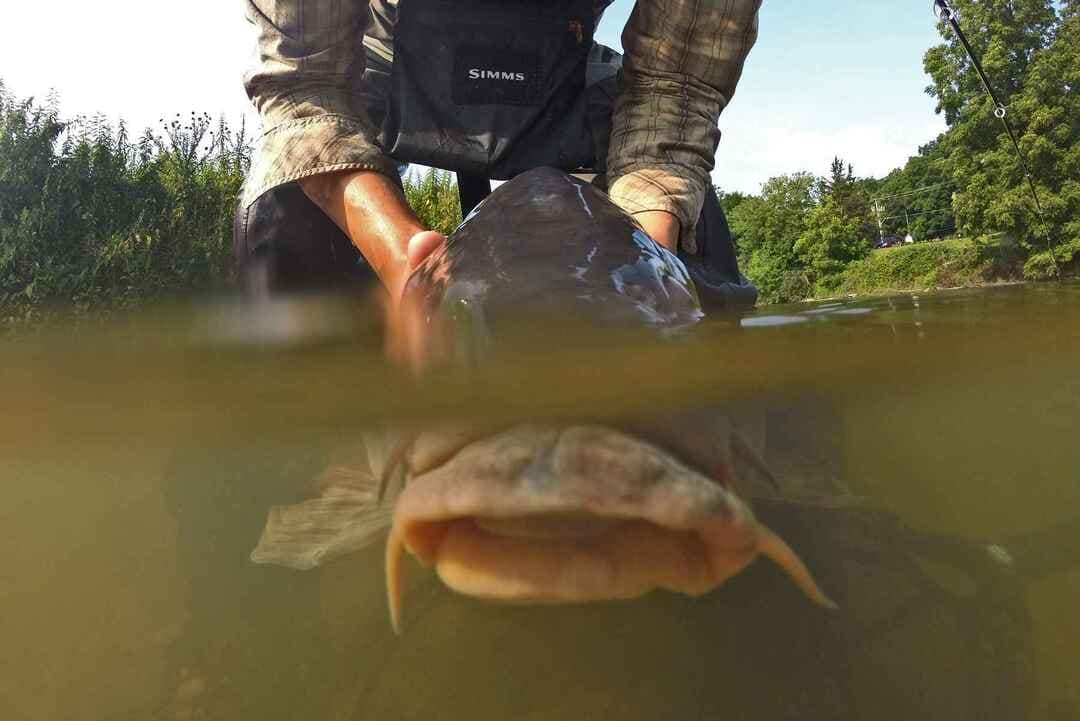

Every spring, I see the same mistake repeated at ramps and weigh-ins: anglers keep hunting deep long after the better fish have started feeding shallow. In tournament fishing, that hesitation can be expensive. The winning water is often the water many competitors run past.
The dominant pattern in spring catfish fishing right now is simple but easy to ignore. Quality fish are using shallow feeding zones, especially where wind, bait movement, and quick access to deeper water intersect. That shift changes how serious anglers should read a flat, position a boat, and manage time on the clock.
Why The Shallow Pattern Matters
Shallow water in early spring makes many anglers uneasy because it clashes with winter instincts. Deep channels, ledges, and holes still matter, but they are no longer the only addresses that deserve attention. As the season turns, catfish begin sliding onto flats and edges where food is easier to intercept and warming trends can trigger short, aggressive feeding windows.
That is the key to spring catfish fishing at tournament level. The best water is often only a few feet deep, but it has a purpose. I look for places where fish can move up, feed efficiently, and slip back toward security without burning much energy. When that setup is present, shallow water stops being a gamble and starts becoming a high-percentage pattern.
The mistake is assuming “shallow” means “featureless.” Productive water usually has a structural reason for holding fish: a subtle ditch, a feeder cut, a tapering point, a shell bed, or a transition from soft bottom to something firmer. Add bait to that equation and the flat becomes a feeding lane instead of empty water.
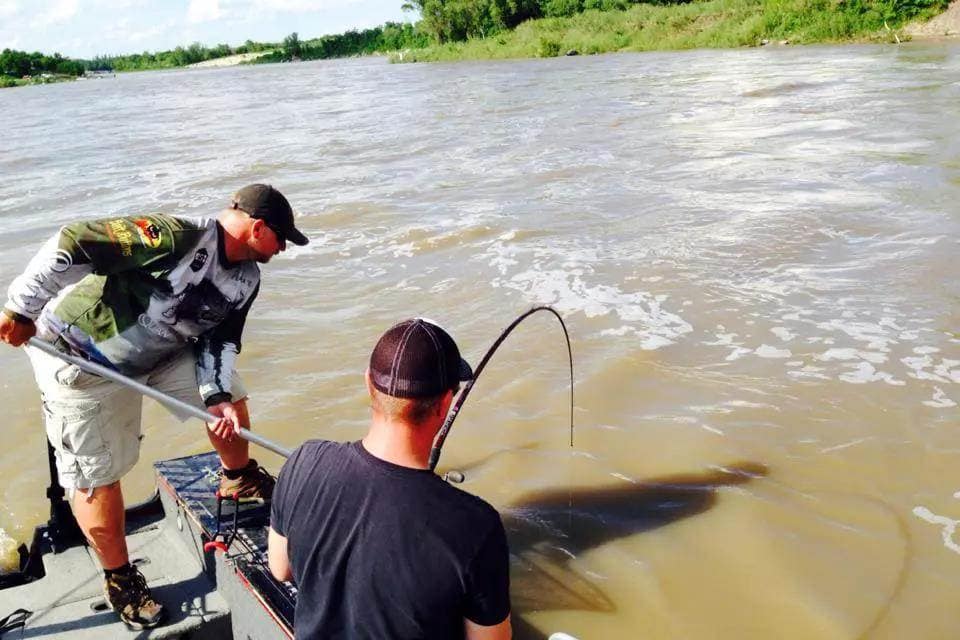
How Wind And Bait Change Everything
Wind is often the trigger that organizes this pattern. A breeze pushes forage, compresses bait activity, and creates predictable feeding zones that catfish can exploit. In practical terms, spring catfish fishing improves when the wind gives fish a reason to set up instead of roam.
That is why I pay attention to windblown banks, open flats, and areas where bait has an obvious place to gather. The fish do not need the entire lake to turn on. They need a localized opportunity where food is being delivered. On the best days, that combination can make a shallow area fish much bigger than it looks on a map.
For anglers who want broader seasonal context, spring catfish fishing is increasingly defined by that migration toward accessible feeding water. The tournament takeaway is straightforward: stop treating depth as the default answer and start asking where forage is being pushed and pinned.
Why Access To Deeper Water Still Counts
Shallow fish are rarely disconnected from depth. The best tournament locations usually offer a quick route between feeding water and security. That route may be a creek mouth, a trough, a channel edge, a long point, or a breakline that lets fish move without exposing themselves for long.
This is where anglers separate themselves. They do not simply anchor on the prettiest flat. They focus on travel routes. In my experience, the most reliable places in spring catfish fishing are transitional zones where fish can feed in skinny water and retreat fast when conditions change. That is often the hidden difference between a flat that reloads and one that looks right but never produces.
Boat Position Is A Competitive Edge
Tournament anglers love to talk about bait, but boat control may matter just as much in this pattern. In shallow water, small errors get magnified. If the boat swings too much, drags lines off target, or pushes too close to the strike zone, the setup loses efficiency quickly.
That is why anchoring is such a powerful part of spring catfish fishing when fish are concentrated on a defined section of flat. Holding the boat steady lets anglers fan-cast with intention and keep baits where feeding fish are actually traveling. Precision is not a luxury in this pattern. It is part of the pattern.
Patience matters too. Many competitors leave productive water too early because the area looks small or because it does not fire immediately. But shallow spring fish often arrive in windows. When wind, bait, and structure are aligned, giving a spot enough time can be the decision that saves a tournament day.
What Happens After A Front
A sharp front can dull the shallow bite and reposition fish fast. Even so, the better adjustment is usually not to abandon the area but to slide off the flat and probe the next level down.
That is one of the defining lessons of spring catfish fishing. A spot that produced in very shallow water may still hold fish nearby after conditions shift; they simply reposition along the same corridor. Anglers who understand that relationship stay in the game. Anglers who make a wholesale move often start over unnecessarily.
The pattern, in other words, is not fragile. It is dynamic. That is an important distinction for tournament anglers, because the field often overreacts to changing weather. A shallow bite that softens is not always a shallow bite that has died. More often, it is a bite that has moved just far enough to reward disciplined adjustment.
Why This Pattern Matters Now
This matters because catfish tournaments in early spring are often decided by who recognizes the seasonal handoff first. Anglers who stay trapped in winter logic may still scrape together a catch. The anglers who understand how wind, forage, and transitional structure reshape the lake are far more likely to build the kind of weight that separates the leaderboard.
For me, the lesson is clear. Spring catfish fishing is strongest when it is approached as a feeding pattern, not a depth pattern. Shallow water becomes dangerous in the best sense when it has bait, structure, access, and time. Right now, the anglers with the strongest edge are the ones willing to fish shallower than the field, hold their position with discipline, and trust that the winning bite may be happening in water many competitors never stop to study.


