
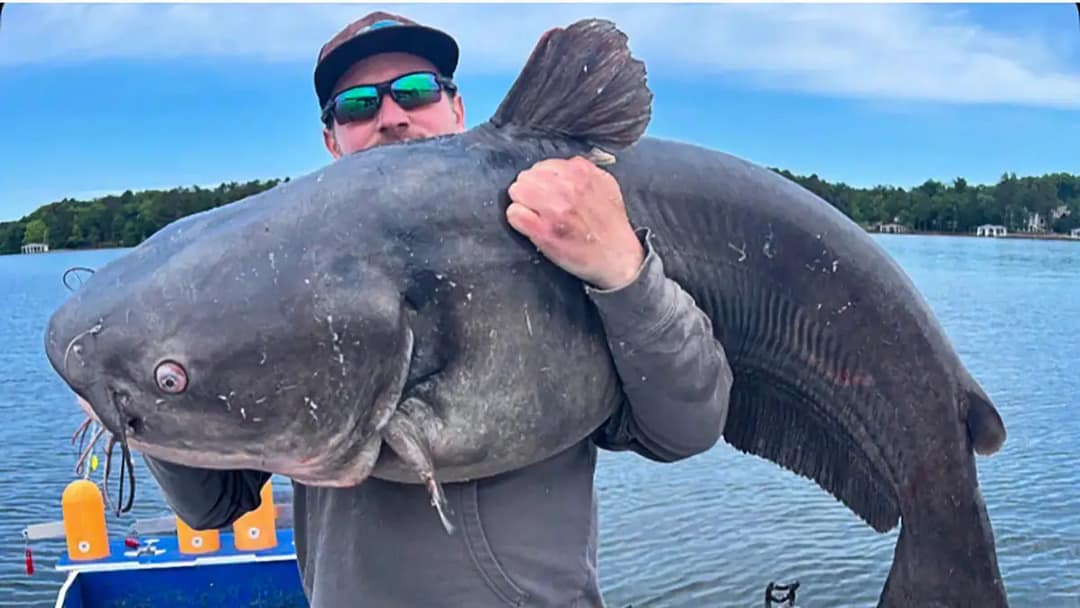

The May blue catfish bite suddenly has the kind of story that makes anglers stop scrolling and start checking their own gear. When a Lake Gaston guide catches and releases nearly 300 pounds of blue catfish in about two hours, including fish in the 40-, 70-, and 100-pound class, the moment becomes more than a big-fish headline; it becomes a seasonal signal with real urgency.
The latest attention around the May blue catfish bite comes from Zakk Royce, whose short evening drift turned into a heavyweight session built on fresh cut bait, a channel ledge, and pre-spawn timing. That combination gives the story its momentum, because it points to a repeatable pattern rather than simple luck.
Why The May Blue Catfish Bite Matters Right Now
May matters because it sits between warming water and spawning behavior, when large blue cats can become more aggressive around concentrated forage. The month does not guarantee a giant, but it does create a stronger opportunity for anglers who understand bait movement, ledge positioning, and the way big fish respond when food stacks in predictable zones.
That is why this Lake Gaston catch deserves more than casual amazement. The fish were not scattered across empty water. They were grouped tightly enough that one drift produced multiple heavy hookups in rapid succession, which tells experienced anglers that the right seasonal alignment can create a rare level of pressure on the rod holders.
For readers who fish casually, the lesson is still useful. Trophy catfishing can look mysterious from the outside, but the foundation is practical: find bait, fish structure, use fresh natural offerings, and stay ready when the window opens. The drama comes from the scale of the fish, but the logic behind the catch is built on discipline.
What The Lake Gaston Catch Really Shows
The most useful part of the story is not only the total weight. It is the way the bite developed. Royce reportedly began with a short controlled drift after catching bait for guide trips, then found himself in a school of giant blue cats that turned several rods into chaos. That sequence gives anglers valuable context and a sharper sense of timing.
Lake Gaston is already known as a strong blue catfish destination, but a catch like this reinforces the reservoir’s reputation for producing true giants. A big system with channel edges, baitfish, and established catfish populations can reward anglers who understand movement. The water is not generous by accident; it rewards preparation more often than guesswork.
Fresh cut bait is the other major takeaway. For big blue cats, scent and realism matter. Fresh perch, shad, or other local bait can create a stronger trail than old bait pulled from a freezer too many times. When predators are keyed on active forage, bait quality becomes a real edge, not a minor detail.
The drift itself also matters. Anchoring can be effective, especially near holes and current seams, but drifting helps anglers cover productive water while keeping baits moving naturally along ledges. That style can expose patterns quickly. It gives the angler more information and turns each pass into a test of position.
Why Baitfish Movement Is The Hidden Driver
Big catfish follow food. That sounds simple, but it is the core principle behind many late-spring trophy sessions. When shad begin grouping for spawning activity, they create a moving buffet that larger predators can shadow. The catfish may be the star, but the forage is often the real trigger behind the bite.
That is why anglers should think one step earlier than the fish itself. Instead of asking only where the catfish are, ask where the bait should be. Look for edges, wind-blown zones, channel transitions, and areas where shallow and deeper water connect. Those places can create concentration when the lake’s food chain starts to tighten.
The biological clock matters too. Blue catfish generally spawn from late May into June in many systems, and the blue catfish spawning window helps explain why pre-spawn feeding can feel so intense. The fish are building energy before their behavior shifts, creating a short stretch of extra activity and intensity.
Still, May is not magic. Weather, water clarity, lake level, fishing pressure, and local forage can change the bite quickly. One reservoir may peak earlier than another. One ledge may reload while another goes quiet. Good catfish anglers treat May as an advantage, not a promise, and that distinction protects their judgment.
The Pattern Behind Monster Blue Cats
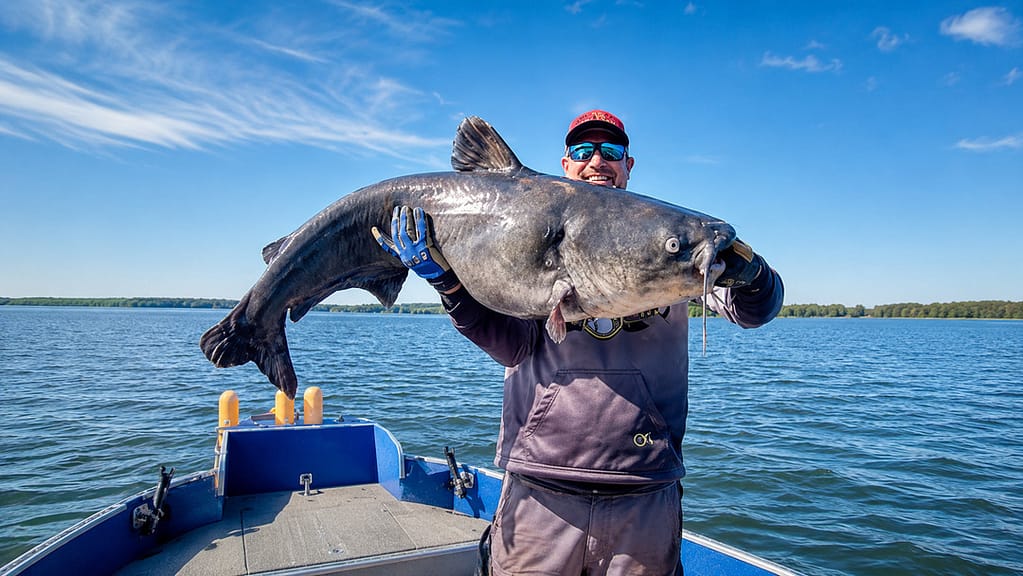
The classic late-spring pattern is not complicated, but it does require execution. Anglers want fresh bait near feeding lanes where blues can intercept food without wasting energy. Channel ledges, flats near deeper water, river bends, and creek mouths all deserve attention when they match bait movement and water conditions.
| Factor | Why It Matters In May |
|---|---|
| Fresh cut bait | Matches active forage and creates a stronger scent trail |
| Channel ledges | Give big fish travel routes and feeding edges |
| Shad movement | Pulls predators toward concentrated food |
| Controlled drifting | Covers water while testing productive zones |
| Pre-spawn timing | Can increase feeding urgency before behavior shifts |
| Careful handling | Helps trophy fish survive after release |
The table is not a shortcut. It is a framework. Fresh bait alone will not fix a dead area. A good ledge will not matter if the bait has moved. Perfect gear still needs the right drift. Trophy success usually comes from stacking small advantages until the setup has enough precision to matter.
That is also why anglers should avoid copying one guide’s exact depth or drift line without reading their own water. Lake Gaston’s 10- to 20-foot ledge pattern may translate in principle, but not always in depth. The better takeaway is adaptation: follow the same logic, then adjust to the local conditions.
Bank anglers can apply the same thinking from shore. They may not control a drift, but they can choose points, bridge areas, current breaks, riprap, creek mouths, and wind-blown banks where bait is likely to pass. The main question stays the same: where can a big fish feed efficiently without wasting energy? A shore setup that answers that question can be more productive than a boat sitting over pretty water with no bait nearby. That is the kind of practical reading that separates casual luck from repeatable catfish decision-making in late spring.
Catch And Release Changes The Meaning Of The Story
The release is not a side note. When multiple large blue cats go back into the lake, the story shifts from extraction to stewardship. Trophy fish are valuable because they represent years of survival, growth, and favorable habitat. Treating them carefully adds credibility to the catch and protects future quality.
That does not mean every blue catfish everywhere should be treated the same way. Blue catfish management depends heavily on the waterbody. In some systems, they support a trophy fishery. In others, they are invasive predators that create ecological concern. That difference requires clarity, not one-size-fits-all opinion.
This is where the conversation becomes bigger than Lake Gaston. Anglers increasingly have to understand the management goals of the water they fish, especially where catfish overlap with conservation priorities. A broader look at catfish conservation through tournament fishing shows how recreational pressure can become part of a practical strategy when the ecological stakes are clear.
For trophy releases, handling matters. Large blue cats need support under the belly, minimal time out of water, and enough revival time before they swim off. A fish can survive a great fight and still be harmed by careless photos. Responsible anglers understand that respect begins after the net and continues through the release.
What Weekend Anglers Can Learn From This Bite
The average angler does not need a guide boat or record-class water to learn from this story. The same principles can improve ordinary trips. Use fresh bait when possible. Fish near travel routes. Watch for forage. Let the first few bites teach you something about depth, direction, and presentation.
May also rewards anglers who stay mobile without becoming impatient. There is a difference between waiting through a natural lull and wasting hours in water with no signs of life. Electronics can help, but observation still matters. Bait flipping, birds working, wind pushing into banks, and subtle current can all provide evidence for a smarter move.
Gear should match the goal. Eating-size catfish do not require extreme equipment, but trophy blues demand stronger rods, reliable reels, heavy leaders, sharp hooks, and drag settings that can survive sudden weight. The right setup does not remove the fight. It creates control when the fish turns heavy and the margin gets thin.
Newer anglers should also learn the local rules before they fish. Regulations on harvest, size, bait, and transport can vary by state and waterbody. Responsible catfishing is not just about catching fish. It is about knowing what the resource needs, which builds trust between anglers, managers, and the wider community.
How Conditions Can Change Quickly
The hardest part of May catfishing is that the same seasonal ingredients can produce very different days. A warm, stable stretch can pull bait into predictable areas and make fish easier to pattern. A hard front, a sudden wind shift, or a water-level change can scatter that setup and force anglers to start over.
That is where patience and mobility have to work together. Sitting on a good-looking spot can make sense when bait and fish are present, even if the bite takes time to start. Sitting on a lifeless spot because it worked last week is a different choice. The best anglers know when to wait and when to move.
This is also why detailed trip notes matter. Depth, water temperature, bait type, wind direction, time of day, and bite windows can reveal patterns across multiple outings. One trip may feel random. Five trips can start to show a story. Serious catfish anglers do not just remember the fish they caught; they remember the conditions that made those fish catchable.
Why This Story Travels Beyond One Lake
The reason this story travels is emotional as much as technical. Every angler understands the fantasy of one short drift becoming unforgettable. It is the idea that the lake can still surprise even the people who know it well. That sense of mystery is part of fishing’s lasting appeal.
Modern anglers have better tools than ever: mapping, sonar, social media reports, specialized rigs, and refined bait systems. Yet a giant catfish still has a way of making the sport feel wild. Technology can narrow the search, but it cannot remove uncertainty, and that uncertainty keeps the pursuit alive.
The story also arrives as more people are heading back to the water for longer evenings and warmer weekends. A dramatic May catch gives anglers a reason to think bigger. It turns the season into a question: are the blue cats moving here, too? That question creates curiosity and puts fresh energy into the local bite.
There is a risk, though, in treating one extraordinary session as a guarantee. Big catfish remain difficult. The same ledge can go quiet after pressure. Bait can shift. Weather can scatter fish. The best interpretation is balanced confidence, not hype, because serious fishing still demands patience.
The Bigger Future Of Catfish Fishing
Catfish fishing is becoming more visible because it sits at the crossroads of recreation, food, conservation, and trophy hunting. That range gives the category unusual strength. A family can fish for dinner, a guide can pursue 100-pound blues, and a tournament can connect anglers to a larger purpose with measurable impact.
That range also creates tension. Some anglers want trophy protection. Some managers want increased harvest. Some communities view blue catfish as economic opportunity, while others worry about ecological imbalance. The mature position is not emotional simplicity. It is local knowledge combined with practical accountability.
The Lake Gaston story should lead anglers to better questions. What water are we talking about? What role do blue catfish play there? What do regulations encourage? Are we protecting a trophy fishery, reducing invasive pressure, or balancing both? Those questions turn a viral catch into real understanding and better leadership.
What Anglers Should Watch Next
The next few weeks deserve attention. If shad activity stays strong and blue cats continue feeding before the spawn, productive reservoirs and river systems could produce more notable catches. The timing will vary by region, but the late-spring window is clearly worth watching with focus and care.
For serious anglers, the opportunity is tactical: track bait, refine drift paths, rotate bait sizes, keep gear ready, and handle big fish properly. For casual anglers, the lesson is simpler. Go while the season is active, fish with intention, and respect the water enough to learn from every result and every miss.
The May blue catfish bite matters because it combines a dramatic catch with a believable seasonal pattern. It shows how big fish, bait movement, pre-spawn behavior, and responsible release can meet in one remarkable session. The risk is assuming giants come easily. The opportunity is fishing with sharper awareness, better discipline, and a deeper respect for the conditions that make a monster blue cat possible.


